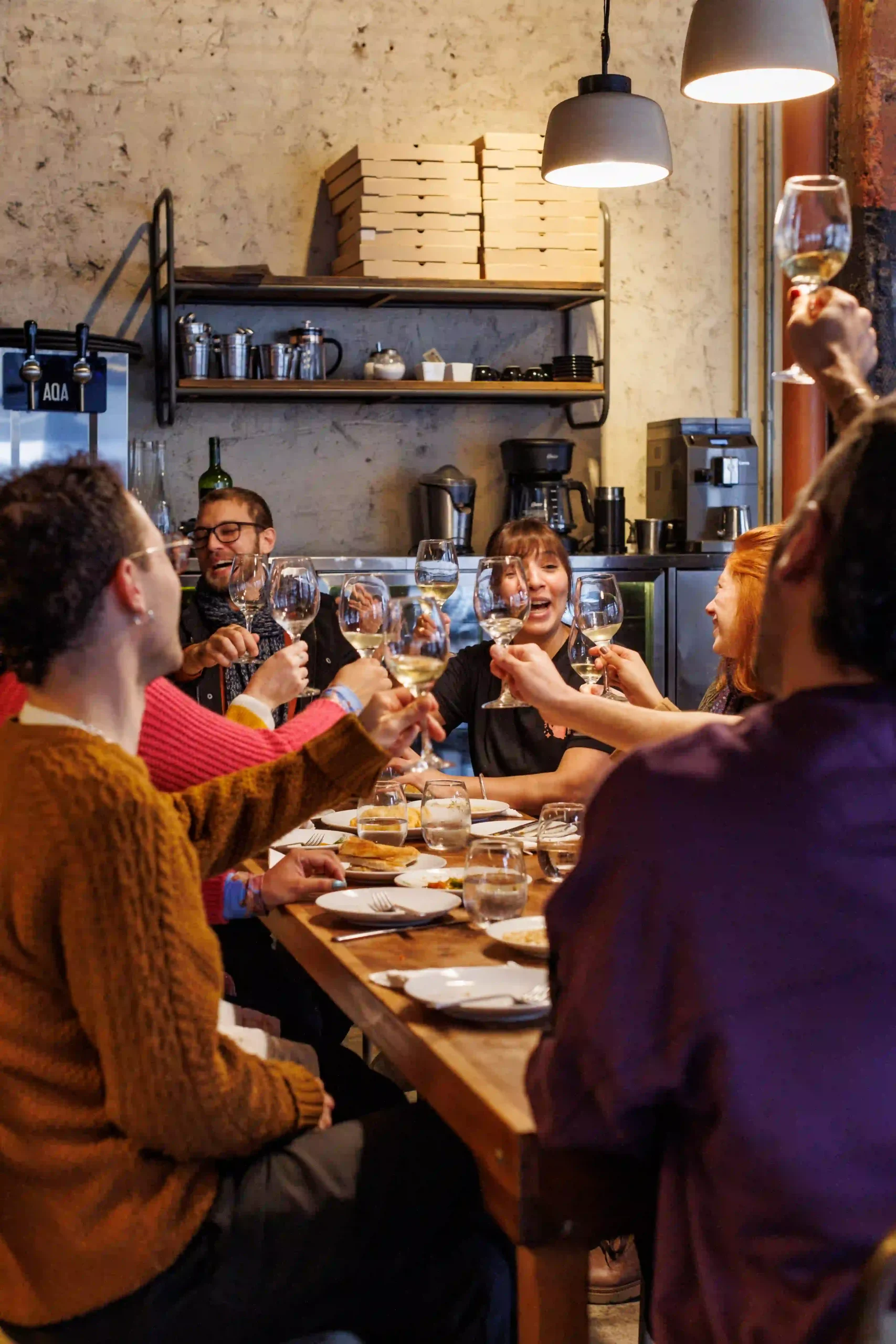
A quasi-religious practice, an almost dogmatic act. Unhurried enjoyment, the perfect moment to gather our people, an excuse to share, rich aromas. Those are the answers that immediately come up when we ask our local guides what is asado. It is pretty crazy to think that a meal can be defined by words that seemingly have nothing to do with gastronomy; and yet, they have absolutely everything to do with it.
If you are trying to figure out the real difference in the asado vs barbecue debate, you have to throw out the idea of a quick weekend cookout. In Argentina, this is a prehistoric practice sustained in the modern world. It is a social event with no set schedule. You do not check your watch. You arrive early, pour a drink, and surrender to the rhythm of the embers.
The ritual starts long before the meat hits the grill. While the fire catches, pouring that first drink is practically law. A tall, ice-cold glass of Fernet with cola or a robust Malbec is the mandatory co-pilot for whoever is manning the iron grates. It is an event where we take our time, eat slowly, and let the conversation stretch into the evening.
But there is also a serious culinary science behind the romance. In this guide, we are going deep. We will break down exactly why argentine meat is world-class, walk you through the traditional stages of the tasting menu, and give you the ultimate cheat sheet on the best way to cook an asado yourself.
Before the Fire: The Cult of Argentine Meat
Why is it so good?
The global fame of our beef is no accident; it is the direct result of our geography and tradition. The cattle roam freely across the massive, flat plains of the Pampas, feeding exclusively on nutrient-rich natural grass rather than grain. This lifestyle produces argentine meat that is naturally lean, incredibly tender, and packed with a deep, earthy flavor that industrial feedlots simply cannot replicate.
The respect for the raw product is absolute. The entire process, from raising the cattle to the butchering, is designed to protect that quality, ensuring the ingredient shines entirely on its own before it ever even touches a flame.
Top Butcher Shops in Buenos Aires
In Buenos Aires, butcher shops have evolved from simple neighborhood counters into culinary destinations. If you want to see the product at its peak, these institutions treat every cut with serious reverence:
Don Julio: Beyond its international acclaim as a steakhouse, their butcher counter is a masterclass in meat selection and dry-aging.
Cabaña Juramento: An essential benchmark for anyone looking for flawlessly sourced cuts and unwavering quality.
Carnicería Corte Comedor: Their aged cuts are the gold standard for any serious asado.
Visiting these spots makes one thing clear: the excellence of an asado begins long before you light the match. It starts with choosing a world-class ingredient.
Beef Cuts: How to Eat an Asado in Stages
First of all, it is important to highlight that an asado is NEVER served all at once on a single plate. Instead, it is kind of a multi-course tasting menu that comes straight off the grill to a shared wooden cutting board. You eat piece by piece as the meat is ready.
This continuous flow is a massive challenge for the asador.Every single cut has its own specific cooking time and must be pulled off the fire at the exact doneness the guests prefer, all while following a strict serving order. It requires a mental stopwatch, placing each piece of meat over the coals at the exact right moment to orchestrate the meal perfectly.
Honestly, while I know my way around the table, I am no expert behind the grill. I am always deeply impressed by someone who can manage that fire, and I never get used to seeing a true master at work. It is exactly why every gathering ends with a mandatory, loud «¡Un aplauso para el asador!»(A round of applause for the grill master). They absolutely earn it.
Just to be clear before we dive in: the breakdown below is the order in which we eat, which is entirely different from the order things are placed on the grill.
Round 1: The Starters
Everything kicks off with the classics: Chorizo (pork sausage) and Morcilla (a rich, spiced blood sausage). Throw a hot chorizo inside a piece of crusty bread, and you have the legendary street food staple known as the choripán.
Round 2: Las Achuras (The Offal)
Please, do yourself a favor and do not skip this.
Mollejas (Sweetbreads): It is the caviar of the grill. Cooked slowly over the embers until they develop a crispy crust and a creamy, melt-in-your-mouth interior, they are traditionally finished with a heavy squeeze of fresh lemon.
Chinchulines (Chitterlings): Intensely flavorful, crunchy, and my favorite achuras. They require serious skill from the asador to prepare perfectly, but when done right, they are a true local delicacy.
Round 3: The Main Event
These are the heavy hitters that require patience and a slow fire.
Matambre: A thin, highly flavorful cut of rose meat that gets incredibly crispy over the hot coals. It means «Hunger killer». I love how literal we could get.
Costilla (Asado de Tira): Short ribs cut crosswise across the bone. The meat near the bone is packed with fat and deep flavor, demanding a low and slow cook to reach absolute perfection. You should start placing the bone against the embers.
Vacío (Flank): A thick, fibrous cut with a layer of fat on the outside that crisps up beautifully. Slicing into a perfectly cooked vacío on the wooden board is usually the peak moment of the meal.
The Traditional Sides
We do not drown our meat in heavy, sugary BBQ sauces. Instead, we rely on three traditional accompaniments to cut through the richness of the fat: Chimichurri (a mix of fresh parsley, garlic, oregano, vinegar, and oil), Salsa Criolla (diced onions, bell peppers, and tomatoes in vinegar), and Provenzal (a potent, simple mix of chopped garlic and parsley).
Even though the three of them are good, the meat does not need any extras to be delicious.
How to Host Your Own Argentine Asado at Home
Though Buenos Aires is filled with excelent steakhouses, if you happen to be renting a place with a parrilla , you should give it a try and host your own asado. Experiencing the ritual from the other side of the fire is something every traveler should do at least once. But before we get into the tips, remember what i said: everything starts with the ingredients. You cannot rush a bad cut of meat into being good. Take the time to visit a proper butcher and buy high-quality cuts.
Once you have the meat, it is time to face the fire.
Choosing the Fuel: Wood vs. Charcoal
Your first big decision is what to burn.
Carbón (Hardwood Charcoal): This is the go-to for most weekend asadores and definitely what you should use if it is your first time. It lights faster, provides consistent heat, and is much easier to manage.
Leña (Firewood): This is the traditional, romantic route. It gives the meat a deeply authentic, smoky flavor, but it requires much more time and skill to break down into usable embers.
Lighting the Fire (The Hairdryer Trick)
Building the fire is almost an art form. You start with a base of crumpled paper (do you know how many times i passed at school and used my notes?), add kindling or small pieces of wood, and stack your charcoal on top so it can catch the flame. Fundamentalists will tell you that using chemical fire starters or blowing air onto the fire is a sin. However, if this is your first time, take all the help you can get (be careful!). Honestly, I have even seen my own brother pull out a hair dryer to get a stubborn fire going. No judgment here, just get those embers glowing red.
Meat, Timing and Embers
Because you are serving a tasting menu, you need a strategy. I highly recommend mentally listing the order in which things go on the grill and the amount of heat they need.
The Long Game (Low Heat): Thick, bone-in cuts like Costilla (Asado de Tira) and thick fibrous cuts like Vacío go on first. They need a steady, low heat and can take up to two hours to cook perfectly.
The Middle Ground (Medium Heat):Achuras like mollejas and chinchulines take a while to get crispy and render their fat, so get them on early with a moderate amount of embers.
The Fast Track (High Heat):Chorizo and Morcilla are quick. The Morcilla is already cooked and just needs to be heated through, while the Chorizo takes about 30 to 40 minutes. Thin cuts like Matambre also cook very fast over high heat and should go on last.
The Sherpa Cheat Sheet
To make sure your event is a success, keep these core rules in mind:
Lie about the start time: Remember, this is a social event. Tell your friends to come over at 1:00 PM, knowing full well that the main cuts will not hit the table until at least 3:30 PM.
Keep the crowd happy: Because of the timeline mentioned above, a picada is mandatory. Put out a wooden board with salami, cheese, olives, and fresh bread so your guests have something to snack on while they wait.
Respect the embers: Do not rush the fire. Wait until the hot coals are covered in a thin layer of white ash before you pull them under the grill. If there are black, unburned pieces of charcoal touching your meat, you are doing it wrong.
Salt is your only seasoning: Generously salt the raw meat with sal parrillera right before it hits the grates. That is all high-quality argentine meat needs.
Keep the drinks flowing: The asador should never have an empty glass. Have a bottle of robust Malbec open, or mix up a tall, ice-cold glass of Fernet with cola to sip while the smoke does its work.
The Fire is Waiting
So, if anyone ever asks you what is asado, you now have the full breakdown. You know the cuts, you know the strict rules of the embers, and you understand that a true asado in argentina is taking your time and enjoying the people you share it with.
If you are still building your culinary itinerary and want to know what else belongs on your plate, keep exploring our guides to discover exactly what to eat in Buenos Aires beyond the grill.
But let’s be honest: reading about the smoke and the sizzle will only get you so far. If you want to skip the theory and get straight to the tasting, come walk the streets with us. Join one of our Sherpa food tours to eat your way through the neighborhoods alongside a local guide. And yes, stopping at a classic neighborhood parrilla to grab a bite of perfectly charred argentine meat straight off the fire is just one of the many delicious steps on our route.
Buenos Aires is a city somehow built by immigrants and, specifically, heavily shaped by italians. You can witness it in some gestures, social codes and of course, in our cuisine.
To no one’s surprise, we rebel, we adapt, and we make things unapologetically our own. So, when it comes to pizza, we took the traditional Italian recipe, multiplied the cheese, thickened the dough, and completely rewrote the rules. That is exactly how the iconic pizza porteña was born.
While the rest of the world associates Argentina entirely with beef, the reality on our streets tells a different story. If you look at the numbers, the sheer volume of pizzerias in this city easily rivals, and often surpasses, the amount of steakhouses. Why? Because pizza is the fast fuel for our daily grind. In the middle of the city’s frantic pace, it offers speed, deep comfort, and an affordable way to hit pause. It is a delicious byproduct of our Italian heritage crashing into local abundance.
As a massive pizza lover who has spent years grabbing slices at crowded counters, I put together this guide to the best pizza in Buenos Aires. We will break down exactly what makes our local style so unique, and then I will point you to the six absolute best Buenos Aires pizzerias you need to try.
Pizza Porteña 101: What You Need to Know
Before you order, you need to understand what you are eating. Traditional porteño pizza is a beautiful celebration of excess, and that’s beautiful.
The Thick Dough
Let’s put thin, foldable NY slices or delicate Neapolitan crusts to the side for a minute. The traditional style here is pizza al molde(baked in a pan). The bread is thick, spongy, and structurally engineered to hold an absolute mountain of toppings. It is our way of saying that when we eat, we do not hold back.
The Cheese: More is More
In Buenos Aires, the cheese is the main character. We spell it with a «u,» and it is completely different from Italian mozzarella. Our muzzarella is made from cow’s milk: it is oilier, heavier, and packed with intense flavor. Around here, the golden rule of a good pizza is simply that more is more. It has to melt, spill over the edges, and be unapologetically abundant.
The Sidekick: Pizza with Fainá
If the pizza is Batman, the fainá is undeniably its Robin. Walk into any classic spot and you will hear everyone ordering «una de muza y una de fainá.» This is a dense, savory flatbread made from chickpea flour, crispy on the outside and spongy on the inside. The trick? You throw the fainá directly on top of your pizza slice and eat them together in one massive, double-carb bite. It is the mandatory sidekick if you want to eat like a true local.
The Stance: The Counter Culture
In the true temples of pizza, waiting for a table is for those who have too much free time. The most authentic ritual is eating de parado (standing up). You grab your slice, lean against the front counter, and eat shoulder-to-shoulder with businessmen, taxi drivers, and night owls. I would say it is the actual rhythm of the city translated into food: fast, loud, and deeply satisfying.
The 6 Best Buenos Aires Pizzerias
When we talk about the best places to order authentic pizza porteña, these three historic institutions are the undisputed champions of the city.
Güerrín
Neighborhood: Downtown
Type of Pizza: Traditional al Molde
Budget: $$
If you want to experience the absolute classic, this is it. Güerrín is the beating heart of the city’s pizza scene. Every single one of us have stopped here at least once during the lunchtime rush. The pro move here is to bypass the back dining room completely. Order a slice and eat it standing up at the front counter surrounded by the beautiful, noisy chaos of the Microcentro.
What to order here: Hit it right down the middle with a classic muzza.
El Cuartito is another iconic old-school pizzeria. It’s guaranteed to get crowded after 8 pm, so get there early if you want to grab a table (otherwise order to go, else you will be waiting forever). No nonsense, no frills and lots of cheese. I would highlight their Football memorabilia lining the wall. It is true Buenos Aires fashion.
What to order at El Cuartito:
Fugazzeta and Napolitana (with tomato slices and dried garlic and parsley). The standard muzzarella is quite good too.
If I was in Buenos Aires tonight I think I'd head out to El Cuartito for a pizza, and take a look at the football and boxing photos/posters. pic.twitter.com/Tcbri83bm7
Last but not least among pizza diehards… This is a local legend. La Mezzetta is famous for their stuffed fugazzetta. I would dare to say it is the best in town.
Tourists caught wind of this hidden gem after it was featured in “Somebody Feed Phil”. Nowadays it’s hard to order a pizza here without having to queue given its rise in popularity among locals and foreigners alike. Try to get there early (before 8 pm) or be prepared to wait.
There’s no place to sit and dine here: take your pizza to go or eat at the standing counters.
What to order here:
fugazzeta, fugazzeta, and fugazzeta (stuffed, of course).
Buenos Aires is currently experiencing a massive pizza renaissance. The classics can hold my heart but a new wave of pizzerias is elevating the scene with high-quality ingredients, incredible spaces, and perfected techniques.
Picsa
Neighborhood: Palermo
Type of Pizza: Modern al Molde / Sourdough
Budget: $$$
A new take on traditional pizza porteña, Picsa stands out because of their sourdough pizza crust. If the hectic atmosphere of Avenida Corrientes is not for you, Picsa might be a good choice. The location is also ideal, as its located right in the middle of Palermo Soho.
What pizza to order at Picsa:
The Napo (Napolitana) here is excellent. The Libanesa (“lebanese”) is for the risk-takers. They have a pretty decent wine selection here, so do check that out.
The commitment to quality PICSA has, is what makes it one of the main stops on our Sherpa Palermo Food Tour. During the experience, we don’t just stop for their pizza; we also dive into their empanadas, which are easily among the best places in the city to enjoy empanadas.
Atte. Pizzeria
Neighborhood: Palermo
Type of Pizza: Neapolitan
Budget: $$$
Sometimes you need a break from the heavy al molde style, and Atte. is exactly where you want to go.
This is easily one of the most beautiful, aesthetically pleasing spots in the city. Backed by an impeccable design and a seriously cool vibe, it could be a nice date-night spot.
What to order here:
Margherita with no doubt. The pistachio one is also really good.
Eléctrica
Neighborhood: Villa Crespo
Type of Pizza: Sourdough / Modern
Budget: $$
Eléctrica has hands-down one of the best backstories and locations in town. Built inside an abandoned, roofless mechanic’s garage, they leaned heavily into the gritty, industrial vibe (there is literally a vintage car parked next to the tables) and paired it with some of the best sourdough pizza in the neighborhood.
You Conquered the Best Pizza in Buenos Aires. Now Let’s Explore the Rest.
The cheesy, beautiful chaos of pizza porteña is just one chapter of our culinary story. If you are building your itinerary and want to know what else belongs on your plate, keep exploring our travel guide for more unapologetic, local guides on exactly what to eat and drink while you are here.
Even better? Let us show you the streets ourselves. Join a Sherpa food tour to walk the neighborhoods alongside a local guide. We will skip the tourist traps, hit the best spots (including a dedicated pizza stop, of course), and show you exactly how this city tastes.
In Argentina, eating goes way beyond biological necessity; it is how we experience life.
When we travel, we do it to truly understand a place, and at Sherpa, we firmly believe there is no better introduction to a culture than pulling up a chair at its table. A single bite can tell the story of our geography, our economic shifts, and our complex history.
Plus, let’s be honest: Argentine food is outrageously good. (I know we have a well-earned reputation for being a bit egocentric, but when it comes to our gastronomy, I promise the hype is completely justified).
You can think of our guide to Argentine food culture as the theory. Over there, we break down the broader context: exploring the different restaurant archetypes in Buenos Aires, our notorious dining schedules, insider tips for ordering, and the immigrant waves that shaped our menus.
But this article right here? This is the practice. When it comes to deciding exactly what to eat in Buenos Aires, the endless options can easily become overwhelming. That is why I have done the curating for you. Out of a city absolutely obsessed with food, I chose the 5 fundamental dishes you simply cannot leave without trying, and I am going to tell you exactly where to find them in their absolute best versions. Let’s dig in.
Asado
If you ask anyone what to eat in Buenos Aires, the immediate, roaring answer will be beef. But when we talk about an asado, we are talking about an entire sensory experience. Long before you even see the grill, you can smell it: the unmistakable, intoxicating scent of woodsmoke and sizzling fat drifting down the block, pulling you in.
The secret to our world-renowned meat comes down to the vast Pampas, where our cattle roam and graze on natural grass. That diet gives the beef a rich, organic flavor and a melt-in-your-mouth tenderness that needs absolutely no masking. Forget heavy BBQ glazes or marinades; just a sprinkle of coarse salt, the magic of the fire, and a dab of fresh chimichurri are all you need.
A proper asado is a marathon, not a sprint. You must always warm up with the achuras. My personal favorites are the crispy sweetbreads crackling with a squeeze of fresh lemon, and the chinchulines (chitterlings). You also have to add morcilla (blood sausage) to your plate; I know the name might sound a bit controversial, but it is unbelievably rich and savory. Only then do you move on to the main cuts, like a slow-cooked costilla(ribs), a tender matambre, and a juicy vacío(flank steak), all expertly charred over glowing coals by a patient grill master.
Where to eat it:
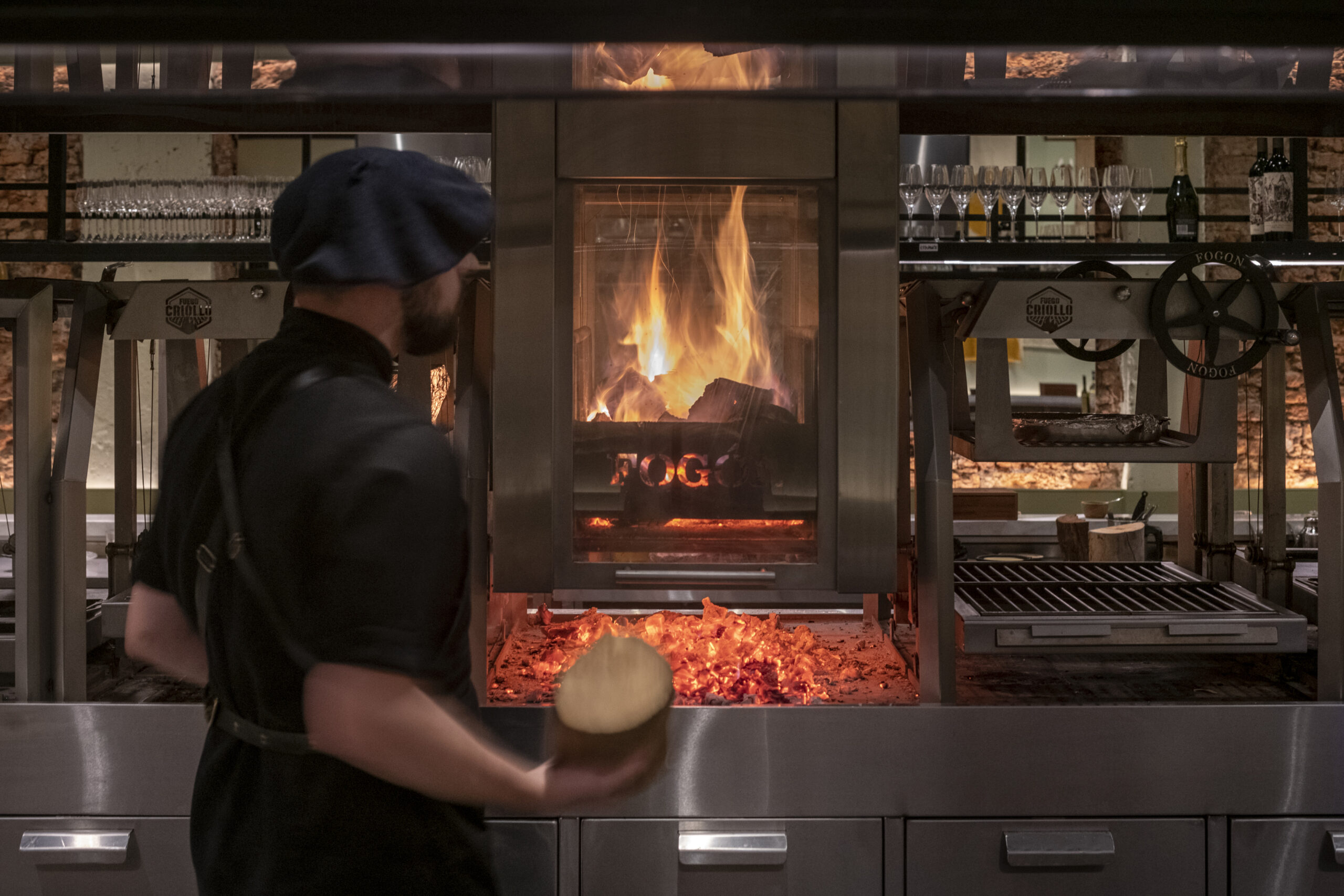
For a truly unforgettable introduction, I highly recommend Fogón Asado. It offers an immersive, educational dining experience where you sit right around the fire, watch the chefs work their magic, and taste every iconic part of the tradition in one tasting menu.
Of course, Buenos Aires is filled with countless parrillas, each with a completely different profile. You might be craving an award-winning temple of meat or a bustling, humble neighborhood joint. To find exactly where to eat in Buenos Aires when the craving hits, head over to this complete guide on The Best 8 Steakhouses in Buenos Aires.
Milanesa
To the untrained eye, it might just look like a standard breaded cutlet or a close cousin of the schnitzel. But for us, a milanesa is the undisputed-definitive-supreme-legendary-absolute-ultimate Argentine comfort food. If you want to know what to eat in Buenos Aires to truly feel like a local, this is the dish.
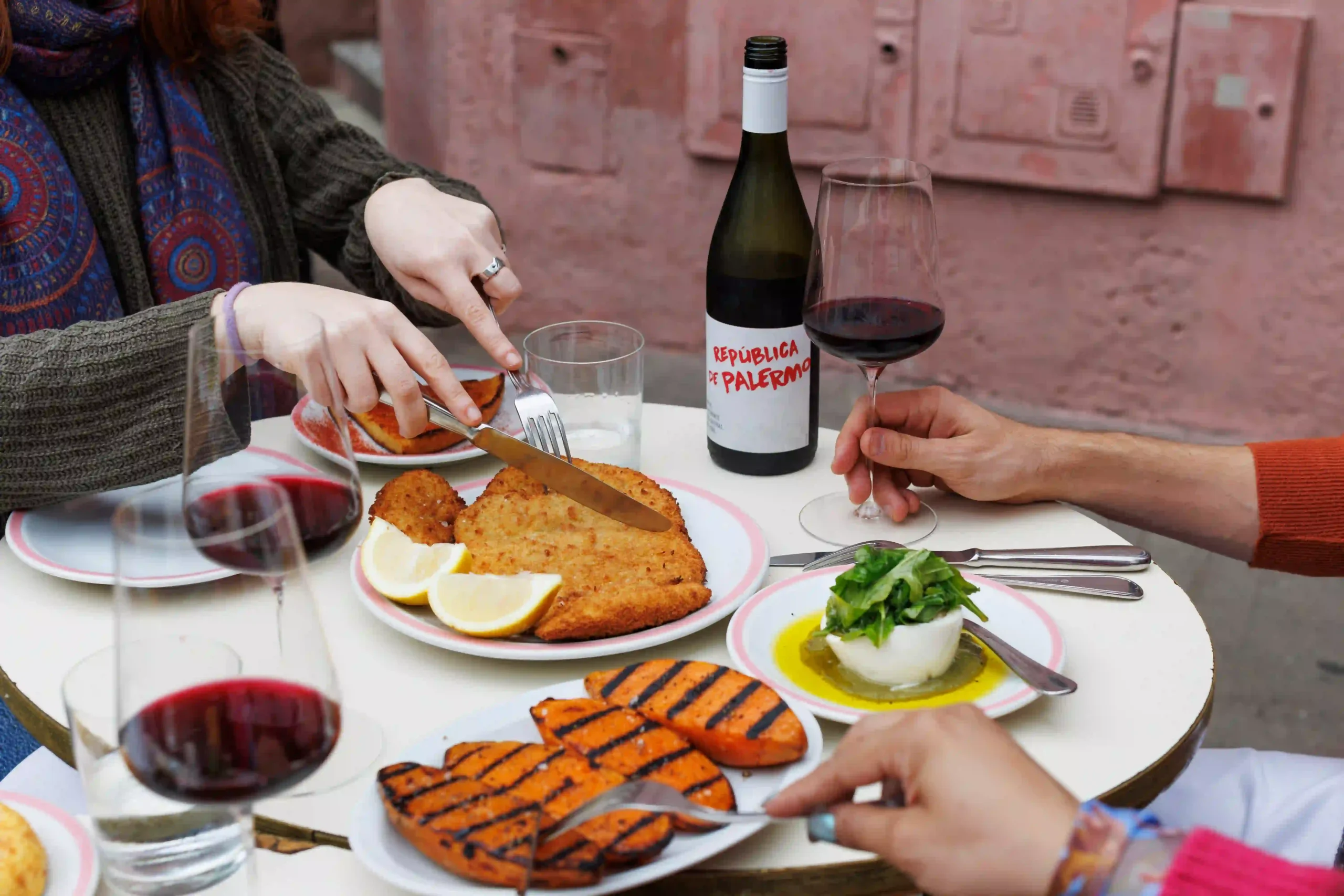
The concept is beautifully simple: a slice of beef or chicken dipped in an egg-and-garlic wash, coated in breadcrumbs, and cooked. You can bake it, sure, but frying it to a flawless, golden crisp is the absolute key. When it is perfectly fried, the breading puffs up slightly, creating a satisfying crunch that locks all the tender meat juices inside. The real game-changer is adding a generous squeeze of fresh lemon over the top right before your first bite. That hit of citrus cuts through the richness and elevates the flavor completely.
Naturally, a classic this iconic needs the right sidekick. You will always see a milanesa paired with either french fries or a rich, buttery puré de papas (mashed potatoes).
Where to eat it:
El Preferido de Palermo. We have proudly listed this iconic pink corner as one of the best restaurants in Buenos Aires, and their milanesa de bife de chorizo (breaded sirloin) is just perfect. It operates as a historic bodegón (traditional tavern) that deeply respects the classics, elevating them with top-tier ingredients and flawless service. It is a humble must-try food turned into a masterpiece.
Empanadas
Empanadas are a brilliant culinary hybrid: they could be a sit-down dish, but also street food. You can easily eat them sitting at a table, but mastering the art of eating them standing up is a true local thing. There is a very specific skill to it: you must open your legs slightly and lean forward. Why? Because a proper, authentic meat empanada is dangerously juicy.
Argentina has countless regional recipes. Luckily, the streets of Buenos Aires gather the absolute best variations in one place. If you want to order like an expert while eating in Buenos Aires, you need to recognize the three heavyweights:
La Salteña: this version holds a beautiful, mildly spicy stew of hand-diced beef, scallions, and hard-boiled eggs. The secret weapon here is the addition of tiny potato cubes that absorb every drop of flavor.
La Tucumana: These purists refuse to use ground beef. They strictly fill their dough with knife-cut matambre(rose meat) heavily seasoned with cumin. The result is dangerously juicy and flavorful. These ones are my personal recommendation!
La Cuyana: Hailing from the Andes, these are baked in scorching clay ovens. They achieve their legendary moisture through a massive amount of onions that caramelize slowly with the meat.
If you want to step away from the beef, you have incredible options. The Jamón y Queso (Ham & Cheese) is a cult favorite. Vegetarians also win big. You have to try Humita, a sweet and savory native corn pudding mixed with béchamel and cheese.
Where to eat it:
La Posta del Horneroin San Telmo. You will spot regular «El Hornero» stalls inside crowded tourist markets around the city. However, our Sherpa guide Katherine insists on taking the purist route by visiting their central production hub.
Forget everything you know about delicate Italian crusts or thin, foldable slices. Buenos Aires took the concept of pizza and transformed it into an unapologetically heavy beast. We call this local style with thick and spongy dough,pizza al molde.
The real shock factor comes with the cheese. A proper pizza porteña carries an absurd avalanche of gooey mozzarella. The cheese cascades down the sides and chars slightly against the hot metal edges. Every single bite results in an endless string of melted dairy.
To experience this like a true local, you need to go for the classic pairing. You order a slice of fainá(a dense chickpea flatbread) and place it directly on top of your pizza slice. Yes, it is an absolute gluttonous overload. Stacking dense chickpeas on top of an inch of dough and cheese probably ruins your ability to taste the delicate tomato sauce underneath. We do not care. It is a wildly excessive tradition, but trying this exact combination is a mandatory step when eating in buenos aires.
Where to eat it:
Pizzería Güerrín on Corrientes Avenue. Walking into this neon-lit institution is a complete sensory overload. The heavy aroma of baking dough and roasted garlic hits you before you even cross the doors. Trust me, if you wanted local… here you’ll watch the absolute chaos of the city unfold around you. If you prefer a modern, elevated homage to this classic, our Sherpa team also spends a lot of time eating the sourdough versions at PICSA in Palermo.
Choripán
The name explains the entire recipe perfectly. «Chori» stands for chorizo(a thick pork sausage) and «pan» means bread. It sounds ridiculously simple.
The sausage splits open over the hot coals of the grill. The casing gets a furious char and snaps perfectly against your teeth when you take that first bite. The bread must be crusty on the outside but soft enough inside to soak up all that rich, neon-orange grease.
Take this local advise: a choripán without condiments is a completely unfinished sentence. We usually slice the sausage down the middle in a butterfly cut. Then, we drown the meat in a garlicky, tangy chimichurri or a massive spoonful of salsa criolla. That sharp acidity cuts right through the heavy pork fat and balances the whole sandwich perfectly.
Taking a walk along the river at Costanera Sur and grabbing a choripán from one of the classic white food carts is a deeply traditional porteño ritual. You lean against the railing, smell the charcoal in the air, and let the chimichurri drip directly onto the pavement. Now, if you want a slightly elevated, modern take, you absolutely need to visit CHORI in Palermo. It is actually the most voted spot by our entire team of Sherpa guides. They respect the classic street food soul but upgrade it with artisanal sausages, incredible homemade bread, and a vibrant atmosphere that perfectly captures the spirit of the dish itself.
How to Taste It All (And Save Room for Dessert)
Now you know what to eat in Buenos aires… But i know that reading about the snapping casing of a hot choripán or the melted mozzarella cascading down a hot iron pan inevitably makes you hungry. Trying to fit every single one of these massive meals into a short trip becomes a serious logistical challenge. We designed our experiences at Sherpa Food Tours to solve that exact problem. We hit the streets of Buenos Aires together, grab a seat at our absolute favorite local counters, and taste all of these cultural marvels in one single journey.
We take care of navigating the menus, ordering the perfect cuts of meat, and finding the exact right portions. Your only job is to surrender completely to the flavors of the city.
Come eat with us. I promise you will leave with a very happy palate and a perfect understanding of exactly how our culture beats.
To keep your culinary journey going, head straight over to my complete guide onThe Best Argentine Desserts. I will show you exactly how and where to satisfy your sweet tooth durinig your trip.
Buenos Aires has an overwhelming, world-class culinary scene. There is no doubt that the city is packed with internationally recognized spots and historic venues. Most traditional guides will immediately point you toward the premium international cuts at Don Julio, the high-end mixed cuisine of Osaka, the multi-course Michelin experience at Aramburu, or the chaotic, beautiful slice found standing at the counter of Güerrín.
While those are fantastic experiences, just like getting lost among the food stalls of the Mercado de San Telmo, they are not always the first places we recommend. The reality of traveling is that highly viral spots often mean dealing with massive tourist crowds, booking months in advance, or occasionally falling into an overpriced tourist trap.
In Sherpa, as local guides and culinary experts, we want to show you what we actually eat and the places we genuinely love. We value the history of the spot, and the quality of the ingredients, but we also care deeply about the ambiance, the service, the budget, and the true local vibe.
That is why we have built our own curated ranking of the best restaurants in Buenos Aires. This list (with a wide variety) is designed to help you make the most of your stay, avoid the fatigue of endless research, and easily choose what better fits you.
The Steakhouse: Fogón Asado
A highly narrative, contemporary take on the classic Buenos Aires grill. Fogón takes the traditional Argentine asado to elevate it into an intimate, closed-door tasting menu where you sit directly in front of the flames.
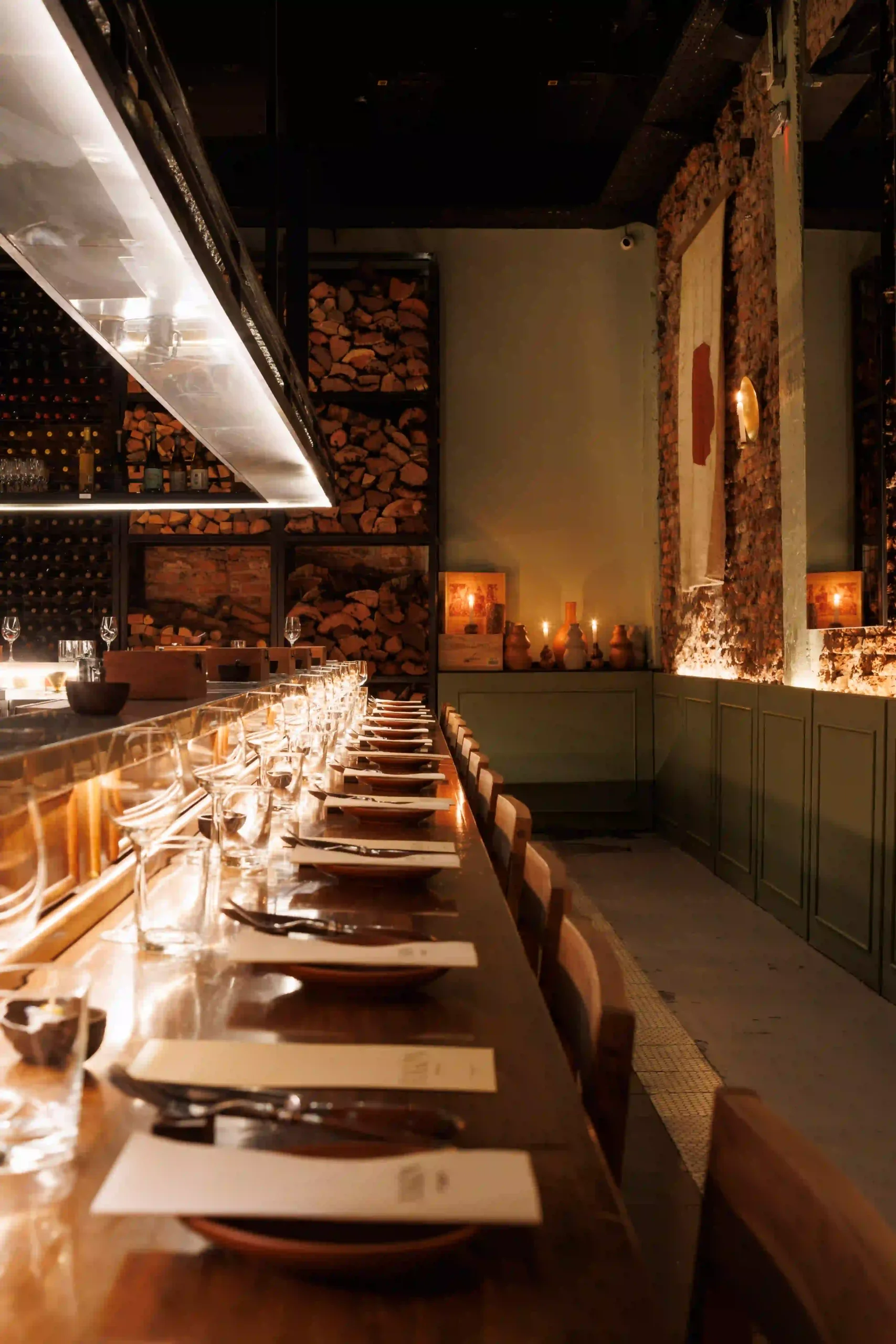
The ambiance is perfectly dim and tranquil, accompanied by service that is highly attentive yet never invasive. But the true standout is the narrative behind the meal. Being able to sit right in front of the grill, understanding exactly what you are eating and why, is our absolute best definition of a culinary experience.
Just like our guide Stan says, this immersive ritual could be perfectly described as a trance-like state with the fire, food and wine.
The Menu & Pairing
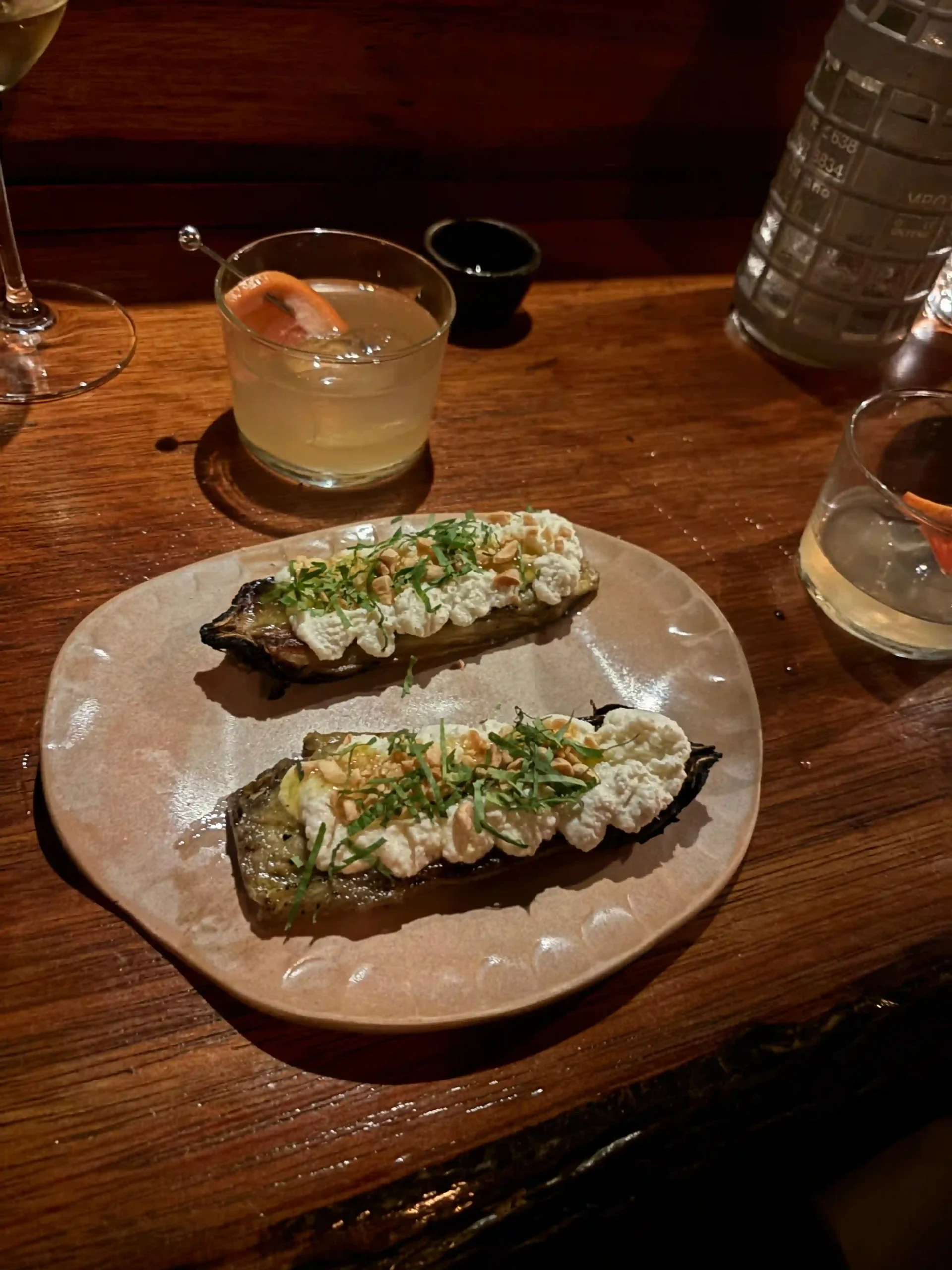
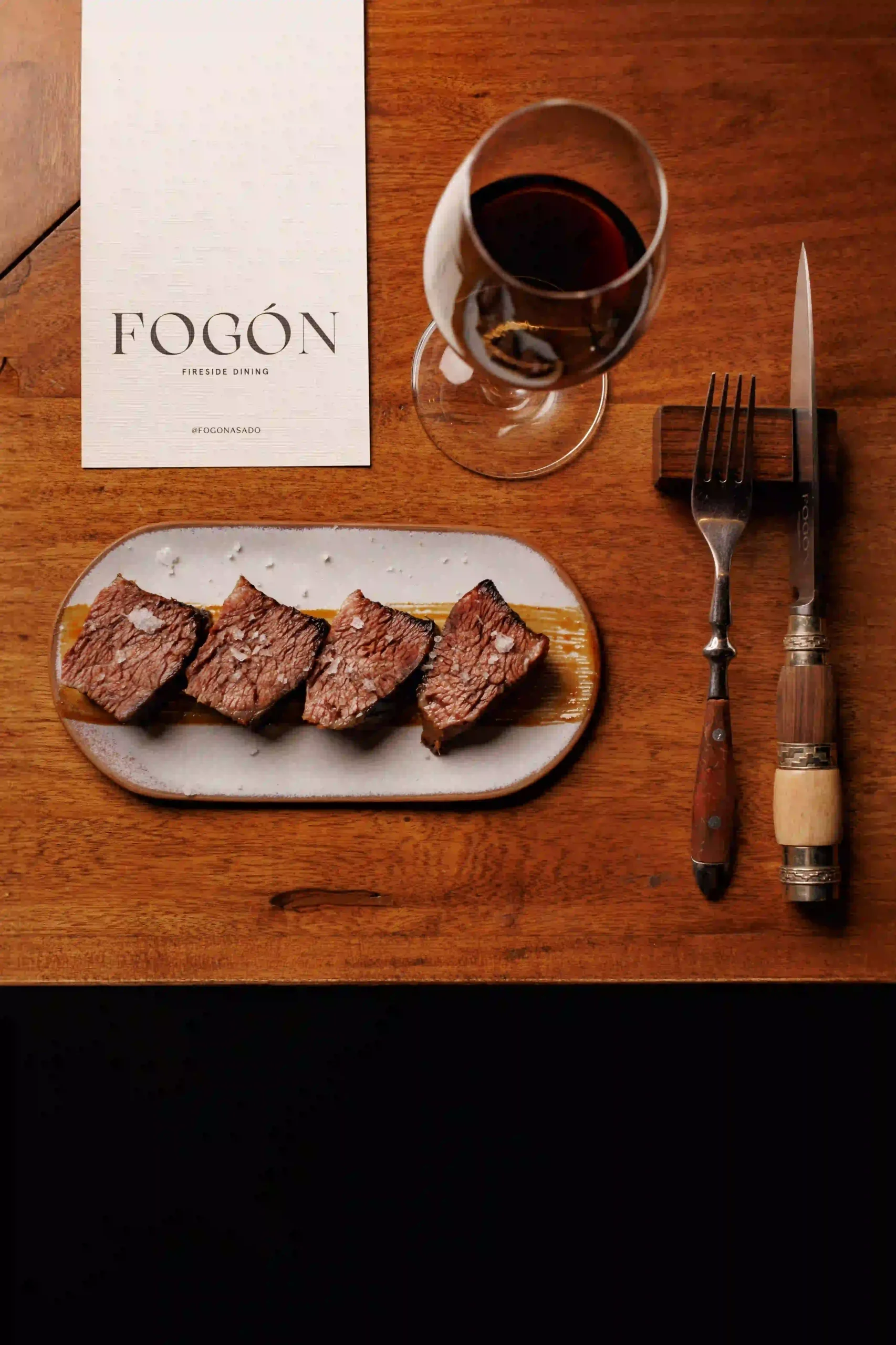
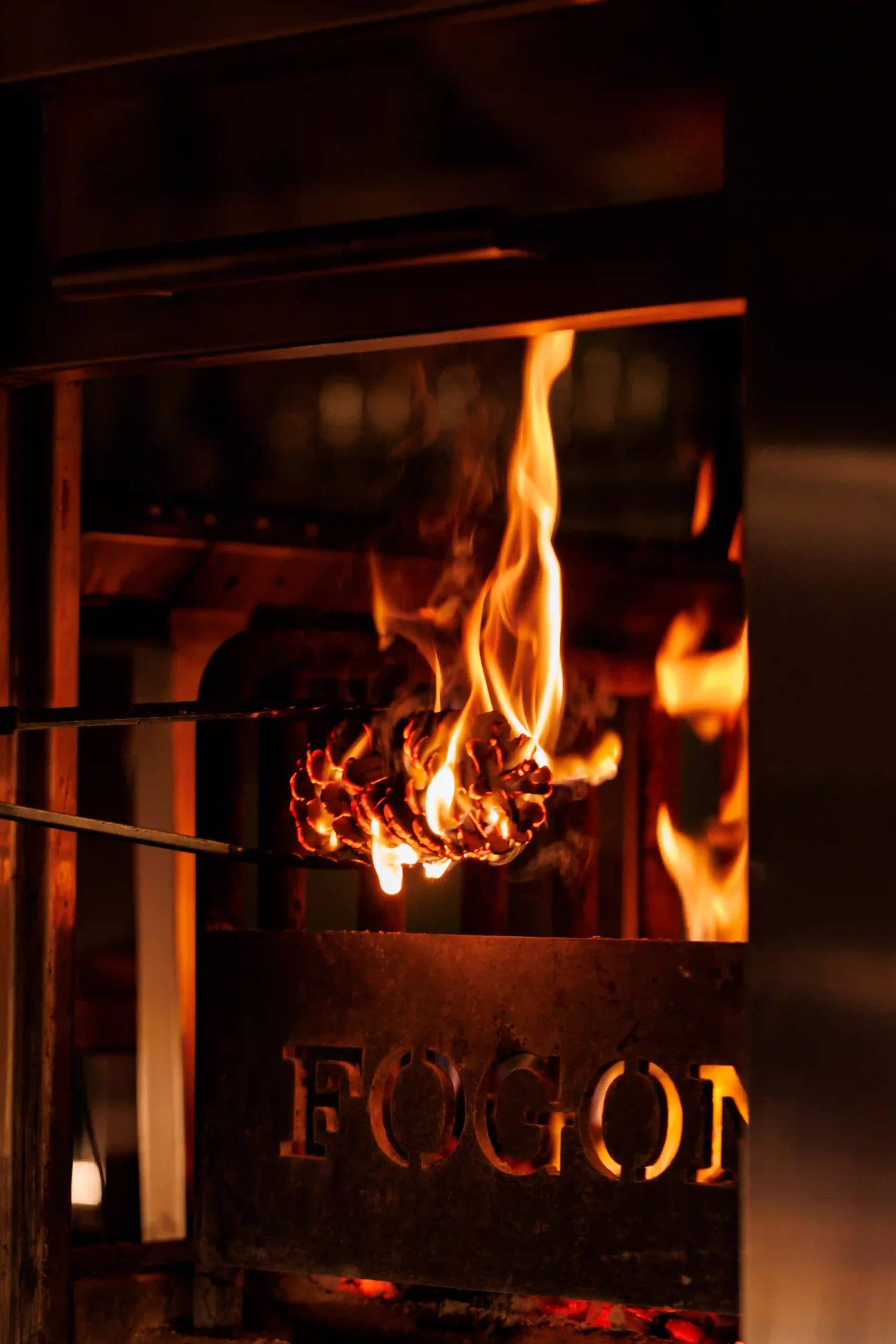
You are here for the tasting menu, and opting for the wine pairing is the best thing you could do; it accompanies the courses flawlessly. The menu is full of spectacular, refined surprises. The Asado Braseado al Papillote is excellent, as is the unexpected delight of the Marucha Roja smoked with pine cones. For that dish, they specifically burn the cones to build the fire. It imparts a completely different flavor profile than traditional firewood, a brilliant, subtle detail that builds an unforgettable narrative. There is also a Berenjena al Rescoldo (ember-roasted eggplant) served with ricotta and fresh herbs that offers a stunning contrast of flavors, textures, and sensations. It is such a well-thought-out, meticulously planned dish that relies on simple, exceptionally high-quality ingredients.
It’s impossible to miss the pink corner on Jorge Luis Borges. It looks like an Argentine movie set but smells of real food.
El Preferido isn’t the cheapest bodegón in town. You could find a decent milanesa nearby for less. But you don’t come here to save money; you come to create a memory you’ll actually want to talk about.
Stepping inside is a time warp. The walls hold the spirit of a 1950s neighborhood store, while the open kitchen moves with modern precision. When you sit down, the first thing you see isn’t the menu, but the charcuterie hanging from the ceiling like edible chandeliers. Spilling a drop of the house wine on the white tablecloth wouldn’t embarrass you here; it just feels like the night has truly started.
What truly makes El preferido one of the best Buenos Aires restaurants is the impeccable service. While classic bodegones often lean into a chaotic, loud charm, the attention here is completely flawless. Everything is exceptionally neat, and despite the rustic roots of the food, each dish arrives beautifully and carefully presented. It offers the comforting warmth of a local tavern but operates with the seamless grace of fine dining.
What to order
I have a simple policy: if there’s fainá(a savory chickpea flatbread), i order it. Here, it arrives perfectly baked. The moment you bite into it, you experience a brilliant contrast between the crispy, olive-oil-toasted edges and the dense, flavorful center. Though it is a “simple” staple of Buenos Aires cuisine, this version is just perfect.
Then comes the undisputed Milanesa de Bife de Chorizo. The breading is dry and crispy, hugging the tender meat perfectly. Add some lemon and make the best out of this Argentine schnitzel.
Budget: $$-$$$
Did you know? The building dates back to 1952, and its iconic pink facade is one of the most photographed corners in the Palermo neighborhood.
Mengano
A distinguished porteño restaurant that brings pure nostalgia to the realm of haute cuisine. Mengano reimagines classic Argentine family meals and neighborhood staples in an elegant setting.
The ambiance is dim and incredibly easy on the eyes; the space is has thoughtful details without relying on pure sensory overload. It captures the comforting essence of traditional dining but elevates it with modern techniques. It is the perfect choice if you want to experience the soul of local, homemade food but in a sophisticated, upscale environment where the innovative presentation of the plates takes center stage.
What to order
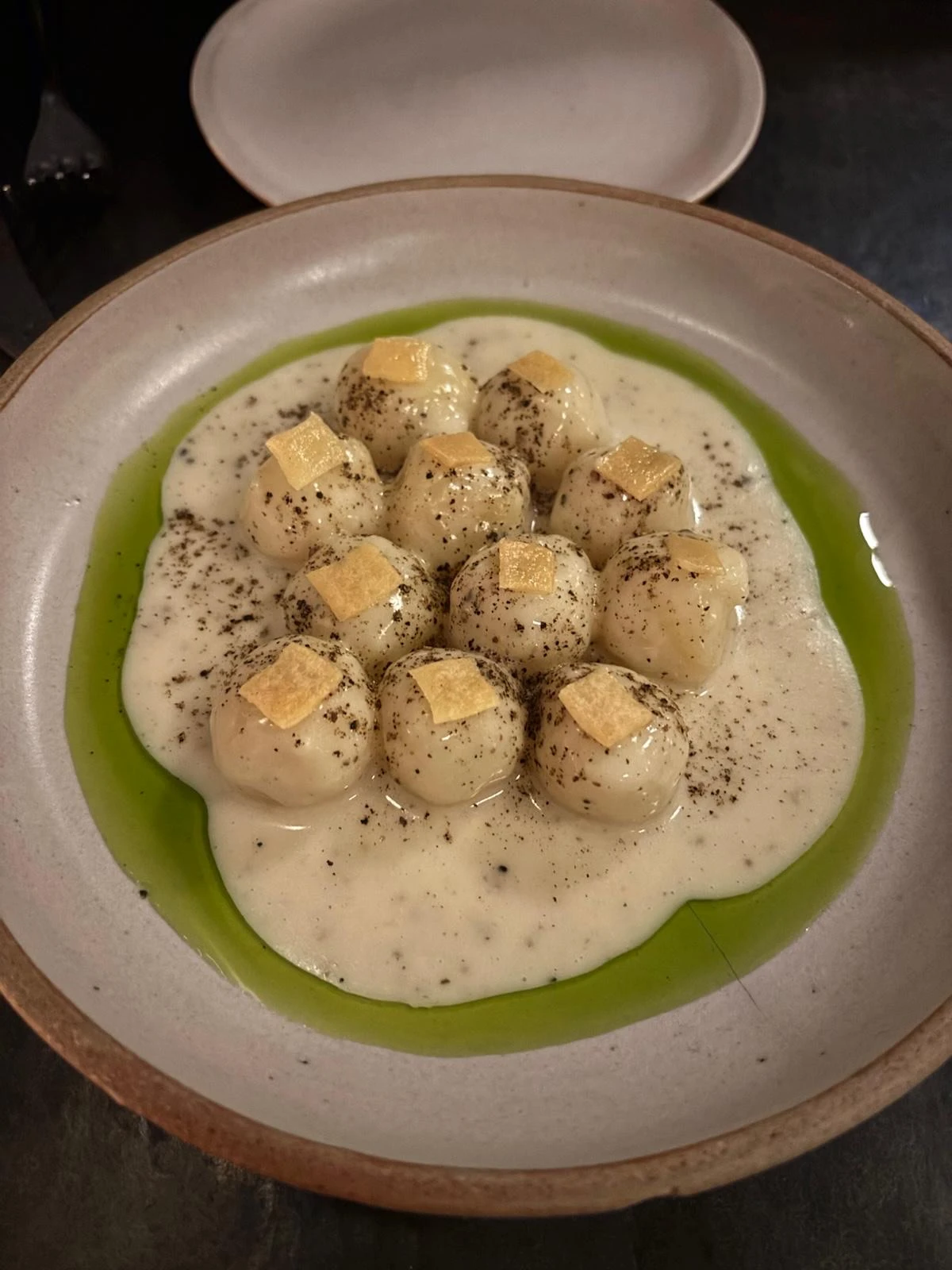
The menu is designed around platitos (small plates or Argentine tapas), encouraging you to share and taste a bit of everything. You absolutely have to order the Ñoquis chipa soufflé cacio e pepe, a brilliant, airy local twist on the Italian classic, and the Sándwich de milanesa Wagyu.
For dessert, i would go for the Rogel. It is not the rustic, towering pastry you might find in a traditional Argentine bakery; Mengano’s version offers a completely different texture and presentation. It looks incredibly modern and detail-oriented, yet it perfectly retains the sweet, authentic soul of the classic Argentine dessert.
Budget:
$$-$$$
Did you know? Mengano’s innovative approach to traditional local flavors earned it a prestigious nod from the Michelin Guide, cementing its reputation as one of the best restaurants in Buenos Aires for a modern dining experience.
The Veggie Friendly choice: Narda Comedor
A fresh, comforting, and detail-oriented space where seasonal ingredients are key. Created by renowned Argentine chef Narda Lepes, this restaurant changes the pace of the city’s famously meat-heavy dining scene.
Stepping into Narda Comedor feels like a deep breath of fresh air. The vibe is incredibly organic and local, with a bright, welcoming dining room. Every detail is carefully curated to make you feel nourished and relaxed. It is the perfect pause for a traveler who needs a delicious, high-quality break from traditional heavy meals.
What to order
The menu shifts constantly with the seasons, ensuring you always get the absolute best produce of the moment. While they do serve animal protein, their plant-forward approachmakes their vegetable dishes the true main characters. If you are searching for the best vegetarian restaurants in Buenos Aires, this is hands down the most comforting and flavorful option you will find. A quick heads-up on expectations: while the portions might appear small at first glance, they are incredibly well-balanced, nutrient-dense, and leave you feeling satisfied.
Did you know? Narda Lepes is a beloved television personality and she revolutionized the country’s food scene by teaching a notoriously meat-loving nation how to appreciate fresh vegetables, diverse global flavors, and mindful eating habits.
The Innovators
Anafe
As we said in our guide to Argentine Food, the culinary epicenter of Buenos Aires has been steadily shifting. The leafy, residential neighborhoods of Chacarita and Colegiales have become the playground for young, brilliant Argentine chefs. Safely outside the usual tourist circuits, this area is bursting with fresh concepts and culinary innovation, and Anafe is the perfect example of this vibrant new wave.
Stepping onto their cool, relaxed terrace feels like uncovering a neighborhood secret. It completely strips away the stiffness of fine dining, replacing it with an effortlessly cool atmosphere.
What to order
The menu is dynamic and a testament to the creativity of this new generation. For starters, if you lean toward fresh, acidic flavors and brilliant flavor combinations, the Stracciatella con Melón is a masterpiece. It is a juicy, creamy, and wonderfully acidic dish that mixes fresh melon, cucumber, celery, lime, and baby onions with rich stracciatella and basil.
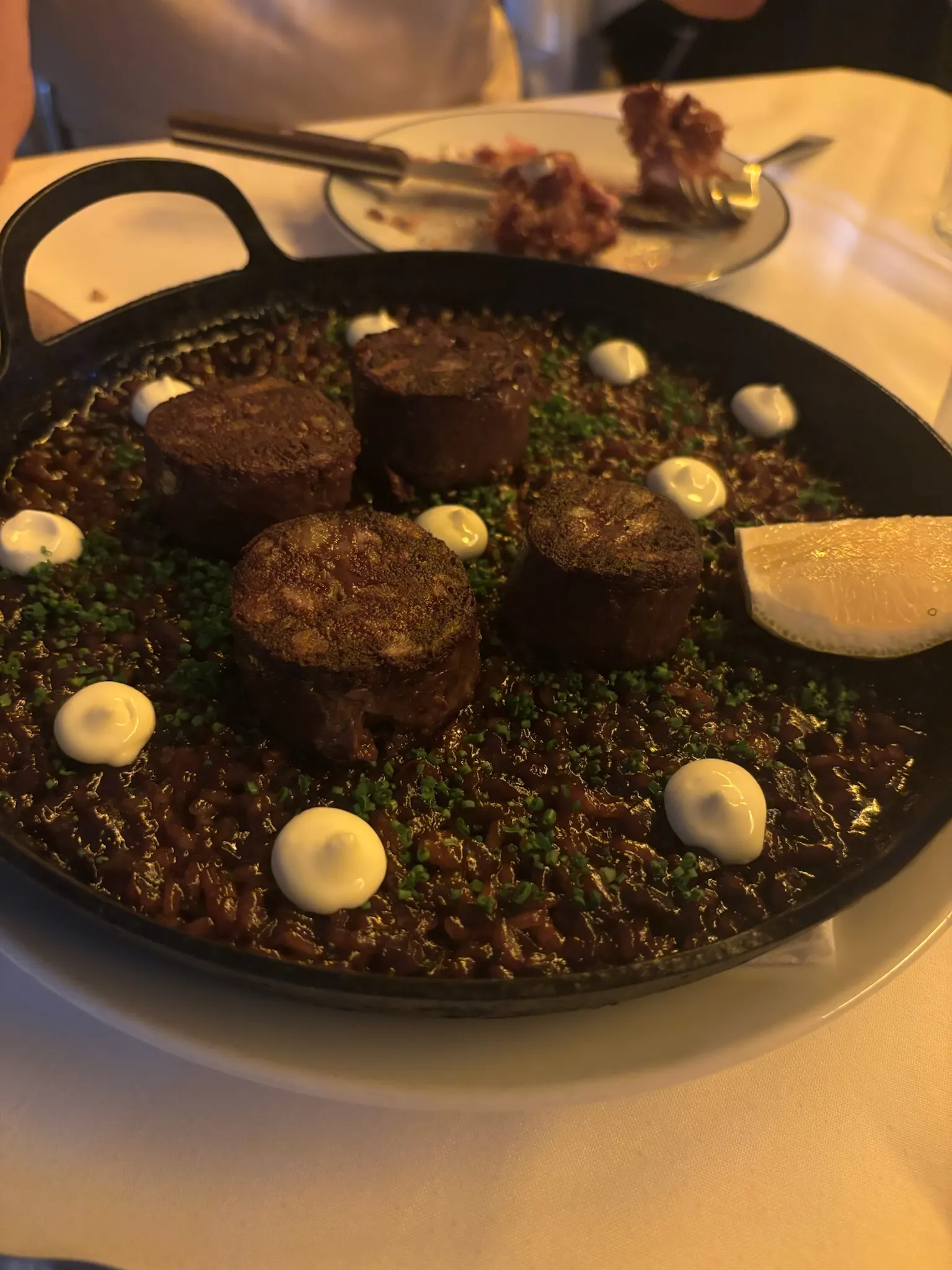
For the main course, the Arroz al Horno is truly surprising. It features a rich squid sofrito topped with creamy alioli and perfectly crispy morcilla (blood sausage). For travelers who might usually hesitate at the thought of traditional blood sausage, this modern execution is a good way to experience it. The dish delivers a stunning mix of mild and strong flavors, playing with a brilliant contrast of textures.
Budget: $$
Did you know? Anafe actually started as a secret closed-door pop-up in a tiny apartment before exploding in popularity, opening its permanent location, and eventually earning prestigious recognition.
Garabato
The latest hit from the visionary hospitality group behind other local favorites like Mad Pasta and Piedra Pasillo. True to its name—which translates to a «sketch» or «scribble», Garabato is defined by having its own unique path.
It explicitly defines itself as aneo-bistro, stepping away from the traditional nostalgia of local taverns to forge an entirely distinct culinary identity. It offers a highly creative, sophisticated menu within a relaxed, vibrant atmosphere. It is the perfect spot for a traveler who wants an innovative, boundary-pushing dining experience with a strong, independent personality.
While many popular spots in the city lean heavily on beef and heavy pastas, Garabato is an outstanding destination for high-quality fish and seafood. The must-orders here are the ceviche and the cóctel de langostinos(prawn cocktail). These dishes perfectly showcase their signature style and technique. As our guide Anthony perfectly sums it up: «In a time when it’s so easy to trick people with pretentious little plates that taste like nothing, Garabato does things right.» It is the ideal choice for a lighter, genuinely flavor-packed dinner.
Budget: $
Did you know? For the truly adventurous foodie, Garabato’s menu hides a brilliant, bold surprise: the Garra de Pato Frita (fried duck claw). This is the ultimate proof that this kitchen is not afraid to take risks and draw its own unique path.
Beyond a Simple Reservation: A Final Piece of Advice
I hope you reached the end of this guide knowing exactly where your next great anecdote will take place. I didn’t write this to hand you a boring directory of ingredients or a list of the most hyped spots in the city. I did the legwork, ate the milanesas, and drank the wine (can’t complain) so you don’t have to spend your vacation scrolling through endless, confusing reviews. I have given you the script; now you just have to choose the vibe.
So, now that I have handed you my definitive list of the best restaurants in Buenos Aires, I want to leave you with one final, crucial tip: truly live the table.
Dare to order the controversial dishes. Whether it is the crispy morcilla at Anafe or the fried duck claw at Garabato, stepping out of your comfort zone is the entire point of traveling. It is hands down the best way to immerse yourself in our gastronomy.
This is where the real magic happens. Do not worry about spilling a little Malbec on the crisp white tablecloth. Try everything, share your plates, and get a little messy. Because food here is not just an excuse to eat incredibly delicious things, but it is the most authentic way to learn about who we are as a country.
And remember, the culinary heartbeat of Buenos Aires is not solely found in its top-tier restaurants. To truly understand our palate, you have to explore every layer of the city.
By now, you have everything you need. You could easily take this list, pin the locations on your phone, and build a fantastic itinerary entirely on your own. But let me raise the stakes for a second.
Knowing which are some of the best restaurants in Buenos Aires is the first step. The real magic happens when you experience them with a local companion by your side. At Sherpa Food Tours, we don’t do generic walking itineraries. We share our city exactly the way we would with a good friend, taking you to the places where we actually choose to spend our own weekends.
How we do it is entirely up to you.
You can dive straight into the city’s culinary heartbeat by joining one of our signature neighborhood tours. We can get lost together in the historic, cobblestone streets of San Telmo, sharing plates in old-school taverns, or we can explore the vibrant, ever-evolving food scene of Palermo. You just show up, let your guard down, and we take care of the rest.
Or, if you have a very specific craving, we can design a Buenos Aires Private Experience tailored entirely to you. We navigate the impossible reservations, the language barriers, and the streets.
Ready to create a memory you’ll actually want to talk about?
What time do people usually eat dinner in Buenos Aires?
Dinner in Buenos Aires is typically served late, with locals often dining between 9 and 11 PM. For an authentic experience, embrace the late dining culture of the city.
Do you tip waiters in Buenos Aires?
In Buenos Aires, tipping waiters around 10% of the total bill is a common practice if the service meets your satisfaction. While not obligatory, tipping is a welcomed acknowledgment of good service.
What is the legal drinking age in Argentina?
The legal drinking age in Buenos Aires is 18. Most of Buenos Aires restaurants and bars will ask for identification to verify your age if you’re ordering alcoholic beverages.
You’ve heard the rumors and we can confirm it’s true: Argentina has the best steak in the world, and if you are lucky enough to visit, you should absolutely try it.
However, knowing what cut to order and where to find what you’re craving for, are the biggest challenges for hungry travelers.
If i have to be honest, my first thought when it comes to choosing the Best Steakhouses in Buenos Aires is: nothing will ever truly compete with a Sunday asado at home, surrounded by family and friends. But, as the local book La Guía del Morfi Porteño wisely points out, you simply can’t compete with emotional memory when it comes to food. So, as your guides, we’ve done the hard (and delicious) work of tasting our way through the city to bring you the absolute best alternatives. Buenos Aires is packed with incredible spots that offer every kind of parrilla experience imaginable, and this guide will give you everything you need to choose the perfect one.
Tip: If you want to skip the guesswork and dive straight into a curated tasting, paired with incredible wines and local history, you can always join us on one of our Sherpa Food Tours.
Now, let’s get to the meat of the matter. Here are the very best steakhouses in Buenos Aires.
Where to eat Asado: The 9 Best Parrillas in Buenos Aires
At the top of our list is Fogón, a unique closed-door parrilla experience with a 9-course tasting menu that redefines the traditional Argentine asado. Listed in the Michelin Guide and ranked #22 among the world’s top 101 steakhouses, Fogón brings Argentine grilling to a new level.
Dining at Fogón feels like a whole ceremony. The glowing embers of the open fire cast a warm light over the intimate, closed-door seating arrangement. It’s a deeply sensory and educational experience where you can hear the sizzle of the fat, smell the rich aroma of the selected woods, and watch the grill master work their magic right in front of you.
Here, every single detail is meticulously thought out and beautifully narrated, right down to the exceptional wine pairings perfectly designed to elevate each course. To me, what makes this spot truly special is how it strikes the perfect balance: it offers a modern, high-end, and intimate atmosphere, while remaining incredibly approachable and warmly rooted in local hospitality.
What to Order: The tasting menu is an absolute must. But if i had to pick favorites, the Matrimonio(a different take on blood sausage and chorizo) and the braised Asado al Papillottecompletely steal the show.
2 – Don Julio: The World-Class Legend
Guatemala 4699 (Palermo)
Don Julio is usually named as the #1 on the international stage, proudly holding a Michelin Star and widely considered a mandatory stop for anyone visiting Buenos Aires. Stepping into this iconic corner of Palermo, you are instantly greeted by the rich, smoky scent of premium beef and walls lined entirely with empty wine bottles signed by happy diners; a hint at the legendary wine cellar that lies beneath. It is the ultimate mecca for steak lovers worldwide, offering the absolute highest quality of meat and impeccable, traditional service.
There is no denying that the food here is spectacular. However, it’s worth noting that getting a reservation can take months, and the walk-in lines often wrap around the block. As a tip, it’s much more feasible to get a lunch reservation than a dinner one.
Still, while it is undeniably a world-class experience, if you can’t snag a table, don’t despair. Honestly, at least to me, there are other spots on this list that are absolutely on par when it comes to capturing the true soul and flavor of an Argentine asado.
What to Order: The Ojo de Bife (Ribeye) and the incredibly tender Mollejas de Corazón (Heart sweetbreads).
3 – Corte Comedor
Av. Olazábal 1391 (Belgrano)
Stepping into Corte Comedor feels like entering a modern temple dedicated entirely to the product. Born as a natural extension of a premium butcher shop operating right next door, the dining room breathes flawless technical execution. The atmosphere is fresh and slightly industrial, welcoming you with the deep aroma of dry-aged beef and smoked sausages. It is the ultimate destination for true meat purists looking for perfect technique and flavors that speak for themselves, without any distractions.
What to Order: You must start with their cured meats and artisanal chorizos, which our Sherpa guide, John, accurately describes as «simply mind-blowing.» For the main course, the Basque blood sausage and the Shorthorn Skirt Steak (Entraña) are true masterpieces.
If you are looking for a full, immersive local experience to see what a massive, real Argentine asado looks like, this is the place.
Tucked away from the typical tourist circuits, El Ferroviario is a bustling, larger-than-life dining hall that celebrates true abundance. As our guide Chiara perfectly points out, it offers an excellent, authentic porteño atmosphere.
What to Order: You cannot go wrong with the holy trinity of popular Argentine cuts: Tira de Asado (Short Ribs), Vacío (Flank Steak), and Entraña (Skirt Steak). Make sure to arrive very hungry.
Tucked away in the neighborhood of Villa Crespo, Madre Rojas is a brilliant hidden gem that often flies under the radar for most tourists. It is the absolute perfect spot for a relaxed, yet outstanding, dinner with friends where the main focus is simply great food. The atmosphere is warm, genuine, and incredibly inviting, completely free of any tourist traps. As our guide Chiara points out, it offers excellent service and a neighborhood atmosphere. This laid-back local vibe paired with a true dedication to top-tier meat quality and flawless grilling techniques, make it one of the best steakhouses in Buenos aires.
What to Order: You absolutely have to try their dry-aged meats.
Their picaña is also a great choice if you are looking for deep, incredibly tender, and concentrated flavors.
Although its facade might not catch your eye and their social media doesn’t really do it justice (it’s a little… rustic), Parrilla Peña represents the unfailing tradition of downtown Buenos Aires. Our goal is to bring you to these truly different, local spots. Do not come here looking for an «aesthetic» experience; come strictly for the unbeatable flavor. True to the authentic bodegón style, it stands out for its solid grilling and a genuine atmosphere that is absolutely perfect for a relaxed dinner. Here, you will find classic, experienced waiters and generous portions.
What to Order: The eggplant vinaigrette is a must-try starter. For the main course, you cannot go wrong with the classic Tenderloin (Bife de Lomo) paired with a good portion of french fries.
If you are looking to escape the tourist menus and eat exactly where the neighbors eat, this is your place. I like to think of it as an authentic «speakeasy parrilla,» SecreTito is a hidden treasure where Argentina’s two greatest passions beautifully collide: outstanding food and soccer. Completely themed around «La Academia» (Racing Club), the dining room vibrates with a contagious, vital energy. I might not be a Racing fan myself, but I absolutely applaud the initiative. It is a fun, clearly immersive experience that is absolutely perfect if you want to try something genuinely different.
What to Order: Make sure to arrive very hungry. The portions here are incredibly abundant and specifically meant to be shared, making classic cuts likeVacíoor Asado de Tirathe perfect choice for the table.
If the intense football energy at a local parrilla got you fired up, keep the passion alive by checking out our guide to the best sports bars in Buenos Aires.
8 – Cabaña Las Lilas
Av. Alicia Moreau de Justo 516 (Puerto Madero)
If you want fancy, this is fancy. Cabaña Las Lilas has maintained its prestigious reputation over the years thanks to its unbeatable waterfront location in Puerto Madero and its long-standing trajectory. It offers exceptional, top-tier service paired with beautiful views of the river. Beware: prices are high, as is the norm in Puerto Madero.
This spot is the perfect choice for corporate profiles, business dinners, or anyone wanting a truly fancy, premium night out in the city.
What to order: While they offer an array of premium options, I highly recommend their Asado de Tira(Short Ribs). Although it isn’t usually my go-to cut, here it is an absolute standout. The meat is incredibly tender and falls right off the bone, perfectly showcasing the top-notch quality that defines this steakhouse.
How to Navigate a Buenos Aires Parrilla (Like a Local)
However, we completely understand that when you are traveling, sitting down at a traditional steakhouse and trying to decipher a menu entirely in Spanish can be quite intimidating.
To help you skip the confusion and order with total confidence, here is your… cheat sheet.
The Essential Argentine Beef Cuts
When you sit down, these are the words you will see on the menu.
The Starters (Achuras & Classics):
Provoleta: Grilled pulled-curd Provolone cheese (Not a meat cut, but an absolute must-order starter).
Chorizo: Argentine sausage.
Morcilla: Blood sausage (if you have the chance, go for the Basque version).
Mollejas: Sweetbreads (A local delicacy worth to try).
Chinchulines: Small intestines (if these are properly cooked, could be my top #1).
The Main Steaks:
Entraña: Skirt steak.
Ojo de Bife: Ribeye steak.
Bife de Chorizo: Sirloin.
Lomo: Tenderloin.
Vacío: Flank steak.
Cuadril: Rump steak.
How to Order Your Steak (Doneness Levels)
Argentines typically prefer their meat cooked a bit more than foreigners. So, if you want to choose your level, here is how to ask for your perfect temperature:
Vuelta y vuelta («Turn and turn»): The meat barely touches the grill, is quickly flipped, and served. If you want your steak rare, this is what you need to order.
Jugoso:Medium-rare. Keep in mind that in Argentina, jugoso means a warm pink center; don’t order this expecting a blue or bloody cut.
A punto:True medium, with just a hint of pink in the middle.
Pasado de punto: Between medium and medium-well.
Cocido:Well done.
As a true Argentine, my personal go-to usually falls into one of the last two categories. However, the grill masters at these steakhouses are absolute experts. Don’t hesitate to ask for their recommendation on which temperature will best highlight the specific flavor and texture of the cut you are ordering.
Once you finish your steak and Malbec, the night is still incredibly young. Keep the fun going and discover our top recommendations for the 10 best bars in Buenos Aires.
Discover the Real Buenos Aires with Sherpa
Experiencing a true Argentine asado goes way beyond simply sitting down for a great steak; it is community, abundance, and sharing a moment. At Sherpa Food Tours, we believe that gastronomy is an undeniable part of any journey and the best way to truly understand a country’s culture.
As local experts on Argentine food, we created this travel guide to give you our top recommendations, but our mission goes much further than that. We are passionate guides who want to invite you to truly live Buenos Aires, to eat Buenos Aires, and to understand the very soul of Argentina through its most cherished flavors.
That is exactly why we created our signature experiences: the Buenos Aires Local Foodie Adventure in Palermo, and the San Telmo Street Food and Market Expedition. On our tours, we don’t just take you to eat, although we absolutely make sure you taste the most delicious cuts the city offers. Over the course of 10+ tastings and drinks, we guide you through all the iconic dishes. Our expert local guides navigate the menus, the language, and the hidden neighborhood streets so you can skip the tourist traps and focus on an immersive, authentic experience.
Whether you choose to brave the menus on your own or join us for a complete culinary crash course, our best advice is always the same: arrive with a very healthy appetite, order a bottle of wine and take your time.
As Argentines, we have a mean sweet tooth. It comes as no surprise that Argentine desserts are a pretty important part of our gastronomy. In fact, we live by a very specific (and scientifically questionable) biological theory: Dessert goes to a different stomach. If you see a local clutching their belly after a massive steak dinner, claiming they can’t take another bite, don’t be surprised if they immediately order a Flan Mixto.
In our minds, there is always room for dessert, especially when it’s as good as ours. (Are we bragging? Maybe a bit, but we have the stats to back it up).
Fair warning: we are known for adding dulce de leche to pretty much everything, so this list will include several desserts which prominently feature it. However, some contenders have made it to our top 10 Argentine desserts without the help of Argentina’s favorite ingredient.
Let’s get into it!
1- Dulce de leche
In Argentina, the Dulce de Leche is the undisputed MVP. And I don’t say that lightly. Think of it as the «Minimum Viable Product» of our sweets, though there is nothing «minimum» about it. It is the cornerstone of our confectionery. From the dulce de leche, almost every other dessert on this list is born.
Simply put it is made by slowly heating sugar and milk together for hours. But flavor-wise? It is what caramel wants to be when it grows up. Deeper, creamier, and strictly dairy-based.
The Legend
We love a good origin story. Legend has it that dulce de leche was born from a fortuitous error by a maid serving two of our most famous historical figures: Generals Rosas and Lavalle (but that’s another story). Apparently, she forgot a pot of milk and sugar on the stove and when she finally remembered it, the liquid had condensed into the thick, brown nectar we worship today. A happy accident, indeed.
How Argentines eat dulce de leche
While it is the main ingredient for almost every dessert you are about to see on this list, it also holds a special place just as it is (that’s what people who eat from the spoon say).
(Not that) Fun anecdote
When I went on a student exchange program, I brought a jar of dulce de leche specifically to share with my host family. I wanted them to try our national obssesion. Long story short: they never got to try it. I ate the whole jar myself… I think it was partly because it is delicious, but mostly because it was the only cure for my homesickness.
There is something inexplicably warm and homey about DDL. Sure, it can be cloying if you overdo it, but It is kind of that scene of Ratatouille where Ego takes a bite and is transported back to his childhood.
Sherpa Tip
If you ever have the «I’m broke but I want dessert» issue, try Banana con Dulce de Leche. It’s not an Instagram-friendly dessert, but trust me tastes great.
2- Alfajores
Alfajores, also known as “Argentine cookies” are one of Argentina’s most beloved desserts and afternoon snacks. Alfajores are cookie sandwiches with (usually) a dulce de leche filling, sometimes featuring a chocolate or powdered sugar glaze.
There are alfajores with different fillings, such as fruit jam or chocolate mousse, but really, most people think of dulce de leche when they think of alfajores.
There are alfajores at any price range and they can be bought at kiosks, supermarkets, bakeries or premium shops like Havanna or Rapanui which bridge the gap between commercial availability and artisanal quality.
If you are looking for something a little bit more gourmet, head to a good café or bakery. Try either the chocolate glaze alfajores or the alfajores “de maicena”, which are made with cornstarch and then rolled around in grated coconut which sticks to the dulce de leche, giving them their signature look.
Don’t attempt to eat an alfajor de maicena without a good cup of coffee (or any drink you like) in hand. Cornstarch absorbs moisture, so the cookie is quite dry. This won’t be a problem as long as you have something to drink.
A conito is what you get when you take an alfajor and go “How can I make this more about the dulce de leche?”. A conito is a plain vanilla cookie topped off with a generous helping of dulce de leche, and then covered in chocolate. The most popular version of conitos are Havanna’s “havannets”, but you can find them in many bakeries as well.
4- Flan Mixto
Though it is not from here, Flan or creme caramel is a local favorite and a staple dessert in any self-respecting bodegón. A flan is a custard-type dessert, made with eggs, milk and sugar. Us Argentines love flan not just because is a dessert typically prepared by our grandmas, who usually have a coveted recipe that is a family secret.
While you can order your flan “as it is”, the authentic local version is flan mixto, which incorporates whipped cream and dulce de leche. It’s very common to split a flan mixto between two, as its sweetness factor can be a bit much, especially after a generous meal.
5- Helado or Argentine Gelato
Ice cream might be pretty universal, but ours is arguably one of the best in the world. We owe this to three factors:
We have a long-standing tradition of artisanal ice cream making.
We eat ice cream all year round (winter you won’t stop our plans).
Our ingredients are top-notch, like fresh berries from the south and pasture-raised dairy.
Must-try local flavors include dulce de leche ice cream (of course) and tramontana (cream, dulce de leche and chocolate cookies). If you’re into berries, i would definitely go for patagonian berries or «Frutos del bosque».
Be prepared because there are several dulce de leche ice cream variations.
Where to go for Gelato?
The list of artisanal spots is endless, but a safe bet that never disappoints is Rapanui. This local brand is not only quality consistent but also representative of our traditional and artisanal gelato.
However, picking an ice cream shop in Buenos Aires can be difficult. If you want to dive deep into the best spots, flavors and the specific etiquette of ordering, check out Sherpa’s travel Guide on Argentine Gelato.
6- Panqueques
If you’ve read the word “panqueques” and thought of pancakes, you’re wrong, but not by far. Our panqueques are thin, much closer to a French crêpe. They are the a versatile dough (literally and figuratively). In the savory world, you’ll see them wrapping ham and cheese or rolled up and covered in sauce to create canelones .
I decided to includ them on this list strictly for their dessert performance. When filled with dulce de leche (i told you it was everywhere), it becomes a top-tier combination. The warmth of the freshly made crepe melts the filling slightly, turning it into a gooey masterpiece. It is simple, effective, and delicious.
Where to try panqueques?
You are most likely to find the authentic version at a Bodegón, where they often serve them «quemado» (with a burnt sugar crust).
7- Postre Vigilante
Postre vigilante is a typical Argentine dessert which consists of a slice of cheese topped with a slice of jam or jelly, usually quince (dulce de membrillo) or sweet potato (dulce de batata). Note that the jam used is more akin to a paste, therefore the mentioned jam slice.
In the northwest of Argentina, a regional variation features goat cheese and cayote (squash) jam. Likewise, in the Patagonia region, Atuel cheese (similar to French Port Salut) may be served with elderberry jam.
Rumor has it that the name “Postre Vigilante” originated in a Palermo establishment sometime during the 1920s. Apparently, the dessert was originally offered under the name “queso y dulce”, but became very popular with the officers of a nearby Police Station, who went to this place to grab a quick lunch and quicker dessert. The place changed the name to “Postre Vigilante” as vigilante means “watcher”, which is slang for cop.
I’ll give it to you straight: I don’t like this one.However, I still think you should try it. At Sherpa, we believe that our food is an essential part of our culture, and trying everything—even the things that sound odd—is the best way to truly experience a country. It is a polarizing classic: half the population loves it, half doesn’t. You need to take a bite to see which side of history you stand on.
8- Chocotorta
Chocotorta is the quintessential Argentinian dessert. While we may share many recipes with Uruguay, Italy and Spain (and pretty much everyone else in the world if you take a look at our immigration history), Chocotorta is a cake we can confidently say is 100% Argentinian.
Chocotorta came to be in 1975, when the Bagley Company caught wind of a dessert that had become very popular in some towns in the Santa Fe Province. This dessert featured their Chocolinas: a plain rectangular chocolate cookie (that’s literally it).
Bagley, in association with a cream-cheese company, added a few tweaks to the recipe, and started a marketing campaign to promote the newly baptized “Chocotorta”. It was an instant hit.
The beauty of Chocotorta lies in its simplicity: it takes only 3 ingredients to make a chocotorta (4 if you are being fancy), and anyone can prepare it. It requires no baking, and it’s practically foolproof (i can confirm). It is that delicious that in 2020, it won the best dessert in the world award.
Though we are experts on argentine cuisine, we cannot recommend a specific spot to try chocotorta since it is a gatherings dessert. Want to make it yourself? Check exactly how simple it is, in this Chocotorta Recipe, from our friends at The Argentine Experience.
9- Torta Rogel
Rogel cake is Argentina’s take on a mille-feuille or napoleon. Each layer of puff pastry is separated by a layer of dulce de leche. The cake is topped off with Italian meringue. Rogel cake is also called alfajor santafecino, as it originated in the province of Santa Fe (yeap, just like chocotorta).
I’ll be completely honest: this is not my personal favorite. To me, it lacks the complexity of other desserts on this list. It’s nothing «special» in terms of innovation. However, I can’t deny that it is tasty. If you tried dulce de leche and loved it, you will likely enjoy the Rogel. It delivers exactly what it promises.
10- Bonus track: Franui
Look, we didn’t invent raspberries, and we didn’t invent chocolate. But we can’t help but add this to the mix since Rapanui (a chocolate maker extraordinaire and local trendsetter) put them on the map. They take fresh raspberries from the Patagonia region and double-dip them in chocolate: first in white chocolate, and then in either milk or dark chocolate.
While this is a modern invention and not a «traditional» dessert like the others, I’ll go on record: this is my personal favorite on the entire list. It is a perfect 10/10. Why? Because of the balance. The acidity of the fresh fruit cuts right through the sweetness of the chocolate, creating a bite that is refreshing rather than heavy. You can really taste the quality of the local ingredients and the artisanal process made right here on our soil.
Where to get Franui
This is not a sponsored entry, by the way (but if Rapanui is reading this, i’m open to it…). Now, for real, i just happen to really like them and don’t want you to miss out. This brand has several franchises in Buenos Aires and major cities, so you don’t have to go all the way to Patagonia to try them (though you definitely should visit the south if you can—it’s lovely out there).
Why These Desserts? Our Selection Criteria
You might be wondering: «Is this just a random list of sugary things?» Absolutely not. Choosing only 10 desserts in a country obsessed with sweets was tough work (i had to taste-test a lot, purely for research purposes, of course).
But i didn’t just pick the tastiest ones. This is the criteria:
1. Cultural DNA: These are Argentine desserts that carry a symbolic meaning in our daily lives. They are the grand finale of our Sunday family lunches, the centerpiece of our birthday parties, or the comfort food we turn to after a long day. You can’t understand Argentina’s heritage without understanding its sweet tooth.
2. Beyond Dulce de Leche (Sort of): Okay, i know i said Dulce de Leche is the MVP, but we wanted to show you range. We made sure to include the fruit lovers, the texture freaks, and the chocolate purists. Argentine sweets are diverse, and your palate deserves the full tour.
3. The «Real Life» Factor: Let’s skip the fancy, microscopic desserts. These are the sweets Argentines actually eat.
4. The Sensory Rollercoaster: The mix of textures is key. From the crunchy to cloud-like or even frozen. Eating your way through this list isn’t just about taste; it’s an experience.
In short: we chose the icons, the ones we want you to try before you leave.
Myths and misconceptions about Argentine Desserts
Are medialunas an argentine dessert?
We’ve seen folks including medialunas in their lists and while medialunas are certainly sweet, they are more of a breakfast or merienda (afternoon snack time) treat than dessert.
What about Argentine pastelitos?
Yet again, pastelitos (square puff pastry treats with jam filling) are not technically a dessert but rather an afternoon snack. We eat them mostly during national holidays (and with mate, of course).
Is torta chajá from Argentina?
As much as we like chajá cake, it was created in Uruguay. You will find it in many local bakeries, but it’s not ours to claim.
A Journey Through Argentine Flavors
As you can see, Argentina’s desserts are a testament to our history. These are a chaotic but delicious blend of European and native heritage. From the humble dulce de leche that binds everything together to the modern freshness of a Franui or our artisanal gelato, each bite comes with a little of our identity.
If it sparked your curiosity and want totaste the Real Buenos Aires, you’re are looking at the right thing. At Sherpa Food Tours, we believe the best way to understand a culture is to eat it. We are experts in navigating this city’s culinary landscape, and we love nothing more than sharing it.
On our tours, we don’t just feed you (though, trust us, you will leave full). We dive deep into a culinary journey that covers everything: savory staples, wines, and—of course—the iconic desserts you just read about.
Ready to dig in? Don’t just read about it. Taste it.
Not ready to book yet? No problem. You can keep training your appetite by reading our Introduction to Argentine Gastronomy. It’s the perfect appetizer to understand what makes our kitchen so special before you arrive.
«Tell me what you eat, and I’ll tell you who you are.» It might be a slightly exaggerated twist on the old saying, but from my point of view, food reveals much more about our culture, history, and daily rhythm than it seems.
Our cuisine is a map of who we are. Argentine food is the legacy of the immigrants who arrived on ships, blended with the roots of our native people. It is the story of our Argentine soil, from the fruits that ripen into world-class wine to the endless Pampas where our renowned beef is raised.
Climate conditions, history, and culture condense onto our plates. And it is around these flavors, that we have crafted rituals that move far away from the notion of food as fuel, transforming the act of eating into something to be shared, enjoyed, and lived.
This guide is my personal take on what Argentine food truly is. Consider it a roadmap for you to know what to try, where to find its best version, and the essential tips you need to dive deep into the culinary life of Argentina.
What’s on the Menu
The Rhythm of Eating in Buenos Aires(when and how we eat)
The Traditional Savory Dishes
The Street Food Ritual
The Sweet Heritage
What Argentines Actually Drink
Experience the city like a Local
The Local Eating Rhythm in Buenos Aires(When & How we Eat)
Before we dive into what to eat, you may need to dive into the unwritten culinary rules.
The Timetable: When we Eat
Breakfast
Here, the morning is sweet and simple. Maybe it is because the day can get complicated later, so we prefer to ease into it. It’s usually a café con leche paired with medialunas(our smaller, stickier, sweeter version of croissants) or tostadas (toast) with cream cheese, butter or dulce the leche. It’s quick, and usually happens between 8:00 AM and 10:00 AM.
Lunch
Usually between 1:00 PM and 3:00 PM. It can be a quick bite or a long, wine-fueled affair if it’s a Sunday. On workdays, however, we keep it practical.
Merienda (Tea Time)
This is the bridge between lunch and our late dinner. It happens around 5:00 PM to 7:00 PM. It’s socially acceptable to drink more coffee, mate, or tea, accompanied by something sweet. Do not skip this, or you won’t make it to dinner.
Dinner
This is the biggest shock for travelers. If you show up at a restaurant at 7:00 PM, you will likely find the staff still setting the tables. Locals eat late. 9:00 to 10 PM is prime time.
The Food Venues Landscape in Argentina
There are many kinds of restaurants in our gastronomic culture and each brings something different to the table (literally and figuratively). Let me tell you a bit about them, and how to identify what you’re looking for.
Bodegones
These are the keepers of our history. Picture traditional canteens, often decorated with hanging hams, old sodas, and maybe some soccer memorabilia. They serve «grandmother-style» argentine food: huge portions, homemade pasta. You come here for the noise, the waiters who call you «maestro,» and the nostalgia vibes.
Parrillas
The temples of fire, the steakhouses. From upscale dining rooms to hole-in-the-wall joints with a massive iron grill. This is where the Asado happens.
Cafés Notables
These are coffee bars officially recognized as cultural heritage in Buenos Aires. Frozen in time, filled with dark wood, leather, and literary ghosts. They are not into finding the perfect «single origin» coffee bean (please, don’t you dare asking for a flat white). These spots are meant for reading a book and feeling like you are in the 1920s.
Specialty Coffee Shops
The modern wave arrived in Argentina a few years ago. Specially in the big citys like Buenos Aires, Córdoba and Rosario, Minimalist aesthetics, flat whites, and sourdough avocado toast. They are the sharp, hip contrast to the classic café.
Las Pizzerías
Usually bright, loud, and chaotic (like the city itself). These are not romantic spots; they are fast-paced temples of mozzarella where many locals eat a slice «de parado» (standing up) at the counter.
Panaderías (Bakeries)
There is one on almost every block. It is a daily stop for a loaf of bread or a pastrie. The first time I lived abroad, it was a shock to see bread sold mostly in supermarkets. Here, it is baked fresh just around the corner, and you can taste the difference.
Street Food
While we don’t have food carts on every corner, we have our specific spots, mostly around parks, festivals, riverwalks and, crucially, soccer stadiums.
The Traditional Savory Dishes
Asado
First, a clarification: please do not translate Asado as «Barbecue.» It is a noun with a double meaning. Yes, it refers to the argentine food, but it is also the event itself. You can eat an Asado, but more importantly, you go to an Asado.
It is a ritual of patience, fire, coarse salt, family, and friendship. It is not just about the meal; it encompasses everything that happens before the fire is even lit and the long hours of conversation that follow eating (the sobremesa).
For us, meat is a source of national pride, but the secret isn’t just the product; it’s the ceremony. Every cut has its science, and every Asador (the designated cook) has their tricks. When the meat finally hits the table, there is a sacred moment where we all clap «Un aplauso para el asador» to honor the effort. It’s communion.
To navigate the grill, these are some of the cuts you need to know:
Las Achuras (The Starters): These are kind of “the warm-up”. This includes Chorizo (sausage), Morcilla (blood sausage), and my absolute favorite, the Mollejas (sweetbreads).
Tira de Asado (Short Ribs): The classic Argentine cut. Strips of ribs cut across the bone. It is flavorful, a bit fatty, and best eaten with your hands.
Vacío (Flank Steak): This is my top 2. It’s a thick, fibrous cut that protects its juices with a layer of fat. It requires slow cooking, but the result is incredibly tender.
Matambre (Rose Meat): A very thin cut that gets crispy on the grill. Though the «Matambre a la Pizza» (grilled with tomato sauce and melted cheese on top) is a great choice, for an asado I prefer the classic version finished with some lemon on top .
Entraña (Skirt Steak): A thin, fibrous cut that is intensely juicy. It cooks fast and packs a punch of flavor.
Bife de Chorizo (Sirloin): The thick, tender steak that made Argentina famous worldwide.
You can’t leave Argentina without experiencing an asado, and the best way would be in the backyard of a local friend. That is the honest truth.
However, if you don’t have that invitation just yet, Buenos Aires offers incredible alternatives, including worldwide recognition restaurants, immersive educational experiences, or simply relaxed neighborhood spots with top-tier meat. Lucky you, I have mapped them out.
I get offended when I see «Milanesa» listed on the «Kids Menu» in international spots. For us, this is serious business. For sure, it is the taste of our childhood, but also the ultimate comfort food, and an absolute staple of the local diet. It’s a thin slice of beef (or chicken), breaded and fried (or baked) to golden perfection. Simple? Maybe.
I have tried similar dishes abroad, and the texture is never quite right. The secret is the Pan Rallado. Unlike the coarser crumbs or Panko often used elsewhere, our traditional breadcrumbs are ground very fine. This creates a compact, golden crust that clings to the meat like a second skin, absorbing just the right amount of flavor without becoming oily.
While the undisputed sides are french fries or mashed potatoes (puré).If you are at a restaurant, I strongly recommend asking for a «Puré Rústico» (rustic style) or one with herbs. It elevates the experience.
Empanadas are a hybrid: they are a dish, but they are also street food. You can eat them sitting down, but there is a specific skill to eating them standing up: open your legs slightly and lean forward. Why? Because a good meat empanada is juicy, and «hot grease vs. clean shoes» is a battle you don’t want to lose.
While there are as many versions as there are provinces, in Buenos Aires you can find them all. To order like a pro, you need to know the 3 regional heavyweights:
La Salteña: This one is usually baked. It is filled with knife-cut meat, hard-boiled eggs, scallions, and cubed potatoes. They often pack a spicy punch.
La Tucumana: They generally use matambre (rose meat) cut strictly by knife (never ground beef). They are incredibly juicy and seasoned with cumin. All empanadas are good, but these are absolutely great.
La Cuyana (From Mendoza/San Juan): Baked in clay ovens. These are famous for their juiciness, achieved by using a high ratio of onions to meat.
Just as a personal note: My grandmother used to add white wine to the homemade dough, which made it epic. Honestly, I haven’t found a restaurant that matches her secret recipe yet, but the style remains a must-try.
Beyond the Beef: The Other Classics
Jamón y Queso (Ham & Cheese): This is the one that cannot fail. It sounds basic, but you should look for the ones made with «Masa de Hojaldre» (puff pastry). When the cheese melts inside those buttery, flaky layers, it is unbeatable.
For Vegetarians: You are safe here. Humita is a creamy, sweet corn paste with béchamel sauce and cheese, a native flavor everyone loves. You will also find Verdura (Spinach/Chard with white sauce) or Queso y Cebolla (Cheese & Onion) in almost every shop.
Argentina was home to many Italian immigrants at the beginning of the 20th century. Our food culture is deeply attached to the international influences we went through. Having said that, you could guess pizza here isn’t «international food» but part of our local cuisine. Still, while the roots are Italian, the evolution is strictly Argentine.
So… while the thin, airy Neapolitan style is trending right now (and actually, I prefer it), the real Pizza Porteña (from Buenos Aires) is a distinct mutant.
Pizza porteña vs Italian Pizza
The Dough (Masa al Molde): Unlike the thin Italian crust, our traditional pizza has a thicker, spongier dough (cooked in a pan). Why? I would call it an architectural necessity. It is designed to hold the weight of an obscene amount of cheese.
The Fainá: You will see locals ordering a slice of pizza with a thin, yellow triangle on top. That is Fainá, a dense flatbread made of chickpea flour. We sometimes eat it «A Caballo», meaning one bite includes both pizza and fainá. It sounds as heavy as it is, but the dry texture of the chickpea perfectly balances the oily creaminess of the mozzarella.
The Ritual «De Parado»: In the classic Pizzerías on Corrientes Avenue, there is no need to wait for a table. We can eat «de parado» (standing up) at the counter. You order two slices and a beer, you eat amidst the noise, and you wipe your hands with those tiny wax-paper napkins that don’t really clean anything. It’s not fancy, but it is worth a shot, even if just for the story.
To experience this, head straight to Güerrin. It is a temple of the style, offering not only the classic Muzzarella but an endless (and rather peculiar) variety to explore.
La Picada
This isn’t a specific Argentine dish; it is our version of a Charcuterie board or Tapas, but much more rustic.
There is no fixed recipe, but a respectable Picada must have Salame (salami), Queso (cubes of cheese, usually Pategrás), and Pan (bread). From there, it’s a free-for-all: peanuts, olives, potato chips, and ham.
How does it work? It is strictly finger food, and it plays two very different roles:
The «Prequel» (Before the Asado): served while the meat is on the grill to calm the hunger(It is a trap).
The Main Event: Sometimes, we just don’t want to cook. If friends come over for drinks or to watch a soccer match, a massive Picada is the dinner. No cutlery, no plating, just reaching into the center of the table and grabbing a cube of cheese while arguing about the referee.
The Street Food and Informal Eating Culture in Argentina
As I said, we don’t have food carts on every single corner. In Argentina, street food is a destination in itself. You find it clustered in specific ecosystems: riverside promenades, large parks on weekends, music festivals, and outside soccer stadiums.
The street menu is generally carnivorous and sandwiched between bread. While the Choripán is the main character, the Sándwich de Bondiola (pork shoulder) is a scene-stealer that holds its own.
The Choripán ritual
This is an experience for the brave. It is often spicy, greasy, and messy.
For me, Choripán is linked to my soccer team. When we win, eating a Chori on the way out of the stadium is the trophy, the reward for having left everything in the stands. When we lose, it is the consolation prize.
Choripan in the way to the soccer stadiums
As someone who really appreciates high standards when it comes to food, I apply an exception when it comes to choripan. That is the «Trust the Process» Rule. In these street spots, hygiene standards are… let’s call them «rustic.» Don’t ask about permits. Don’t look too closely at the cooler. Just trust the fire. I mean, of course you will notice which of the spots around is the “safest” choice, but do not expect an operating room.
Insider’s tip: look for the spot with the longest line. High turnover is the best quality control!
However, if it’s your first time or you want to ease into it, there are levels to this game and you don’t need to be a soccer fan at all. You can choose the modern, gourmet route in spots like CHORI (even offer vegetarian versions), or experience the classic ‘Carritos’ in Puerto Madero, where the paradox is fascinating and these rustic options confront the city’s most expensive skyscrapers.
The Argentine Sweet Heritage (Dulce de Leche & Friends)
Dulce de Leche: The National pride
If Argentina had a flag for flavor, this would be it. Legend has it that it was created by mistake in 1829, when a maid forgot a pot of milk and sugar on the fire. The result was this thick, caramel-like jam that runs through our veins. You will find similar versions across Latin America (Manjar, Arequipe), but let’s be clear: the Argentine version is superior. (Sorry, Uruguay, i’m not debating this).
My Personal Take: Some locals eat this by the spoonful. Personally? I find that too intense. I prefer it spread on toast or mixed with something that balances the sweetness. But please, don’t let me stop you from attacking the jar.
Chocotorta: The Champion of Simplicity
This is the dessert that never fails. It is not made by a Michelin-star pastry chef; it was likely invented by a marketing team, but we adopted it as our own. It’s a no-bake cake made of layers of chocolate cookies soaked in coffee or milk, stacked with a mixture of cream cheese and Dulce de Leche.
Why it works: It’s fresh, simple, and hits every pleasure point without being heavy.
Where to find it: Almost every modern coffee shop has a version. Or honestly? You can buy the ingredients at a supermarket and make it in your Airbnb. It’s that easy.
Alfajores: The Cookie Sandwich
The concept is simple: two cookies joined by a filling (usually Dulce de Leche) and often covered in chocolate. Anyways, there are different kinds. Here is the breakdown:
The » Alfajor de Maicena»
These are made with cornstarch cookies and rolled in coconut. They are delicious but have a tiny little problem: someone must kick you in the chest to help you swallow it. Unless perfectly made, these are usually very dry alfajores. So… try them! but please keep some water nearby.
The Classic Alfajores
There is a massive spectrum here. You have the artisanal, high-end versions that are closer to fine patisserie, like the ones from Havanna, and then you have the industrial «kiosk» highlights, that save your life when you need a sugar fix on the go. “Rasta” would be a good example for those.
My advice? Try both. They satisfy different cravings, and comparing them is part of the fun.
Queso y Dulce (Postre Vigilante)
This is our simplest, most rustic dessert: a slice of soft fresh cheese paired with a slice of sweet potato paste (Batata) or quince paste (Membrillo). It has Spanish roots, but we adapted it to our pantry.
My Personal Take: I’ll be honest: I don’t like it. For me, it’s a bit unusual. But it is a classic, arguably the most traditional way to end a meal in a Bodegón. It’s controversial: you either love the contrast, or you don’t get it at all. You have to try it to judge.
Just like our food, our drinking habits (this sounds a little weird) are deeply communal. In Argentina, we don’t drink just to quench our thirst; we drink to extend the conversation.
It is rarely a solitary act. Whether it is passing the Mate around in a park or sharing a bottle of Malbec during a never-ending dinner, the connection is key. We have our own rhythms, our unique national liquors, and unwritten codes.
Living abroad, I was surprised to see people heading to bars at noon or for boozy brunches. Here, the timing is different. While a glass of wine with lunch is perfectly normal, hard liquor and cocktail bars are strictly a nighttime affair (and usually, late night).
From the caffeine kick of the morning to the herbal bitterness of the night, here is how we fuel our chats and fill our glasses.
Mate
You will see people carrying termos under their arm everywhere. Inside the gourd cup, there are dry green leaves and hot water.
Clarification: It is not a drug, it has no weird substances. It is simply an herbal infusion (high in caffeine) that for us, represents company.
The Golden Rules
It is shared: If you are in a circle, don’t ask for one just for yourself. You drink and pass it back.
Don’t touch the bombilla: The metal straw is fixed. Moving it ruins the structure of the yerba (i know, it is a whole science)
The «Gracias» Trap: This is the #1 tourist mistake. In Mate language, saying «Thank you» means «I don’t want any more.» Only say thanks when you are done, you won’t look rude.
The Taste
It is bitter and grassy. There is a huge divide between purists (Bitter) and those who add sugar or sweetener.
Insider’s tip: If it’s your first time, I would recommend you a «Yerba Suave» (mild blend). It might not be the intense local experience, but it is much friendlier for a beginner’s palate.
The Coffee Culture
While specialty coffee is booming all over the country, you must visit a Café Notable if you’re in Buenos Aires. These are historical landmarks.
The icon, Café Tortoni, is a busy spot, but the architecture and history make it worth the queue. This is where Borges, Cortázar, and Alfonsina Storni, among many others, sat to discuss the future of art over a cider or a coffee. The stained glass, the wood, and that heavy intellectual atmosphere make it a must visit.
Fernet
While it has Italian origins, the heart of Fernet is in Córdoba (our central province). It is a dark, herbal, bitter spirit that—let’s be honest—tastes like medicine until you mix it.
The Formula
70% Coca-Cola, 30% Fernet, and ice all the way to the top. The foam is essential and there are tricks to master it.
The «Viajero» Fun Fact
When we were young (or at music festivals), we didn’t use glasses. We cut a plastic Coca Cola bottle in half, burned the edges with a lighter so they wouldn’t cut our lips, and mixed the drink right there to pass around. We call it «El Viajero» (The Traveler). We don’t do this at restaurants or bars at all, but it’s a vital part of our coming-of-age folklore.
Our Wine Culture
Argentina is a «New World» wine country, which means we talk about Grapes. While Malbec from Mendoza is the king that put us on the map, our geography is massive. We have high-altitude wines in the North (Salta) and cold-climate wines in the South (Patagonia).
Grapes to try
Torrontés: The only grape that is 100% native to Argentina. Floral and aromatic, mostly from Salta.
Pinot Noir: Look for bottles from Patagonia (Río Negro). Elegant and earthy.
The Trendy Ones:Bonarda, Petit Verdot, and the comeback of Criolla (a light, drinkable grape that is super trendy in hipster spots right now).
Where to Drink Wine?
The wine bar scene has evolved from the traditional white-tablecloth steakhouses to an incredibly diverse landscape, specially in Buenos Aires. You can find educational spots where sommeliers guide you, or sophisticated jazz bars perfect for a mature, relaxed evening. And for the «cool kids,» there is a massive wave of rustic, vintage-style bars (mostly in Chacarita) where the crowd is young, the wines are organic, and the social life happens as much on the sidewalk as it does inside.
Cocktails bars
Our nightlife is legendary. We start late and end… well, very late. If you have a few nights to explore, I recommend you try to visit these three types of spots to get the full picture.
A Rooftop Bar
Ideally, during sunset. Watching the city skyline turn into night with a drink in hand is the best way to start the evening.
A Speakeasy
Buenos Aires loves hidden concepts. Florería Atlántico, hidden beneath a flower shop and consistently ranked among the world’s best, is a classic.
A Rustic-Vibing-Neighborhood type of Bar
For something louder and local, Tres Monos is a good fit: punk vibe and world-class service.
Thirsty for More?
As you can see, the landscape is massive. We haven’t even touched on the Vermouth or our historic national liqueurs like the Hesperidina.
Buenos Aires is massive, and each district operates with its own culinary personality. To help you choose, here is a quick breakdown of the main gastronomic hubs:
Palermo: The Main Hub
This is the epicenter of dining and nightlife. It is huge (subdivided into Soho and Hollywood) and offers the highest density of options: from Michelin-starred restaurants and Asian fusion to the best cocktail bars.
The Vibe: Loud, intense, and buzzing.
Chacarita and Colegiales: The «Up & Coming»
This is where the local chefs are opening their own indie spots right now. It feels more residential and relaxed.
The Vibe: Sidewalk tables, vermouth bars, specialty coffee, and a «cool» but unpretentious crowd.
San Telmo: The Historic Classic
The bohemian heart of the city. It is steeped in history. This is the best area to find authentic Argentine food in the Bodegones, steakhouses, and the Sunday Market chaos.
The Vibe: Rustic, vintage, and culturally rich.
Recoleta & Retiro: The Posh Up-market
Imagine a European Buenos Aires: wide avenues, palaces, and luxury hotels. The dining scene reflects that sophistication with elegant tea rooms, high-end classic service, and hotel bars.
The Vibe: Polished, quiet, and sophisticated.
Sherpa Food Tours: Experiencing Argentine food like a Local
You can definitely go to all these places alone. You can stand in the long line at a famous parrilla, checking your watch while smelling the smoke from the sidewalk. You can stare at a wine list, trying to guess the difference between a Malbec from Salta and one from Mendoza.
My goal with this guide was precisely to arm you with the insights to handle those moments like a local. I truly hope this article helped you understand the background of our culinary scene and what/how to order while you’re visiting Buenos Aires city.
But there is a better, easier and immersive way to enjoy Argentine food. A way where the logistics disappear, and the magic takes over.
At Sherpa, we bridge the gap between the plate and the culture, turning a simple dinner into a shared ritual.
Here is why you should pull up a chair with us
From Tourist to Local
We unlock the city for you. We explain whywe clap for the Asador, why the pizza has so much cheese, and the history behind every bite. You won’t just taste Argentine food; you’ll fully understand the eating rhythm of our city.
The «Insider» Access (Skip the Line)
We know your time is precious. As partners with some of the city’s most sought-after restaurants, we allow you to walk straight in. No waiting on the sidewalk; you go right to the table where the wine is already pouring.
The Joy of the Table
This isn’t a lecture; it’s a dinner party. You will share a feast with incredible people from all over the world. As i said, Argentine food is about connection, laughter. With Sherpa strangers become friends over a glass of Malbec.
Curated with soul and experience
We don’t just take you to the «famous» spots. We mix the hits with the hidden gems, the neighborhood favorites that only us locals know.
Just Relax, We’ve Got It
Navigating a new city is beautiful, but can be stressful. Our friendly insider hosts handle every detail so you can simply relax, taste, and enjoy the argentine sobremesa.
Yes, we are proud to have been trusted by over 20,000 travelers. But our real pride is seeing you leave the table with a full belly, a happy heart, and new friends.
I’ve Shared the Tips, Now It’s Time to Share the Table
I have given you the full roadmap to navigate our Cuisine. We talked about the unwritten rules of Mate, the country’s juiciest Empanadas, our shameless appropriation of Italian Pizza, and… well, so many other things that I won’t list again because, honestly, I hope you were paying attention!
But as I said at the beginning, exploring Argentine food is about much more than just flavor;it is about the stories shared across the table. It is about the mixed cultures, the chaos, the wine, and the people. Eating our food is a truly immersive experience, and you should give yourself that treat.
Tipping: Service is generally not included. 10% is the standard; go for 15-20% if the service was outstanding. Bring cash! While some places allow you to tip via card, servers love cash.
Money & Cards: The economic situation here is… dynamic. Currently, using your foreign credit/debit card is a great idea because you get a favorable exchange rate. Note: This changes often, so double-check the rules right before you fly.
Getting Around: Skip the yellow taxis if you can. Use Apps like Uber or Cabify. Select the «Comfort» or «Premium» option. The price difference is usually small, but the difference in car quality is huge.
Public Transport: To use the bus or subway, you can pay with your card. No SUBE is needed.
Safety: Argentina is generally safe in tourist areas. However, follow the local rule: «No te regales» (Don’t gift yourself). Do not walk around staring at your phone. If you need to check a map, stop and step inside a shop. Be smart, not paranoid.
Water: Tap water is generally safe to drink in Buenos Aires, but if you have a sensitive stomach, sticking to bottled water is a smart move.
Do you have any questions or want to learn more about our tours? We love talking about food and travel! Reach out to us right here and we will get back to you as soon as possible.
Argentina is renowned for its rich culture, vibrant nightlife, and delicious cuisine, but few beverages capture the country’s essence quite like Fernet. This dark, aromatic spirit, with its bold flavors and cultural significance, has become synonymous with Argentine social gatherings and traditions. From its origins to the best places to try it in Buenos Aires, let’s explore the story behind this iconic drink.
The Origins of Fernet
Fernet traces its roots to 19th century Italy, where it was originally crafted as a medicinal tonic. The recipe typically includes a blend of herbs and spices like myrrh, rhubarb, chamomile, cardamom, and saffron, infused into a base of distilled alcohol.
In the late 1800s, Italian immigrants brought Fernet to Argentina, where it soon gained immense popularity. Over time, it became a national staple, evolving from a medicinal drink made with 27 herbs to a bitter liqueur paired with coke, known simply as Fernet con Coca.
Today, Fernet is not just a drink but an acquired taste in Argentina, often shared among friends during celebrations and casual get-togethers. Its distinctive taste—a balance of bitterness and sweetness—has cemented its place in the hearts of Argentines.
The most popular way to drink Fernet in Argentina is to mix it with cola. The traditional recipe involves filling a glass with ice, adding Fernet to about one-third of the glass, and topping it up with cola. This simple yet effective combination tempers the bitterness of the Fernet, creating a refreshing and unique cocktail.
For adventurous drinkers, there are variations worth exploring. Some mix Fernet with grapefruit soda, tonic water, or orange juice for a different twist. Purists might prefer to sip it neat, appreciating the complexity of its herbal notes. No matter how you choose to enjoy it, Fernet offers a taste of Argentine culture in every sip.
5 Must-Visit Spots to Try Fernet in Buenos Aires
Buenos Aires is home to countless bars and restaurants that celebrate Fernet, offering everything from classic cocktails to innovative mixes. Here are five standout venues where immerse yourself in the Fernet experience:
Located in the bustling Palermo Soho district, La Ferneteria Bar is a haven for this italian liqueur enthusiasts. The bar offers a unique experience, with five different varieties of Fernet served straight from the tap. Guests can choose mixers such as cola, grapefruit soda, or bitter orange juice and even customize the alcohol content from 30% to 70%. Also, an interesting fact is that they are opening a branch in Miami, United States.
• Address: Serrano 1349, Palermo Soho
• Bookingtip: Arrive early or make a reservation at this number: +541132571744, and save yourself a spot.
While best known for its legendary pizzas porteñas, Güerrín also offers a chance to enjoy this long drink in an authentic Argentine setting. Founded in 1932, this pizzeria on Corrientes Avenue is steeped in history and bustling with the energy of the theatres.
The charming décor, featuring classic tiles and vintage posters, creates a nostalgic atmosphere that pairs perfectly with a cold Fernet con Coca. Güerrín is not just a place to eat, but an essential cultural experience.
• Address: Av. Corrientes 1368, San Telmo
• Booking tip: Drop by during off-peak hours to avoid long lines.
4.Presidente Bar
Located in the upscale neighborhood of Recoleta, Presidente Bar exudes elegance and exclusivity. Frequented by international celebrities like Maluma and Coldplay, this bar is renowned for its sophisticated cocktails and extensive liquor collection, including premium Fernet options.
The lavish décor, complete with chandeliers and a private library-like bar, adds to the luxurious experience. Whether you’re sipping Fernet or another signature cocktail, Presidente Bar promises a glamorous night out.
• Address: Avenida Presidente Manuel Quintana 188, Recoleta
• Booking tip: Dress smartly and make a reservation to ensure entry to this high-end venue.
5.Cosi Mi Piace
Dubbed «Palermo’s cantina,»Cosi Mi Piace combines Italian culinary traditions with a love for Fernet. Known for its Roman-style pizzas, the venue also boasts an impressive menu of Fernet cocktails, making it an ideal spot for pairing drinks with delectable Italian fare.
With both indoor and outdoor seating, Cosi Mi Piace offers a cozy, welcoming atmosphere perfect for a leisurely meal and drink.
• Address: El Salvador 4618, Palermo
• Booking tip: Opt for outdoor seating to enjoy Palermo’s vibrant street vibe while sipping your Fernet. Reserve your table at +54 9 11 70744618.
Fernet: More than a drink
Fernet it’s a symbol of Argentine culture, tradition, and camaraderie. From its Italian roots to its status as a national favorite, Fernet tells a story of adaptation and innovation. Whether enjoyed at a trendy bar like La Ferneteria, a historic venue like Güerrín, or a luxurious spot like Presidente Bar, there’s no wrong way to experience this popular alcoholic beverage.
Ready to Experience the Full Story?
This story, isn’t just in the glass, it’s at the very heart of the city’s entire culinary culture. It’s an experience best shared.