Etiqueta: argentine food

  • The Top 10 Argentine desserts you should try

    The Top 10 Argentine desserts you should try

    As Argentines, we have a mean sweet tooth. It comes as no surprise that Argentine desserts are a pretty important part of our gastronomy. In fact, we live by a very specific (and scientifically questionable) biological theory: Dessert goes to a different stomach. If you see a local clutching their belly after a massive steak dinner, claiming they can’t take another bite, don’t be surprised if they immediately order a Flan Mixto.

    In our minds, there is always room for dessert, especially when it’s as good as ours. (Are we bragging? Maybe a bit, but we have the stats to back it up).

    Fair warning: we are known for adding dulce de leche to pretty much everything, so this list will include several desserts which prominently feature it. However, some contenders have made it to our top 10 Argentine desserts without the help of Argentina’s favorite ingredient.

    Let’s get into it!

    1- Dulce de leche

    In Argentina, the Dulce de Leche is the undisputed MVP. And I don’t say that lightly. Think of it as the «Minimum Viable Product» of our sweets, though there is nothing «minimum» about it. It is the cornerstone of our confectionery. From the dulce de leche, almost every other dessert on this list is born.

    Simply put it is made by slowly heating sugar and milk together for hours. But flavor-wise? It is what caramel wants to be when it grows up. Deeper, creamier, and strictly dairy-based.

    The Legend

    We love a good origin story. Legend has it that dulce de leche was born from a fortuitous error by a maid serving two of our most famous historical figures: Generals Rosas and Lavalle (but that’s another story). Apparently, she forgot a pot of milk and sugar on the stove and when she finally remembered it, the liquid had condensed into the thick, brown nectar we worship today. A happy accident, indeed.

    How Argentines eat dulce de leche

    While it is the main ingredient for almost every dessert you are about to see on this list, it also holds a special place just as it is (that’s what people who eat from the spoon say).

    dulce de leche argentine desserts

    (Not that) Fun anecdote

    When I went on a student exchange program, I brought a jar of dulce de leche specifically to share with my host family. I wanted them to try our national obssesion. Long story short: they never got to try it. I ate the whole jar myself… I think it was partly because it is delicious, but mostly because it was the only cure for my homesickness.

    There is something inexplicably warm and homey about DDL. Sure, it can be cloying if you overdo it, but It is kind of that scene of Ratatouille where Ego takes a bite and is transported back to his childhood.

    Sherpa Tip

    If you ever have the «I’m broke but I want dessert» issue, try Banana con Dulce de Leche. It’s not an Instagram-friendly dessert, but trust me tastes great.

    2- Alfajores

    Alfajores, also known as “Argentine cookies” are one of Argentina’s most beloved desserts and afternoon snacks. Alfajores are cookie sandwiches with (usually) a dulce de leche filling, sometimes featuring a chocolate or powdered sugar glaze.

    There are alfajores with different fillings, such as fruit jam or chocolate mousse, but really, most people think of dulce de leche when they think of alfajores.

    There are alfajores at any price range and they can be bought at kiosks, supermarkets, bakeries or premium shops like Havanna or Rapanui which bridge the gap between commercial availability and artisanal quality.

    alfajor havanna argentine desserts

    If you are looking for something a little bit more gourmet, head to a good café or bakery. Try either the chocolate glaze alfajores or the alfajores “de maicena”, which are made with cornstarch and then rolled around in grated coconut which sticks to the dulce de leche, giving them their signature look.

    Don’t attempt to eat an alfajor de maicena without a good cup of coffee (or any drink you like) in hand. Cornstarch absorbs moisture, so the cookie is quite dry. This won’t be a problem as long as you have something to drink.

    Did i make you hungry? To make sure you buy the right ones for your souvenir stash, read our Travel Guide to Argentine Alfajores.

    3- Conitos

    A conito is what you get when you take an alfajor and go “How can I make this more about the dulce de leche?”. A conito is a plain vanilla cookie topped off with a generous helping of dulce de leche, and then covered in chocolate. The most popular version of conitos are Havanna’s “havannets”, but you can find them in many bakeries as well.

    4- Flan Mixto

    Though it is not from here, Flan or creme caramel is a local favorite and a staple dessert in any self-respecting bodegón. A flan is a custard-type dessert, made with eggs, milk and sugar. Us Argentines love flan not just because is a dessert typically prepared by our grandmas, who usually have a coveted recipe that is a family secret.

    While you can order your flan “as it is”, the authentic local version is flan mixto, which incorporates whipped cream and dulce de leche. It’s very common to split a flan mixto between two, as its sweetness factor can be a bit much, especially after a generous meal.

    flan mixto argentine dessert

    5- Helado or Argentine Gelato

    Ice cream might be pretty universal, but ours is arguably one of the best in the world. We owe this to three factors:

    1. We have a long-standing tradition of artisanal ice cream making.
    2. We eat ice cream all year round (winter you won’t stop our plans).
    3. Our ingredients are top-notch, like fresh berries from the south and pasture-raised dairy.

    Must-try local flavors include dulce de leche ice cream (of course) and tramontana (cream, dulce de leche and chocolate cookies). If you’re into berries, i would definitely go for patagonian berries or «Frutos del bosque».

    Be prepared because there are several dulce de leche ice cream variations.

    Where to go for Gelato?

    The list of artisanal spots is endless, but a safe bet that never disappoints is Rapanui. This local brand is not only quality consistent but also representative of our traditional and artisanal gelato.

    However, picking an ice cream shop in Buenos Aires can be difficult. If you want to dive deep into the best spots, flavors and the specific etiquette of ordering, check out Sherpa’s travel Guide on Argentine Gelato.

    6- Panqueques

    If you’ve read the word “panqueques” and thought of pancakes, you’re wrong, but not by far. Our panqueques are thin, much closer to a French crêpe. They are the a versatile dough (literally and figuratively). In the savory world, you’ll see them wrapping ham and cheese or rolled up and covered in sauce to create canelones .

    I decided to includ them on this list strictly for their dessert performance. When filled with dulce de leche (i told you it was everywhere), it becomes a top-tier combination. The warmth of the freshly made crepe melts the filling slightly, turning it into a gooey masterpiece. It is simple, effective, and delicious.

    Where to try panqueques?

    You are most likely to find the authentic version at a Bodegón, where they often serve them «quemado» (with a burnt sugar crust).

    7- Postre Vigilante

    Postre vigilante is a typical Argentine dessert which consists of a slice of cheese topped with a slice of jam or jelly, usually quince (dulce de membrillo) or sweet potato (dulce de batata). Note that the jam used is more akin to a paste, therefore the mentioned jam slice.

    In the northwest of Argentina, a regional variation features goat cheese and cayote (squash) jam. Likewise, in the Patagonia region, Atuel cheese (similar to French Port Salut) may be served with elderberry jam.

    Rumor has it that the name “Postre Vigilante” originated in a Palermo establishment sometime during the 1920s. Apparently, the dessert was originally offered under the name “queso y dulce”, but became very popular with the officers of a nearby Police Station, who went to this place to grab a quick lunch and quicker dessert. The place changed the name to “Postre Vigilante” as vigilante means “watcher”, which is slang for cop.

    I’ll give it to you straight: I don’t like this one. However, I still think you should try it. At Sherpa, we believe that our food is an essential part of our culture, and trying everything—even the things that sound odd—is the best way to truly experience a country. It is a polarizing classic: half the population loves it, half doesn’t. You need to take a bite to see which side of history you stand on.

    8- Chocotorta

    Chocotorta is the quintessential Argentinian dessert. While we may share many recipes with Uruguay, Italy and Spain (and pretty much everyone else in the world if you take a look at our immigration history), Chocotorta is a cake we can confidently say is 100% Argentinian.

    Chocotorta came to be in 1975, when the Bagley Company caught wind of a dessert that had become very popular in some towns in the Santa Fe Province. This dessert featured their Chocolinas: a plain rectangular chocolate cookie (that’s literally it).

    Bagley, in association with a cream-cheese company, added a few tweaks to the recipe, and started a marketing campaign to promote the newly baptized “Chocotorta”. It was an instant hit.

    The beauty of Chocotorta lies in its simplicity: it takes only 3 ingredients to make a chocotorta (4 if you are being fancy), and anyone can prepare it. It requires no baking, and it’s practically foolproof (i can confirm). It is that delicious that in 2020, it won the best dessert in the world award.

    Though we are experts on argentine cuisine, we cannot recommend a specific spot to try chocotorta since it is a gatherings dessert. Want to make it yourself? Check exactly how simple it is, in this Chocotorta Recipe, from our friends at The Argentine Experience.

    9- Torta Rogel

    Rogel cake is Argentina’s take on a mille-feuille or napoleon. Each layer of puff pastry is separated by a layer of dulce de leche. The cake is topped off with Italian meringue. Rogel cake is also called alfajor santafecino, as it originated in the province of Santa Fe (yeap, just like chocotorta).

    I’ll be completely honest: this is not my personal favorite. To me, it lacks the complexity of other desserts on this list. It’s nothing «special» in terms of innovation. However, I can’t deny that it is tasty. If you tried dulce de leche and loved it, you will likely enjoy the Rogel. It delivers exactly what it promises.

    10- Bonus track: Franui

    Look, we didn’t invent raspberries, and we didn’t invent chocolate. But we can’t help but add this to the mix since Rapanui (a chocolate maker extraordinaire and local trendsetter) put them on the map. They take fresh raspberries from the Patagonia region and double-dip them in chocolate: first in white chocolate, and then in either milk or dark chocolate.

    While this is a modern invention and not a «traditional» dessert like the others, I’ll go on record: this is my personal favorite on the entire list. It is a perfect 10/10. Why? Because of the balance. The acidity of the fresh fruit cuts right through the sweetness of the chocolate, creating a bite that is refreshing rather than heavy. You can really taste the quality of the local ingredients and the artisanal process made right here on our soil.

    Where to get Franui

    This is not a sponsored entry, by the way (but if Rapanui is reading this, i’m open to it…). Now, for real, i just happen to really like them and don’t want you to miss out. This brand has several franchises in Buenos Aires and major cities, so you don’t have to go all the way to Patagonia to try them (though you definitely should visit the south if you can—it’s lovely out there).

    argentine franui

    You might be wondering: «Is this just a random list of sugary things?» Absolutely not. Choosing only 10 desserts in a country obsessed with sweets was tough work (i had to taste-test a lot, purely for research purposes, of course).

    But i didn’t just pick the tastiest ones. This is the criteria:

    1. Cultural DNA: These are Argentine desserts that carry a symbolic meaning in our daily lives. They are the grand finale of our Sunday family lunches, the centerpiece of our birthday parties, or the comfort food we turn to after a long day. You can’t understand Argentina’s heritage without understanding its sweet tooth.

    2. Beyond Dulce de Leche (Sort of): Okay, i know i said Dulce de Leche is the MVP, but we wanted to show you range. We made sure to include the fruit lovers, the texture freaks, and the chocolate purists. Argentine sweets are diverse, and your palate deserves the full tour.

    3. The «Real Life» Factor: Let’s skip the fancy, microscopic desserts. These are the sweets Argentines actually eat.

    4. The Sensory Rollercoaster: The mix of textures is key. From the crunchy to cloud-like or even frozen. Eating your way through this list isn’t just about taste; it’s an experience.

    In short: we chose the icons, the ones we want you to try before you leave.

    We’ve seen folks including medialunas in their lists and while medialunas are certainly sweet, they are more of a breakfast or merienda (afternoon snack time) treat than dessert.

    Yet again, pastelitos (square puff pastry treats with jam filling) are not technically a dessert but rather an afternoon snack. We eat them mostly during national holidays (and with mate, of course).

    As much as we like chajá cake, it was created in Uruguay. You will find it in many local bakeries, but it’s not ours to claim.

    As you can see, Argentina’s desserts are a testament to our history. These are a chaotic but delicious blend of European and native heritage. From the humble dulce de leche that binds everything together to the modern freshness of a Franui or our artisanal gelato, each bite comes with a little of our identity.

    sherpa gelato

    If it sparked your curiosity and want to taste the Real Buenos Aires, you’re are looking at the right thing. At Sherpa Food Tours, we believe the best way to understand a culture is to eat it. We are experts in navigating this city’s culinary landscape, and we love nothing more than sharing it.

    sherpa food tours dessert

    On our tours, we don’t just feed you (though, trust us, you will leave full). We dive deep into a culinary journey that covers everything: savory staples, wines, and—of course—the iconic desserts you just read about.

    Ready to dig in? Don’t just read about it. Taste it.

    Book your Sherpa Food Tour and let us guide you through the best bites in the city.

    Not ready to book yet? No problem. You can keep training your appetite by reading our Introduction to Argentine Gastronomy. It’s the perfect appetizer to understand what makes our kitchen so special before you arrive.

  • Argentine Food Culture: The Ultimate Guide to Eating in Buenos Aires

    Argentine Food Culture: The Ultimate Guide to Eating in Buenos Aires

    «Tell me what you eat, and I’ll tell you who you are.» It might be a slightly exaggerated twist on the old saying, but from my point of view, food reveals much more about our culture, history, and daily rhythm than it seems.

    Our cuisine is a map of who we are. Argentine food is the legacy of the immigrants who arrived on ships, blended with the roots of our native people. It is the story of our Argentine soil, from the fruits that ripen into world-class wine to the endless Pampas where our renowned beef is raised.

    Climate conditions, history, and culture condense onto our plates. And it is around these flavors, that we have crafted rituals that move far away from the notion of food as fuel, transforming the act of eating into something to be shared, enjoyed, and lived.

    This guide is my personal take on what Argentine food truly is. Consider it a roadmap for you to know what to try, where to find its best version, and the essential tips you need to dive deep into the culinary life of Argentina.

    What’s on the Menu

    • The Rhythm of Eating in Buenos Aires(when and how we eat)
    • The Traditional Savory Dishes
    • The Street Food Ritual
    • The Sweet Heritage
    • What Argentines Actually Drink
    • Experience the city like a Local

    The Local Eating Rhythm in Buenos Aires(When & How we Eat)

    Before we dive into what to eat, you may need to dive into the unwritten culinary rules. 

    The Timetable: When we Eat

    Breakfast

    Here, the morning is sweet and simple. Maybe it is because the day can get complicated later, so we prefer to ease into it. It’s usually a café con leche paired with medialunas (our smaller, stickier, sweeter version of croissants) or tostadas (toast) with cream cheese, butter or dulce the leche. It’s quick, and usually happens between 8:00 AM and 10:00 AM.

    Lunch

    Usually between 1:00 PM and 3:00 PM. It can be a quick bite or a long, wine-fueled affair if it’s a Sunday. On workdays, however, we keep it practical.

    Merienda (Tea Time)

    This is the bridge between lunch and our late dinner. It happens around 5:00 PM to 7:00 PM. It’s socially acceptable to drink more coffee, mate, or tea, accompanied by something sweet. Do not skip this, or you won’t make it to dinner.

    Dinner

    This is the biggest shock for travelers. If you show up at a restaurant at 7:00 PM, you will likely find the staff still setting the tables. Locals eat late. 9:00 to 10 PM is prime time.

    The Food Venues Landscape in Argentina

    There are many kinds of restaurants in our gastronomic culture and each brings something different to the table (literally and figuratively). Let me tell you a bit about them, and how to identify what you’re looking for. 

    Bodegones

    These are the keepers of our history. Picture traditional canteens, often decorated with hanging hams, old sodas, and maybe some soccer memorabilia. They serve «grandmother-style» argentine food: huge portions, homemade pasta. You come here for the noise, the waiters who call you «maestro,» and the nostalgia vibes.

    Parrillas

    The temples of fire, the steakhouses. From upscale dining rooms to hole-in-the-wall joints with a massive iron grill. This is where the Asado happens.

    Cafés Notables

    These are coffee bars officially recognized as cultural heritage in Buenos Aires. Frozen in time, filled with dark wood, leather, and literary ghosts. They are not into finding the perfect «single origin» coffee bean (please, don’t you dare asking for a flat white). These spots are meant for reading a book and feeling like you are in the 1920s.


    Specialty Coffee Shops

    The modern wave arrived in Argentina a few years ago. Specially in the big citys like Buenos Aires, Córdoba and Rosario, Minimalist aesthetics, flat whites, and sourdough avocado toast. They are the sharp, hip contrast to the classic café.

    Las Pizzerías

    Usually bright, loud, and chaotic (like the city itself). These are not romantic spots; they are fast-paced temples of mozzarella where many locals eat a slice «de parado» (standing up) at the counter.

    Panaderías (Bakeries)

    There is one on almost every block. It is a daily stop for a loaf of bread or a pastrie. The first time I lived abroad, it was a shock to see bread sold mostly in supermarkets. Here, it is baked fresh just around the corner, and you can taste the difference.

    Street Food 

    While we don’t have food carts on every corner, we have our specific spots, mostly around parks, festivals, riverwalks and, crucially, soccer stadiums. 

    The Traditional Savory Dishes

    Asado

    First, a clarification: please do not translate Asado as «Barbecue.» It is a noun with a double meaning. Yes, it refers to the argentine food, but it is also the event itself. You can eat an Asado, but more importantly, you go to an Asado.

    It is a ritual of patience, fire, coarse salt, family, and friendship. It is not just about the meal; it encompasses everything that happens before the fire is even lit and the long hours of conversation that follow eating (the sobremesa).

    For us, meat is a source of national pride, but the secret isn’t just the product; it’s the ceremony. Every cut has its science, and every Asador (the designated cook) has their tricks. When the meat finally hits the table, there is a sacred moment where we all clap «Un aplauso para el asador» to honor the effort. It’s communion.

    To navigate the grill, these are some of the cuts you need to know:

    • Las Achuras (The Starters): These are kind of “the warm-up”. This includes Chorizo (sausage), Morcilla (blood sausage), and my absolute favorite, the Mollejas (sweetbreads).

    • Tira de Asado (Short Ribs): The classic Argentine cut. Strips of ribs cut across the bone. It is flavorful, a bit fatty, and best eaten with your hands.

    • Vacío (Flank Steak): This is my top 2. It’s a thick, fibrous cut that protects its juices with a layer of fat. It requires slow cooking, but the result is incredibly tender.

    • Matambre (Rose Meat): A very thin cut that gets crispy on the grill. Though the «Matambre a la Pizza» (grilled with tomato sauce and melted cheese on top) is a great choice, for an asado I prefer the classic version finished with some lemon on top .

    • Entraña (Skirt Steak): A thin, fibrous cut that is intensely juicy. It cooks fast and packs a punch of flavor.

    • Bife de Chorizo (Sirloin): The thick, tender steak that made Argentina famous worldwide.

    You can’t leave Argentina without experiencing an asado, and the best way would be in the backyard of a local friend. That is the honest truth.

    However, if you don’t have that invitation just yet, Buenos Aires offers incredible alternatives, including worldwide recognition restaurants, immersive educational experiences, or simply relaxed neighborhood spots with top-tier meat.  Lucky you, I have mapped them out. 

    Find your perfect match in our Guide to the Best Steakhouses in Buenos Aires.

    Milanesa

    I get offended when I see «Milanesa» listed on the «Kids Menu» in international spots. For us, this is serious business. For sure, it is the taste of our childhood, but also the ultimate comfort food, and an absolute staple of the local diet. It’s a thin slice of beef (or chicken), breaded and fried (or baked) to golden perfection. Simple? Maybe. 

    what's a milanesa

    I have tried similar dishes abroad, and the texture is never quite right. The secret is the Pan Rallado. Unlike the coarser crumbs or Panko often used elsewhere, our traditional breadcrumbs are ground very fine. This creates a compact, golden crust that clings to the meat like a second skin, absorbing just the right amount of flavor without becoming oily.

    While the undisputed sides are french fries or mashed potatoes (puré).If you are at a restaurant, I strongly recommend asking for a «Puré Rústico» (rustic style) or one with herbs. It elevates the experience.

    My favourite? The Milanesa de Bife de Chorizo at “El preferido de Palermo”. 

    Empanadas

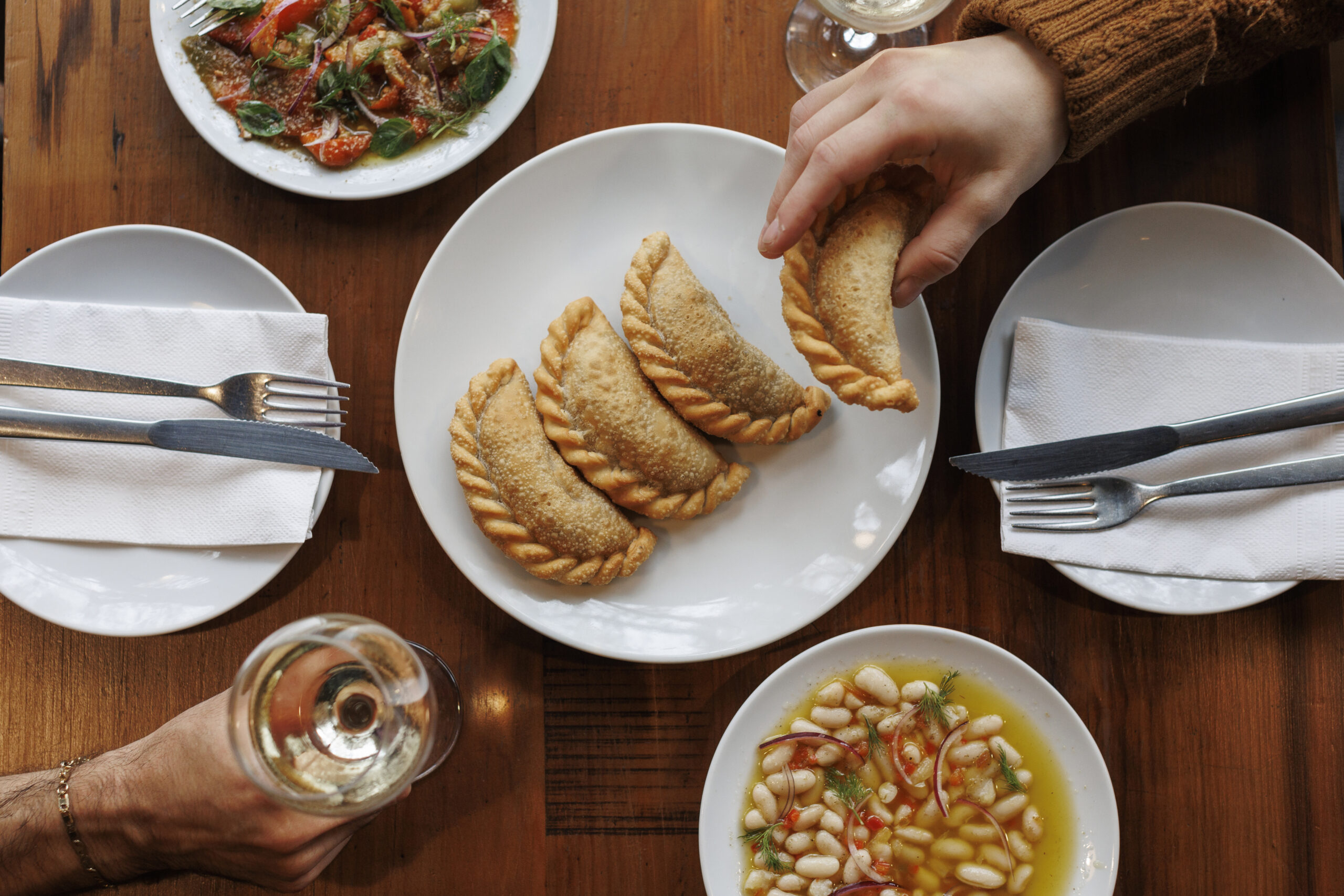
    Empanadas are a hybrid: they are a dish, but they are also street food. You can eat them sitting down, but there is a specific skill to eating them standing up: open your legs slightly and lean forward. Why? Because a good meat empanada is juicy, and «hot grease vs. clean shoes» is a battle you don’t want to lose.

    argentine empanadas

    While there are as many versions as there are provinces, in Buenos Aires you can find them all. To order like a pro, you need to know the 3 regional heavyweights:

    • La Salteña: This one is usually baked. It is filled with knife-cut meat, hard-boiled eggs, scallions, and cubed potatoes. They often pack a spicy punch.

    • La Tucumana: They generally use matambre (rose meat) cut strictly by knife (never ground beef). They are incredibly juicy and seasoned with cumin. All empanadas are good, but these are absolutely great.

    • La Cuyana (From Mendoza/San Juan): Baked in clay ovens. These are famous for their juiciness, achieved by using a high ratio of onions to meat.

    Just as a personal note: My grandmother used to add white wine to the homemade dough, which made it epic. Honestly, I haven’t found a restaurant that matches her secret recipe yet, but the style remains a must-try.

    Beyond the Beef: The Other Classics

    • Jamón y Queso (Ham & Cheese): This is the one that cannot fail. It sounds basic, but you should look for the ones made with «Masa de Hojaldre» (puff pastry). When the cheese melts inside those buttery, flaky layers, it is unbeatable.
    • For Vegetarians: You are safe here. Humita is a creamy, sweet corn paste with béchamel sauce and cheese, a native flavor everyone loves. You will also find Verdura (Spinach/Chard with white sauce) or Queso y Cebolla (Cheese & Onion) in almost every shop.

    Find the ultimate inspiration in our list of the best places to enjoy empanadas in Buenos Aires.

    Pizza: The «Porteño» Mutation

    Argentina was home to many Italian immigrants at the beginning of the 20th century. Our food culture is deeply attached to the international influences we went through. Having said that, you could guess pizza here isn’t «international food» but part of our local cuisine. Still, while the roots are Italian, the evolution is strictly Argentine.

    So… while the thin, airy Neapolitan style is trending right now (and actually, I prefer it), the real Pizza Porteña (from Buenos Aires) is a distinct mutant. 

    pizza porteña

    Pizza porteña vs Italian Pizza

    The Dough (Masa al Molde): Unlike the thin Italian crust, our traditional pizza has a thicker, spongier dough (cooked in a pan). Why? I would call it an architectural necessity. It is designed to hold the weight of an obscene amount of cheese

    The Fainá: You will see locals ordering a slice of pizza with a thin, yellow triangle on top. That is Fainá, a dense flatbread made of chickpea flour. We sometimes eat it «A Caballo», meaning one bite includes both pizza and fainá. It sounds as heavy as it is, but the dry texture of the chickpea perfectly balances the oily creaminess of the mozzarella.

    The Ritual «De Parado»: In the classic Pizzerías on Corrientes Avenue, there is no need to wait for a table. We can eat «de parado» (standing up) at the counter. You order two slices and a beer, you eat amidst the noise, and you wipe your hands with those tiny wax-paper napkins that don’t really clean anything. It’s not fancy, but it is worth a shot, even if just for the story.

    To experience this, head straight to Güerrin. It is a temple of the style, offering not only the classic Muzzarella but an endless (and rather peculiar) variety to explore.

    La Picada

    This isn’t a specific Argentine dish; it is our version of a Charcuterie board or Tapas, but much more rustic.

    There is no fixed recipe, but a respectable Picada must have Salame (salami), Queso (cubes of cheese, usually Pategrás), and Pan (bread). From there, it’s a free-for-all: peanuts, olives, potato chips, and ham.

    argentine food picada

    How does it work? It is strictly finger food, and it plays two very different roles:

    • The «Prequel» (Before the Asado): served while the meat is on the grill to calm the hunger(It is a trap).
    • The Main Event: Sometimes, we just don’t want to cook. If friends come over for drinks or to watch a soccer match, a massive Picada is the dinner. No cutlery, no plating, just reaching into the center of the table and grabbing a cube of cheese while arguing about the referee.

    The Street Food and Informal Eating Culture in Argentina

    As I said, we don’t have food carts on every single corner. In Argentina, street food is a destination in itself. You find it clustered in specific ecosystems: riverside promenades, large parks on weekends, music festivals, and outside soccer stadiums.

    The street menu is generally carnivorous and sandwiched between bread. While the Choripán is the main character, the Sándwich de Bondiola  (pork shoulder) is a scene-stealer that holds its own.

    The Choripán ritual

    This is an experience for the brave. It is often spicy, greasy, and messy. 

    For me, Choripán is linked to my soccer team. When we win, eating a Chori on the way out of the stadium is the trophy, the reward for having left everything in the stands. When we lose, it is the consolation prize. 

    chori de cancha
    Choripan in the way to the soccer stadiums

    As someone who really appreciates high standards when it comes to food, I apply an exception when it comes to choripan. That is the «Trust the Process» Rule.  In these street spots, hygiene standards are… let’s call them «rustic.» Don’t ask about permits. Don’t look too closely at the cooler. Just trust the fire. I mean, of course you will notice which of the spots around is the “safest” choice, but do not expect an operating room. 

    Insider’s tip: look for the spot with the longest line. High turnover is the best quality control! 

    However, if it’s your first time or you want to ease into it, there are levels to this game and you don’t need to be a soccer fan at all. You can choose the modern, gourmet route in spots like CHORI (even offer vegetarian versions), or experience the classic ‘Carritos’ in Puerto Madero, where the paradox is fascinating and these rustic options confront the city’s most expensive skyscrapers.

    If this made you hungry or curious, check the full article on Buenos Aires’ street food!

    The Argentine Sweet Heritage (Dulce de Leche & Friends)

    Dulce de Leche: The National pride

    If Argentina had a flag for flavor, this would be it. Legend has it that it was created by mistake in 1829, when a maid forgot a pot of milk and sugar on the fire. The result was this thick, caramel-like jam that runs through our veins. You will find similar versions across Latin America (Manjar, Arequipe), but let’s be clear: the Argentine version is superior. (Sorry, Uruguay, i’m not debating this).

    My Personal Take: Some locals eat this by the spoonful. Personally? I find that too intense. I prefer it spread on toast or mixed with something that balances the sweetness. But please, don’t let me stop you from attacking the jar.

    Chocotorta: The Champion of Simplicity

    This is the dessert that never fails. It is not made by a Michelin-star pastry chef; it was likely invented by a marketing team, but we adopted it as our own. It’s a no-bake cake made of layers of chocolate cookies soaked in coffee or milk, stacked with a mixture of cream cheese and Dulce de Leche.

    • Why it works: It’s fresh, simple, and hits every pleasure point without being heavy.

    • Where to find it: Almost every modern coffee shop has a version. Or honestly? You can buy the ingredients at a supermarket and make it in your Airbnb. It’s that easy.

    Alfajores: The Cookie Sandwich

    The concept is simple: two cookies joined by a filling (usually Dulce de Leche) and often covered in chocolate. Anyways, there are different kinds. Here is the breakdown: 

    The » Alfajor de Maicena»

    These are made with cornstarch cookies and rolled in coconut. They are delicious but have a tiny little problem: someone must kick you in the chest to help you swallow it. Unless perfectly made, these are usually very dry alfajores. So… try them! but please keep some water nearby. 

    The Classic Alfajores

    There is a massive spectrum here. You have the artisanal, high-end versions that are closer to fine patisserie, like the ones from Havanna, and then you have the industrial «kiosk» highlights, that save your life when you need a sugar fix on the go. “Rasta” would be a good example for those. 

    My advice? Try both. They satisfy different cravings, and comparing them is part of the fun. 

    argentine alfajores havanna

    Queso y Dulce (Postre Vigilante)

    This is our simplest, most rustic dessert: a slice of soft fresh cheese paired with a slice of sweet potato paste (Batata) or quince paste (Membrillo). It has Spanish roots, but we adapted it to our pantry.

    My Personal Take: I’ll be honest: I don’t like it. For me, it’s a bit unusual. But it is a classic, arguably the most traditional way to end a meal in a Bodegón. It’s controversial: you either love the contrast, or you don’t get it at all. You have to try it to judge.

    So, this is the sweet starter pack. We haven’t even touched on our world-class Helado (Ice Cream) or the restaurant classic, Flan Mixto. Unlock the full sugar rush in our Insider’s Guide to Argentine Desserts: What and Where to Order. 

    What  and When Argentines actually Drink

    Just like our food, our drinking habits (this sounds a little weird) are deeply communal. In Argentina, we don’t drink just to quench our thirst; we drink to extend the conversation.

    It is rarely a solitary act. Whether it is passing the Mate around in a park or sharing a bottle of Malbec during a never-ending dinner, the connection is key. We have our own rhythms, our unique national liquors, and unwritten codes.

    what argentines drink

    Living abroad, I was surprised to see people heading to bars at noon or for boozy brunches. Here, the timing is different. While a glass of wine with lunch is perfectly normal, hard liquor and cocktail bars are strictly a nighttime affair (and usually, late night).

    From the caffeine kick of the morning to the herbal bitterness of the night, here is how we fuel our chats and fill our glasses. 

    Mate

    You will see people carrying termos under their arm everywhere. Inside the gourd cup, there are dry green leaves and hot water. 

    Clarification: It is not a drug, it has no weird substances. It is simply an herbal infusion (high in caffeine) that for us, represents company.

    The Golden Rules

    1. It is shared: If you are in a circle, don’t ask for one just for yourself. You drink and pass it back.
    2. Don’t touch the bombilla: The metal straw is fixed. Moving it ruins the structure of the yerba (i know, it is a whole science)
    3. The «Gracias» Trap: This is the #1 tourist mistake. In Mate language, saying «Thank you» means «I don’t want any more.» Only say thanks when you are done, you won’t look rude. 

    The Taste

    It is bitter and grassy. There is a huge divide between purists (Bitter) and those who add sugar or sweetener.

    Insider’s tip: If it’s your first time, I would recommend you a «Yerba Suave» (mild blend). It might not be the intense local experience, but it is much friendlier for a beginner’s palate.

    The Coffee Culture

    While specialty coffee is booming all over the country, you must visit a Café Notable if you’re in Buenos Aires. These are historical landmarks.

    The icon, Café Tortoni, is a busy spot, but the architecture and history make it worth the queue. This is where Borges, Cortázar, and Alfonsina Storni, among many others, sat to discuss the future of art over a cider or a coffee. The stained glass, the wood, and that heavy intellectual atmosphere make it a must visit. 

    cafe tortoni notable food in buenos aires

    Fernet

    While it has Italian origins, the heart of Fernet is in Córdoba (our central province). It is a dark, herbal, bitter spirit that—let’s be honest—tastes like medicine until you mix it.

    The Formula

    70% Coca-Cola, 30% Fernet, and ice all the way to the top. The foam is essential and there are tricks to master it. 

    The «Viajero» Fun Fact

    When we were young (or at music festivals), we didn’t use glasses. We cut a plastic Coca Cola bottle in half, burned the edges with a lighter so they wouldn’t cut our lips, and mixed the drink right there to pass around. We call it «El Viajero» (The Traveler). We don’t do this at restaurants or bars at all, but it’s a vital part of our coming-of-age folklore.

    Our Wine Culture

    Argentina is a «New World» wine country, which means we talk about Grapes.  While Malbec from Mendoza is the king that put us on the map, our geography is massive. We have high-altitude wines in the North (Salta) and cold-climate wines in the South (Patagonia).

    Grapes to try

    Torrontés: The only grape that is 100% native to Argentina. Floral and aromatic, mostly from Salta.

    Pinot Noir: Look for bottles from Patagonia (Río Negro). Elegant and earthy.

    The Trendy Ones: Bonarda, Petit Verdot, and the comeback of Criolla (a light, drinkable grape that is super trendy in hipster spots right now).

    argentine wine

    Where to Drink Wine?

    The wine bar scene has evolved from the traditional white-tablecloth steakhouses to an incredibly diverse landscape, specially in Buenos Aires. You can find educational spots where sommeliers guide you, or sophisticated jazz bars perfect for a mature, relaxed evening. And for the «cool kids,» there is a massive wave of rustic, vintage-style bars (mostly in Chacarita) where the crowd is young, the wines are organic, and the social life happens as much on the sidewalk as it does inside.

    Cocktails bars

    Our nightlife is legendary. We start late and end… well, very late. If you have a few nights to explore, I recommend you try to visit these three types of spots to get the full picture.

    • A Rooftop Bar

    Ideally, during sunset. Watching the city skyline turn into night with a drink in hand is the best way to start the evening.

    • A Speakeasy

    Buenos Aires loves hidden concepts. Florería Atlántico, hidden beneath a flower shop and consistently ranked among the world’s best, is a classic. 

    • A Rustic-Vibing-Neighborhood type of Bar

    For something louder and local, Tres Monos is a good fit: punk vibe and world-class service.

    Thirsty for More?

    As you can see, the landscape is massive. We haven’t even touched on the Vermouth or our historic national liqueurs like the Hesperidina.

    This was just the overview. If you want to double click on this topic, check out our deep dive guide on Traditional Argentine drinks and where to try them.

    A Foodie Neighborhood Breakdown

    Buenos Aires is massive, and each district operates with its own culinary personality. To help you choose, here is a quick breakdown of the main gastronomic hubs:

    Palermo: The Main Hub 

    This is the epicenter of dining and nightlife. It is huge (subdivided into Soho and Hollywood) and offers the highest density of options: from Michelin-starred restaurants and Asian fusion to the best cocktail bars. 

    The Vibe: Loud, intense, and buzzing.

    Chacarita and Colegiales: The «Up & Coming» 

    This is where the local chefs are opening their own indie spots right now. It feels more residential and relaxed. 

    The Vibe: Sidewalk tables, vermouth bars, specialty coffee, and a «cool» but unpretentious crowd.

    San Telmo: The Historic Classic 

    The bohemian heart of the city. It is steeped in history. This is the best area to find authentic Argentine food in the Bodegones, steakhouses, and the Sunday Market chaos. 

    The Vibe: Rustic, vintage, and culturally rich.

    Recoleta & Retiro: The Posh Up-market

    Imagine a European Buenos Aires: wide avenues, palaces, and luxury hotels. The dining scene reflects that sophistication with elegant tea rooms, high-end classic service, and hotel bars. 

    The Vibe: Polished, quiet, and sophisticated.

    Sherpa Food Tours: Experiencing Argentine food like a Local

    You can definitely go to all these places alone. You can stand in the long line at a famous parrilla, checking your watch while smelling the smoke from the sidewalk. You can stare at a wine list, trying to guess the difference between a Malbec from Salta and one from Mendoza.

    My goal with this guide was precisely to arm you with the insights to handle those moments like a local. I truly hope this article helped you understand the background of our culinary scene and what/how to order while you’re visiting Buenos Aires city. 

    But there is a better, easier and immersive way to enjoy Argentine food. A way where the logistics disappear, and the magic takes over.

    At Sherpa, we bridge the gap between the plate and the culture, turning a simple dinner into a shared ritual.

    sherpa food tours in buenos aires

    Here is why you should pull up a chair with us

    From Tourist to Local

    We unlock the city for you. We explain why we clap for the Asador, why the pizza has so much cheese, and the history behind every bite. You won’t just taste Argentine food; you’ll fully understand the eating rhythm of our city.

    san telmo food tour

    The «Insider» Access (Skip the Line)

     We know your time is precious. As partners with some of the city’s most sought-after restaurants, we allow you to walk straight in. No waiting on the sidewalk; you go right to the table where the wine is already pouring.

    The Joy of the Table

    This isn’t a lecture; it’s a dinner party. You will share a feast with incredible people from all over the world. As i said, Argentine food is about connection, laughter. With Sherpa strangers become friends over a glass of Malbec.

    the joy of the table

    Curated with soul and experience

    We don’t just take you to the «famous» spots. We mix the hits with the hidden gems, the neighborhood favorites that only us locals know.

    Curated food experience in buenos aires

    Just Relax, We’ve Got It

    Navigating a new city is beautiful, but can be stressful. Our friendly insider hosts handle every detail so you can simply relax, taste, and enjoy the argentine sobremesa.

    Yes, we are proud to have been trusted by over 20,000 travelers. But our real pride is seeing you leave the table with a full belly, a happy heart, and new friends.

    Ready to book? Join us in our Buenos Aires Foodie’s Adventure. 

    I’ve Shared the Tips, Now It’s Time to Share the Table

    I have given you the full roadmap to navigate our Cuisine. We talked about the unwritten rules of Mate, the country’s juiciest Empanadas, our shameless appropriation of Italian Pizza, and… well, so many other things that I won’t list again because, honestly, I hope you were paying attention!

    But as I said at the beginning, exploring Argentine food is about much more than just flavor; it is about the stories shared across the table. It is about the mixed cultures, the chaos, the wine, and the people. Eating our food is a truly immersive experience, and you should give yourself that treat.

    Table is ready. You can book your spot right here.

    Some extra tips to get you ready! 

    • Tipping: Service is generally not included. 10% is the standard; go for 15-20% if the service was outstanding. Bring cash! While some places allow you to tip via card, servers love cash.

    • Money & Cards: The economic situation here is… dynamic. Currently, using your foreign credit/debit card is a great idea because you get a favorable exchange rate. Note: This changes often, so double-check the rules right before you fly.

    • Getting Around: Skip the yellow taxis if you can. Use Apps like Uber or Cabify. Select the «Comfort» or «Premium» option. The price difference is usually small, but the difference in car quality is huge.

    • Public Transport: To use the bus or subway, you can pay with your card. No SUBE is needed.

    • Safety: Argentina is generally safe in tourist areas. However, follow the local rule: «No te regales» (Don’t gift yourself). Do not walk around staring at your phone. If you need to check a map, stop and step inside a shop. Be smart, not paranoid.

    • Water: Tap water is generally safe to drink in Buenos Aires, but if you have a sensitive stomach, sticking to bottled water is a smart move.

    Do you have any questions or want to learn more about our tours? We love talking about food and travel! Reach out to us right here and we will get back to you as soon as possible.

  • Explore These 3 Michelin-Star Restaurants in Buenos Aires

    Explore These 3 Michelin-Star Restaurants in Buenos Aires

    Buenos Aires has steadily risen as a key player on the global culinary scene, becoming a must-visit destination for food enthusiasts. The city’s rich culinary heritage, combined with a modern twist on traditional Argentine flavors, has made it a contender alongside international dining hotspots.

    One of the most prestigious accolades in the culinary world is the Michelin star, awarded to restaurants that demonstrate exceptional quality and innovation. While Buenos Aires does not yet have a broad collection of Michelin-starred venues, selected restaurants are recognized by the Michelin Guide for their excellence.

    In this article, we’ll explore three of the most outstanding restaurants in Buenos Aires, including those awarded Michelin stars and others that have earned a spot on the Michelin Guide’s recommendations, like Fogón AsadoEach establishment offers a unique dining experience that highlights the creativity and skill of its chefs, making them a must-visit for both locals and tourists alike.

    Don Julio – Palermo

    Don Julio, located in the trendy neighborhood of Palermo, is not just a steakhouse; it’s a benchmark for Argentine asado. Often frequented by high-profile guests like Lionel Messi, it ranks among the top 10 restaurants globally according to a prestigious international publication. The atmosphere at Don Julio is a perfect blend of rustic charm and sophistication, where exposed brick walls, warm lighting, and wooden furniture evoke the essence of Buenos Aires’ rich grilling tradition.

    The menu focuses on prime cuts of Argentine beef, carefully sourced and expertly cooked on the grill. Signature dishes include perfectly seared steaks, accompanied by a vast selection of local wines, chosen by sommelier and owner Pablo Rivero.

    Don Julio provides a high-end, gourmet grilled meat experience. The dress code leans toward smart casual. Dining here is not just about the food, but about the full Argentine parrilla experience, making it a truly memorable meal. Are you into steakhouses? Don’t miss out our article about it.

    About the chefs

    Pablo Rivero, who has been the face of Don Julio for over 20 years, is both a chef and a sommelier. His deep expertise in meat handling and argentine gastronomy and pairing wines has made Don Julio a favorite among locals and visitors alike. On the other hand, Guido Tassi, the chef consultant at Don Julio, is 44 years old, 25 of which have been dedicated to gastronomy. He is also one of the owners of El Preferido in Palermo.

    More information

    • Address: Guatemala 469, Palermo, Buenos Aires.
    • Price range: $$$
    • Reservations: Due to its popularity, it’s essential to book a table in here.

    Trescha – Villa Crespo

    Trescha offers one of the most avant-garde dining experiences in Buenos Aires. Hidden away in the Villa Crespo neighborhood, this intimate restaurant caters to just 10 diners per sitting, where they embark on a 14-course tasting journey. The atmosphere is futuristic and minimalist, with a test kitchen on the first floor that looks like a science lab, equipped with cutting-edge culinary technology like rotovaporizers and centrifuges.

    The 14-course menu is a feast for the senses, featuring dishes that are crystallized, spherified, and fermented, each served on handcrafted ceramic and glass plates designed by local artisans.

    Vegetarians and those with gluten sensitivities will find specially curated menus that offer just as much creativity and attention to detail as the standard menu. The precision and artistry of each dish make Trescha a high-end culinary adventure unlike anything else in the city.

    About the chef

    Tomás Treschanski it’s a young prodigy trained at Le Cordon Bleu in London, has worked in internationally acclaimed kitchens before returning to Buenos Aires. His culinary philosophy is centered on breaking boundaries. At Trescha, nothing is off-limits since everything is a food scene for the diner, including tableware.

    More information

    • Address: Murillo 725, Villa Crespo
    • Price range: $$$$
    • Reservations: You can book your experience here.

    Aramburu – Recoleta

    Aramburu, nestled in the upscale Recoleta district, is one of the most prestigious dining room in Buenos Aires, boasting two Michelin stars—the only restaurant in Argentina to achieve this distinction. The restaurant’s sleek and contemporary design, paired with its open kitchen, allows diners to witness firsthand the precision and artistry behind each dish.

    The intimate setting of the restaurant, along with its modern art displays and minimalist decor, makes it an ideal spot for a luxurious dining experience. The 19-course tasting menu at Aramburu showcases the best of Argentine ingredients, reimagined through modern techniques and a fine dining lens.

    Aramburu’s wine pairings are equally impressive, offering selections from some of Argentina’s best vineyards. For those seeking an elevated dining experience in Buenos Aires, Aramburu is an unforgettable destination.

    About the chef

    Chef Gonzalo Aramburu, it’s trained in Michelin-starred kitchens in Europe and the United States, draws on his vast experience to craft a menu that balances innovation with tradition. From molecular gastronomy elements to inventive takes on classic Argentine flavors, the dishes are as visually stunning as they are delicious.

    More information

    • Address: Vicente López 1661, Recoleta
    • Price range: $$$$
    • Reservations: You can make your reservation here.

    Buenos Aires best restaurants by the Michelin guide

    We all know that Buenos Aires offers some of the finest dining experiences in Latin America, and these restaurants stand at the pinnacle of that culinary landscape. Check out other Michelin distinctions such as tributes to restaurants for their sustainable practices such as Anchoita or their quality-price such as Casa Vigil or other Michelin star-winning restaurants in the province of Mendoza.

    These restaurants compare to the world’s best, delivering exceptional quality and creativity that rival Michelin-starred venues in global dining capitals. For those exploring Buenos Aires or locals seeking a special night out, dining at one of these top restaurants is an experience that will leave a lasting impression.

    Whether you are indulging in the luxury of a multi-course tasting menu or enjoying a gourmet Argentine asado, these places represent the very best of Buenos Aires’ fine dining scene. So, book your table, dress for the occasion, and prepare for a truly remarkable culinary adventure.

    A different experience

    While the refined setting of a Michelin-starred restaurant is a beautiful celebration of technique and excellence, the true culinary soul of Buenos Aires thrives elsewhere. The real magic happens on the streets, in the hidden bodegones, and through the stories tied to every corner. At Sherpa, we believe the ultimate experience is found by combining culture and cuisine.

    If you’ve already enjoyed the very best of high cuisine, we invite you to explore the city’s incredible local gastronomy.

    Looking for a more niche gastronomic experience? Buenos Aires has an incredibly diverse culinary scene with a lot to offer beyond typical Argentine flavors. A meat-lovers tour? A breeze. An all-veggie or vegan tour? Easy as pie. A pizza marathon? You name it, we’ve got it. Customize Your Tour: Our team specializes in creating personalized itineraries based on your preferences and our local expertise. We can accommodate dietary restrictions or preferences, and even arrange a Premium Private Tour for an elevated, bespoke exploration of the city.

  • 6 Best Places to Enjoy Empanadas in Buenos Aires

    6 Best Places to Enjoy Empanadas in Buenos Aires

    Buenos Aires, the vibrant capital of Argentina, is known for its rich culinary scenery, a blend of European influences and traditional Argentine flavors. Among the many dishes the city offers, the empanada stands out as a beloved staple, deeply embedded in Argentine culture. Whether enjoyed as a quick snack or as part of a more elaborate meal, empanadas are a must-try for anyone visiting Buenos Aires.

    Empanadas, with their origins traced back to the Spanish colonization, have evolved into a uniquely Argentine delicacy. Each region of Argentina boasts its own variation, with distinct fillings and preparation methods that reflect local tastes and traditions, like the ones made with spicy ground beef. However, Buenos Aires’ empanadas are particularly celebrated for their diversity and quality. From traditional bakeries to trendy eateries, the city offers a wide array of empanada experiences, each with its own twist on this classic dish.

    They come in various forms, from the typical argentine empanada made of beef-filled to gourmet versions like creamed corn. The importance of empanadas in Argentine culture cannot be overstated—they are not just a dish, but a symbol of sharing and community. As we explore some of the best places to enjoy empanadas in Buenos Aires, you’ll discover why this humble pastry holds a special place in the hearts of locals.

    argentine empanadas in buenos aires

    Located in Recoleta at Av. Pueyrredón 1508 and in the heart of the city at Florida 142, La Cocina is a restaurant in Buenos Aires. Established nearly 50 years ago, this small yet famous eatery is known for its legendary fried empanadas, which have been perfected over decades. The secret recipe, passed down through generations, remains closely guarded by the founder, Rodolfo Remy Schwartz, who hails from Andalgalá in Catamarca—a region famed for its own empanada traditions.

    The atmosphere at La Cocina is simple, reflecting its dedication to authenticity. Regular patrons swear by the quality and flavor of the empanadas, which are known for their delicate, flaky crusts and savory fillings. The must-try here is the classic beef empanada, a perfect blend of tender meat, onions, and spices encased in a golden pastry. Prices are reasonable perfect and budget-friendly option for a delicious snack, you can also call 4825-3171 to order them for delivery.

    Nestled in the upscale neighborhood of Recoleta at Junín 1314, La Querencia offers a cozy and welcoming atmosphere that feels like home. This restaurant has been a cornerstone of Argentine cuisine for over 30 years, known for its dedication to using 100% natural ingredients and traditional cooking methods. The star of the menu is undoubtedly the empanadas, available in more than fifteen flavors, all made with homemade dough and carefully selected fillings.

    La Querencia’s empanadas are celebrated for their authenticity and variety. From the classic beef and chicken to more unique options like cheese and onion, carne picante, carne suave or the «spicy salteñas», each empanada is a testament to Argentina’s culinary heritage. The must-try empanada here is the spicy salteña, known for its robust flavor and perfect level of heat. They recently opened another location in Belgrano on Pampa Street at 2383.

    El Sanjuanino, with locations in Recoleta (Posadas 1515), Barrio Norte (Bustamante 1788), and Cañitas (Báez 227), is a true icon in Buenos Aires. Founded over 50 years ago, this restaurant specializes in artisanal empanadas that have been delighting locals and tourists alike for generations. The atmosphere is warm and rustic, with a focus on traditional Argentine decor and friendly service.

    What sets El Sanjuanino apart is its commitment to traditional recipes and techniques. Here, you can choose between fried empanadas or baked empanadas, with the verdura (spinach) and humita (sweet corn) varieties being particularly popular. These empanadas are generously filled and packed with flavor, making them a standout choice. You can order your empanadas through the Rappi delivery app or by calling the numbers below:

    • Recoleta: 4804-2909/ 4805-2683
    • Barrio Norte: 4822-8080
    • Cañitas: 4005 -9799

    Established in 1935, La Americana is a Buenos Aires classic, with multiple locations in the city center, including Av. Callao 83, Av. Corrientes 1383, and Av. Rivadavia 2800. This family-friendly restaurant is known for its amazing pizzas and high-quality empanadas. You can check out their full menu here.

    La Americana prides itself on being the first empanada house in Buenos Aires, and its menu reflects this long-standing tradition. The variety of empanadas is impressive, with flavors ranging from the classic criolla (beef) to more adventurous options like roquefort and ham. The must-try empanada here is the criolla, a true representation of the Argentine empanada with its rich, savory filling. La Americana is really good idea because it’s an affordable option for those looking to try regional dishes. You can contact the delivery at 4371-0202.

    For those who are taking a tour of San Telmo, we have the ideal option to try the classic El Hornero empanada stand. This place offers a taste of traditional and regional Argentine cuisine in a vibrant setting. The empanadas here are known for their large size and exceptional quality, with flavors deeply rooted in Argentine folklore. The stand it´s inside of the Mercado de Pulgas and it’s a really popular spot for both locals and tourists.

    El Hornero specializes in classic flavors like carne cortada a cuchillo (hand-cut beef), la salteña, and mondongo (tripe), all of which are prepared with top-notch ingredients. The must-try here is the empanada Cantimpalo y Queso, renowned for its hearty filling with spiced chorizo and perfectly baked crust. You can also order delivery through both the Rappi and Pedidos Ya apps.

    Located at Rodriguez Peña 1149 in Recoleta, Cumaná is a charming restaurant that offers a wide range of Argentine dishes, with empanadas being the highlight. The atmosphere is casual and lively, often drawing a crowd thanks to its thanks to its prices and high-quality food.

    Cumaná’s empanadas are a culinary journey across Argentina, with flavors inspired by different regions of the country. From beef to chicken and cheese to spinach, there’s an empanada for every taste. The must-try here is the tender beef empanada. Cumaná is a great option for those looking to explore Argentina’s diverse culinary landscape with at totally affordable and pocket-friendly prices. You can check their menu here and also order delivery by phone: 48139207 or 48135360.

    Exploring Buenos Aires’ gastronomic scene is an exceptional way to immerse yourself in the city’s rich history, traditions, and flavors. The Buenos Aires Private Experience by Sherpa Food Tours offers a fully customizable journey, ensuring each guest enjoys a unique and personalized culinary adventure.​

    Unlike standard group tours, this private experience allows you to delve into the city’s diverse food culture at your own pace. Indulge in iconic Argentine dishes such as asado, empanadas, and milanesas, or venture off the beaten path to uncover hidden culinary gems cherished by locals. Throughout the tour, a knowledgeable guide will share captivating stories and explain the cultural significance of each dish, bringing Buenos Aires’ food heritage to life.​

    Designed for food enthusiasts, families, and travelers with specific dietary preferences, this exclusive tour promises a memorable and immersive experience. Whether you’re seeking authentic flavors, engaging food narratives, or a relaxed private exploration, the Buenos Aires Private Experience is the perfect way to savor the essence of the city—one delicious bite at a time.​

    Why Choose This Tour?

    Fully Personalized & Private – A tailor-made food tour crafted just for you.​

    Authentic Argentine Cuisine – Taste Buenos Aires’ must-try dishes and discover hidden gems.​

    Great for Everyone – Perfect for food lovers, families, and those with dietary needs.​

    Embark on this extraordinary culinary journey and experience Buenos Aires like never before!

    Buenos Aires is a city that takes its food seriously, and empanadas are a fast food that the average Argentinian enjoys constantly, and that is why the vast majority of these places offer delivery orders so you can order your delicious empanadas at your doorstep.

    To complete your Argentine culinary adventure, we recommend pairing your meal with a robust glass of Malbec, creating the perfect harmony between food and drink as you experience the city’s bold flavors.

    Want the Perfect Pairing? Let Sherpa Do It for You!

    Finding the perfect Malbec to match every local flavor is an art. Why not let us handle the pairings while you just enjoy the experience?

    Check out our food tour offer in Buenos Aires and get ready to savor the city.

  • What to eat in Buenos Aires and Where: A guide for foodies

    What to eat in Buenos Aires and Where: A guide for foodies

    Iconic Buenos Aires Food Experiences and Dishes to try during your stay

    When people think about typical Buenos Aires Food, the first thing that comes to mind is usually steak and wine (Malbec, amirite?). However, there’s a lot more to Buenos Aires cuisine.

    Try some choripán during a walk through the Costanera, have a slice of pizza on Avenida Corrientes or enjoy a fantastic cup of coffee with pastries at any of the incredible cafés the city has to offer.

    This guide covers the must-try dishes and foods any visitor should enjoy during their stay in Buenos Aires, and where to do it.

    Asado and Parrillas

    We have to start with what we are famous for! If you want some of that world-famous Argentine steak, head to one of these parrillas (steakhouses) for a taste of the best meat in the entire world (despite what Uruguay may claim).

    • Parrilla Peña (Rodríguez Peña 682): This steak house is closer to Recoleta which makes it the perfect stop when deciding to explore the neighborhood. Low key local vibes and premium quality steak.
    • RS Esquina (Roseti 1596): If you are feeling alternative and want to explore Chacarita, the up and coming neighborhood in Buenos Aires, why not have some pasture-raised beef while you are at it!
    • Cabaña Las Lilas (Av. Alicia Moreau de Justo 516): Elegant, top-notch and failure-free steakhouse in Puerto Madero.

    Wine Tasting in Buenos Aires

    Thirsty for some of that famous Malbec? Look no further! Wine bars have been popping all over town in recent years, to fill a growing demand for a more sophisticated wine experience. 

    Our Palermo Food Tour features a wine-tasting stop, where you get to sample signature regional wines in a classic porteño setting, while also sampling local dishes (give it a try – we promise you won’t be sorry!).

    If you are looking for a wine bar, these are our Buenos Aires faves:

    • Pain et Vin (Gorriti 5132): owned and served by a married couple, Pain et Vin was the original wine bar, and still one of the best. With a hand-picked wine selection paired with heavenly bread, this comfy, intimate place is a delightful spot for connoisseurs and beginners alike.
    • Vico Wine Bar (Gurruchaga 1149): One of the largest wine selections in Buenos Aires in a classy setting. This is a must for wine lovers.
    • Cava Jufre (Jufré 201): If you are looking for a more personal wine experience, go out of your traditional Palermo setting to visit La Cava Jufre in a more relaxed alternative vibe.

    Pizza porteña on Avenida Corrientes (…and elsewhere!)

    Avenida Corrientes is home to some of the best pizzerias in town. The street also houses many theaters (and fancies itself the Argentine Broadway) and bookstores, making it an ideal location for an evening stroll or lunch break.

    Argentine pizza has a thicker crust and loads of cheese – grab a slice to eat on the go or by the standing counter, or get a table and share a pizza with a friend over some Moscato wine (and do try the fainá, a.k.a. chickpea flour pancake). 

    Pizzerias on Calle Corrientes:

    • Güerrín (Av. Corrientes 1368): the most famous pizzería in Avenida Corrientes, go for hype and stay for the slice.
    • Banchero (Av. Corrientes 1604): Another classic, featuring classic with a retro feel, a good option if you want to grab a table and skip the long wait at Güerrín.
    • Genova (Av. Corrientes 872): unpretentious and reliable, Genova offers a great slice at a decent price. If you are tired of going to the same place as every other tourist, head here.

    It’s not all downtown Avenida Corrientes – consider visiting these pizzerias in other neighborhoods:

    • El Cuartito (Talcahuano 937): hands down the best pizza in Recoleta, what else is there to say?.
    • El Imperio de la Pizza (Av. Corrientes 6891): the Chacarita classic – a pizza so good we know of people who went to a movie in Avenida Corrientes and then hopped onto the subway for dinner at Imperio.
    • Bar Roma: (Anchorena 806): looking for something a bit more modern? Bar Roma’s got you – the place may be old, but they’ve refurbished the building and gave the menu solid makeover. Great pizza, great drinks, great ambience.

    Argentine Empanadas

    Empanadas are a Buenos Aires staple, and any pizzeria worth its salt will offer a decent empanada. The classic flavors are carne (beef), jamón y queso (ham and cheese) and humita (corn).

    If you are looking for something more elevated, try one of the following locations.

    Empanada places to try:

    • La Cocina (Av. Pueyrredón 1508): This is like dying and going to Empanada Heaven. Low-key local vibes, if you are hunting for the perfect empanada this is your stop.
    • EL Hornero (Av. Carlos Calvo 455 local 88 y 89): situated in the San Telmo Market, El Hornero is worth a stop after perusing the nearby stores. Great empanada selection, with several vegetarian options.
    • El Sanjuanino (Posadas 1515): a restaurant by and for locals, this place specializes in regional food, including empanadas (we recommend sticking to the classics here).

    Cafés notables: coffee and pastries

    A typical Argentine breakfast consists of a good cup of coffee and medialunas (croissants, and yes, plural). Dipping a medialuna in your coffee gets you extra argentine-ness points. And because one coffee is not enough, Argentines also enjoy coffee and medialunas as merienda, their mid-afternoon coffee break. You can also switch medialunas for alfajores (dulce de leche-filled cookie sandwiches).

    Buenos Aires is filled with incredible cafés, but if you want a taste of tradition together with your cappuccino, go to one of the cafés notables, which are historical cafés spread throughout the city.

    • Café Tortoni (Av. de Mayo 825): Parisian-style grand café in the heat of the city center. Worth waiting in line for. Do try the churros and hot chocolate!
    • Las Violetas (Av. Rivadavia 3899): Iconic historical café in Almagro, featuring 1020s decor, superb pastries and a lovely atmosphere.
    • La Biela (Av. Pres. Manuel Quintana 596): located right in front of the Recoleta cemetery, La Biela is the perfect spot to grab a cup of coffee after some sightseeing.

    Looking for something more modern? Try these cafés:

    • Atelier Fuerza (Ecuador 1283): we gotta be honest, we added La Fuerza because of the pastries, and the pastries alone. It is actually a bakery, but it’s THE bakery.
    • Zarpado Café (Pasaje Echeverría Local 9): a hole-in-the-wall café in the newly opened pasaje Echeverría, Zarpado is a worthy offering among the up-and-coming Barrio Chino gastro scene.
    • Sastre Café (Av. Díaz Vélez 4674): Tiny spot next to Parque Centenario – take your coffee to go and do try the pastries!

    Choripán: Street meat by the riverside

    Eating a good choripán by the riverside is a favorite pastime for many porteños. The Costanera comes alive during the weekend, as the city dwellers flee the streets for a taste of fresh air and street meat.

    Order a choripán (chorizo sandwich) at one of the many street carts lining up the street at the Costanera. Other sandwich options are bondiola (pork) and lomito (steak). Add chimichurri sauce for an extra kick. If you fancy a choripán, but don’t want to go all the way to the Costanera, you can head to similar street carts in the Bosques de Palermo.

    Not really into food carts? You can also try choripán at Chori in Palermo Soho (Thames 1653).

    Ice Cream with Italian Flair

    It’s no secret that Argentina has a sweet tooth, and with our Italian heritage, gelato quickly became a national passion. Heladerías are open all year round, and we even sell ice cream by the kilo, so you can enjoy it at home too.

    The best heladerías in town are those that combine local flavors with Italian tradition, plus a side of innovation.

    Ice cream shops worth a visit:

    • Scannapieco (Av. Álvarez Thomas 10): classic porteño ice-cream shop, with signature Italian flavors (and a mean crema chantilly!).
    • Rapa Nui (Avenida Santa Fe 772): originally from the South, Rapa Nui has the best chocolate flavors (yes, plural) and berry sorbets.
    • Obrador Florida (Soler 5063): a modern take on ice cream, this place features exotic creations and seasonal flavors only. A bit pricey, but worth it by far.

    Bodegón dishes: homemade-style food

    Bodegones are dinner-style restaurants. Typical bodegones feature vintage wooden decor, football (yes, we don’t call it soccer) memorabilia and family photos. No Buenos Aires food experience is complete without a visit to a bodegón.

    Bodegones offer simple, hearty dishes in generous portions. Go hungry, and ask about the house specialties.

    Typical bodegón dishes are the iconic tortilla with chorizo, milanesas with a side of fries and pasta dishes such as ravioli or cannelloni. Don’t skip dessert: try the flan mixto (with whipped cream and dulce de leche) or dulce de leche pancakes.

    Our bodegón favorites:

    • Los Galgos (Av. Callao 501): Much like El Preferido (part of our Palermo Tour), this is a refurbished bodegón that serves Argentine staple dishes.
    • Cantina Los Amigos ( Loyola 701): Literally named «The Friends» this is a traditional gathering spot for friends and families in the neighborhood of Villa Crespo. Don’t expect fancy, refined dished but rather large portions that can’t be contained in a traditional plate. This place is better enjoyed with a group of people to sample more dishes.
    • Barcelona (Avenida Córdoba 5895): traditional dishes, laid-back atmosphere and very affordable prices. Hot tip: try the apple tarantella for dessert.

    Yerba Mate: that thingie with the straw

    You’ve heard about it, but don’t quite get the hype: what is this yerba mate thing?

    Mate is a typical argentine drink which is consumed following a strict code of rules. You must have an appropriate container (also called mate), which is typically made out of a calabash gourd. Then you add the chopped yerba mate leaves and put a metal straw (bombilla) in. Pour hot water, and then drink (never ever move the bombilla – this is considered poor manners).

    The thing about mate is that you won’t be able to find it at a restaurant – most people have their own mate they drink at home or bring with them to work/school. However, you can try mate as part of the Argentine Experience (a crash course into Argentine cuisine for newcomers).

    The other alternatives are to befriend and Argentine (which is actually quite easy) and get them to share mate with you, or buy your own mate (this makes for a great souvenir as well).

    Gluten Free and Vegan Options

    Gluten Free Buenos Aires Food: what are my options?

    Steakhouses (Parrillas): Don Julio, Las Lilas and Corte Comedor all have gluten-free options. Campobravo is exclusively gluten free.

    Cafés and bakeries: La Union Bakery and Gout Café are completely gluten-free. Felice is also a pretty good gluten-free restaurant and café.

    Ice cream shops: Antiche Tentazioni, Cremolatti and Rapanui have gluten-free options (though Rapanui’s is prepackaged).
    Pizza and Empanadas: Taccout and Jana Gluten Free are the go-to for the gluten-free crowd

    Where to eat vegan in Buenos Aires?

    Bakeries: Sableé Vegana (Belgrano)

    Cafés and Restaurants: Fifí Almacén, Mudra, Loving Hut (all in Palermo) are some top-notch vegan cafés. Ruta Jardín and Fauna are not fully vegan, but have good vegan options. La Reverde (City Center) is a vegan «parrilla», for those who crave cruelty-free vegan steak. Sacro (Palermo) is a great vegan & vegetarian restaurant.

    Pizza: Pizza Vegana (takeaway), Flipper (they have vegan and non vegan, same options for both menues). Güerrín also has a vegan option.

    Ice cream shops: Obrador Florida, Antiche Tentazioni and Rapa Nui, while not entirely vegan, have great vegan flavors.

    Ready to Stop Reading and Start Eating?

    This guide gives you the map, but navigating the massive Buenos Aires food scene can be overwhelming. How do you choose? You don’t have to…

    Why stress about reservations or missing out on a hidden gem when you can experience the best of it all, curated by a local expert?

    Discover Sherpa Buenos Aires Food Tours: Stop guessing and start tasting. Join a Sherpa tour to discover the city’s most authentic, must-try flavors in just a few hours.

    Not ready to book? Use our full Buenos Aires Travel Guide to dive even deeper into specific neighborhoods and culinary secrets.

    Want the ultimate cheat sheet for your trip? Go straight to our curated list of the absolute best restaurants in Buenos Aires.