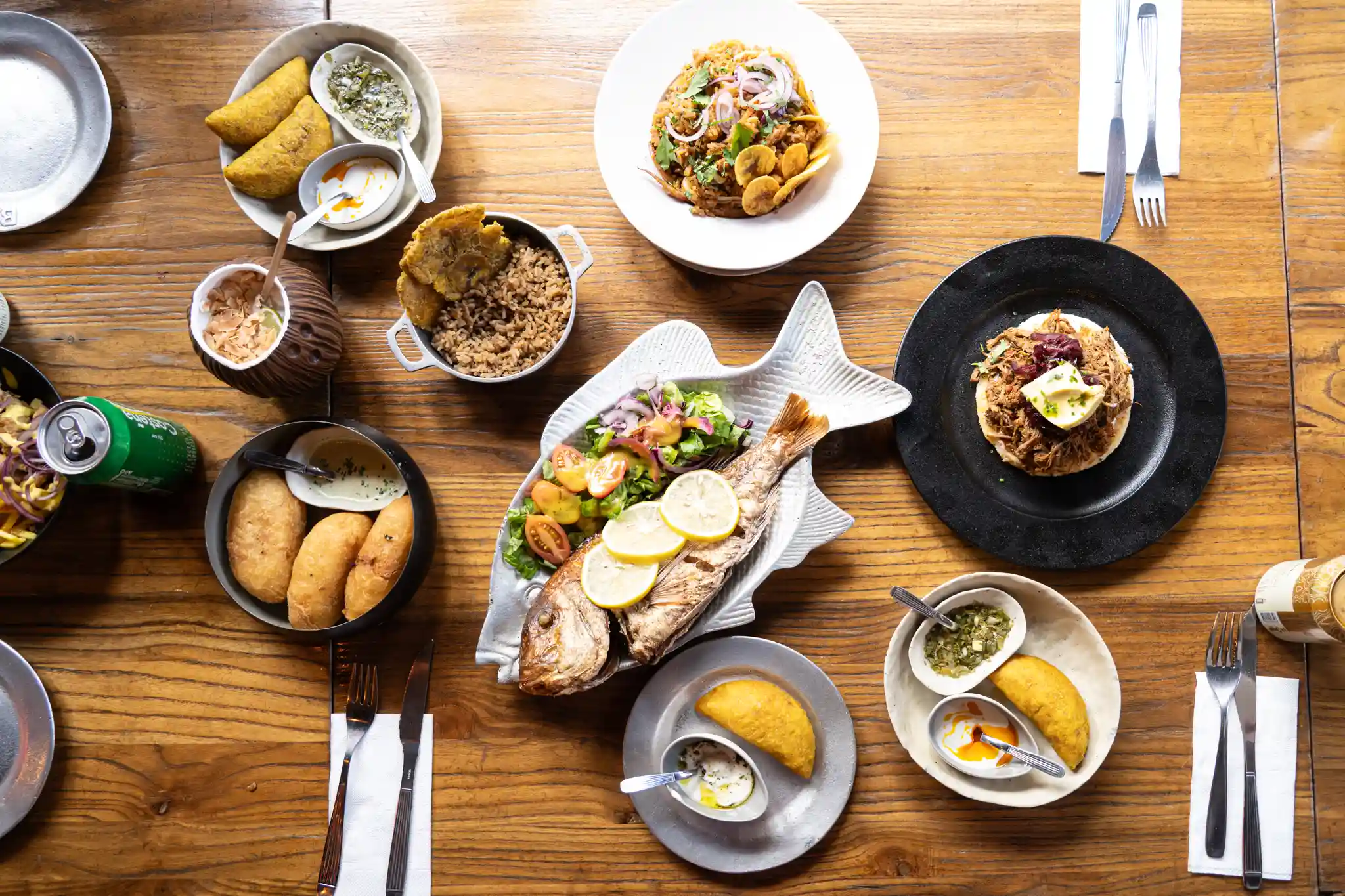
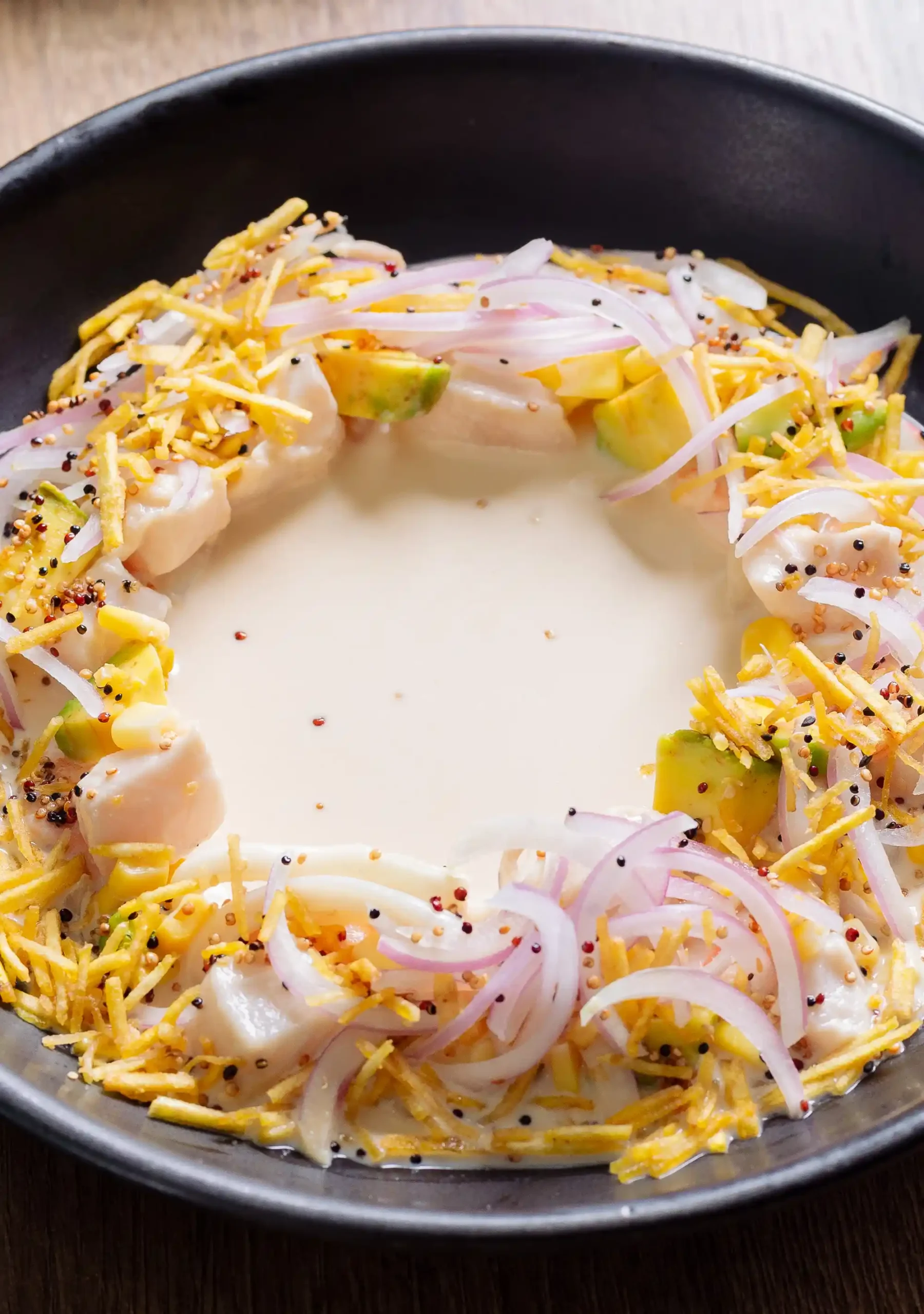
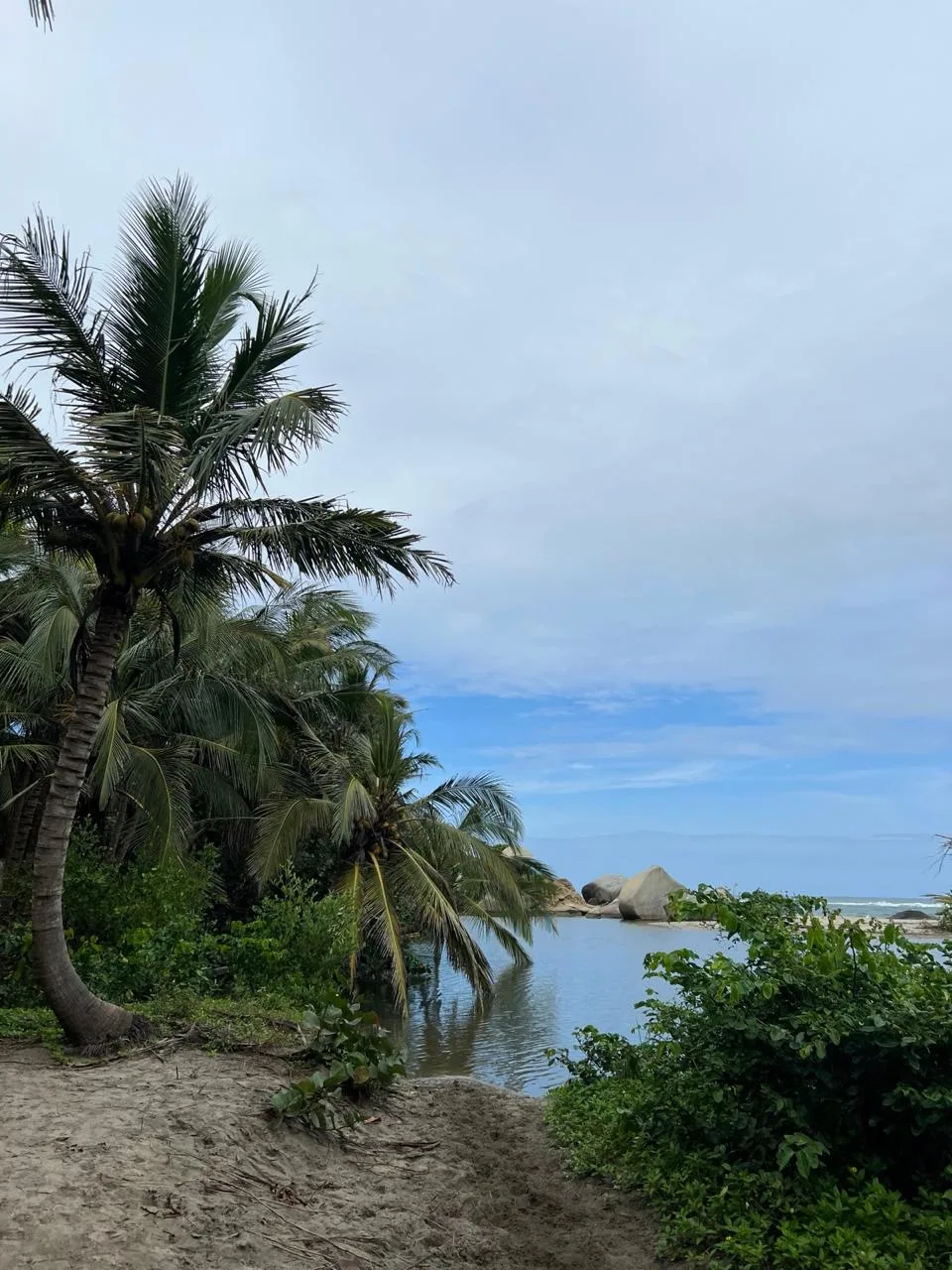
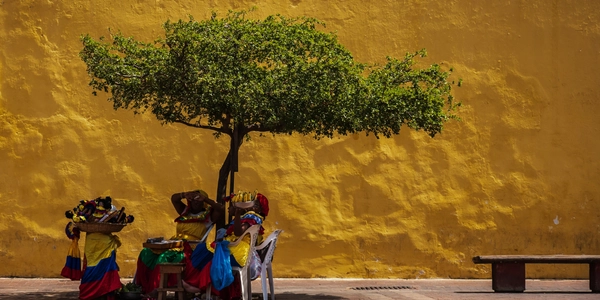
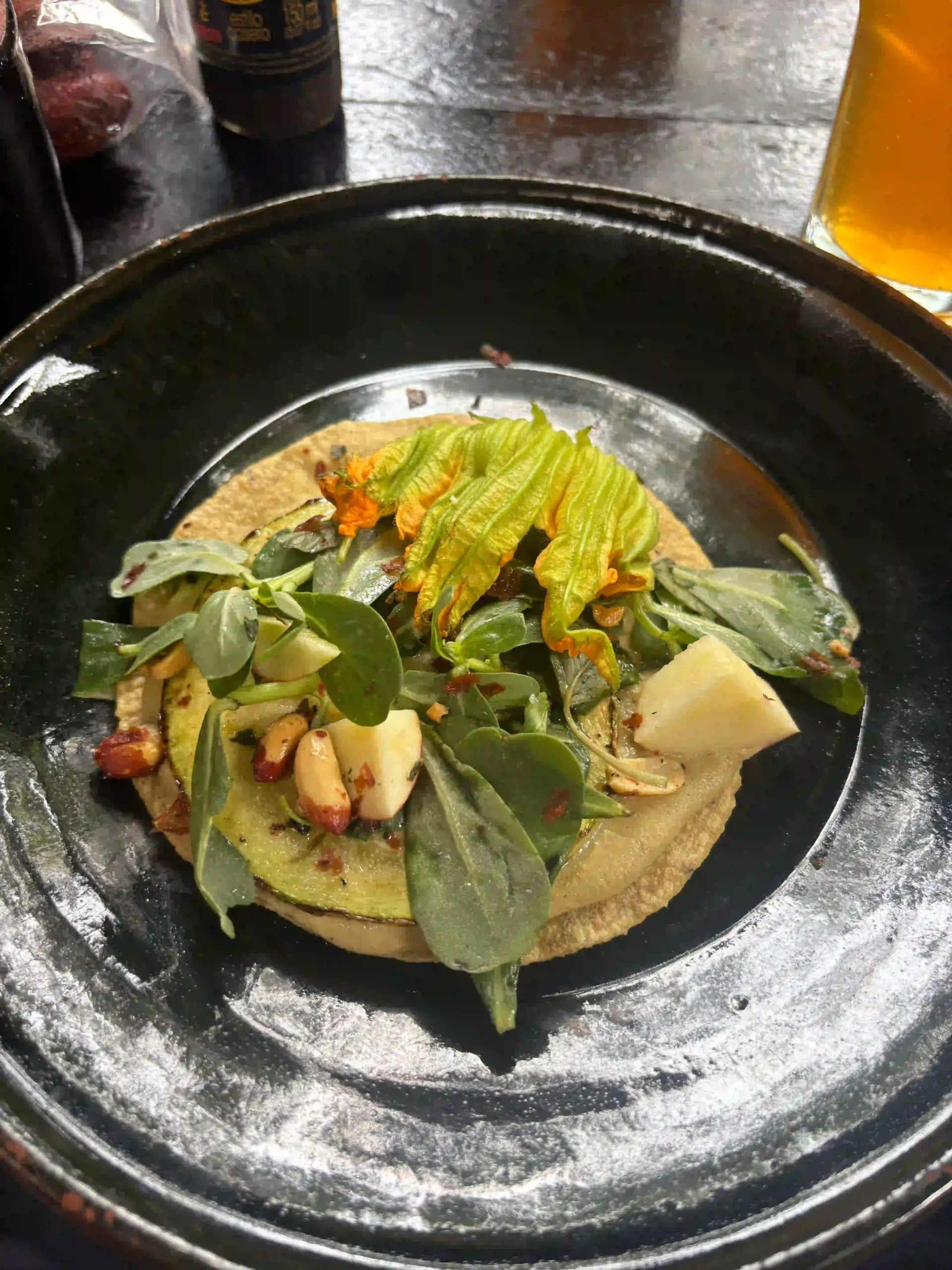
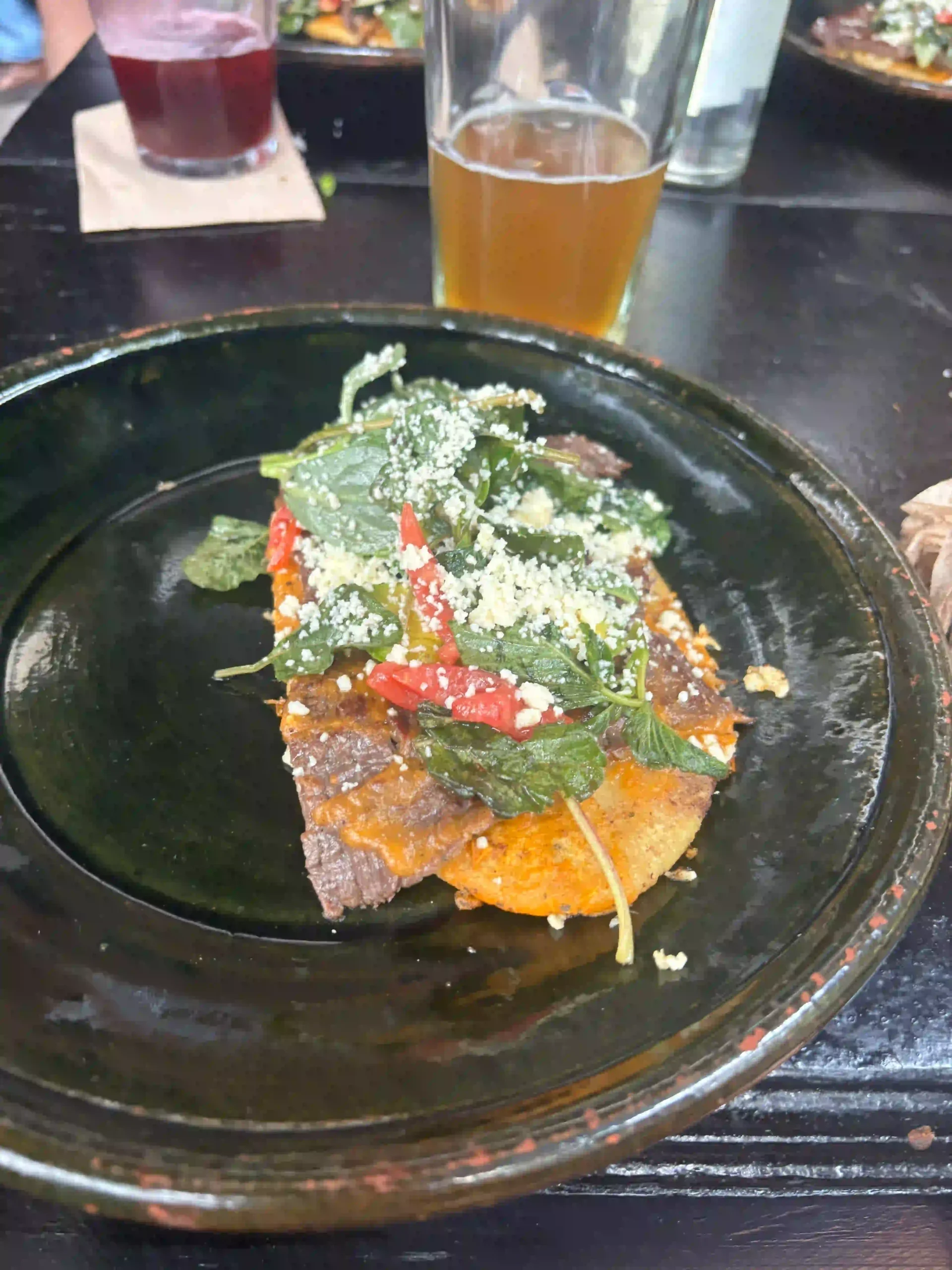
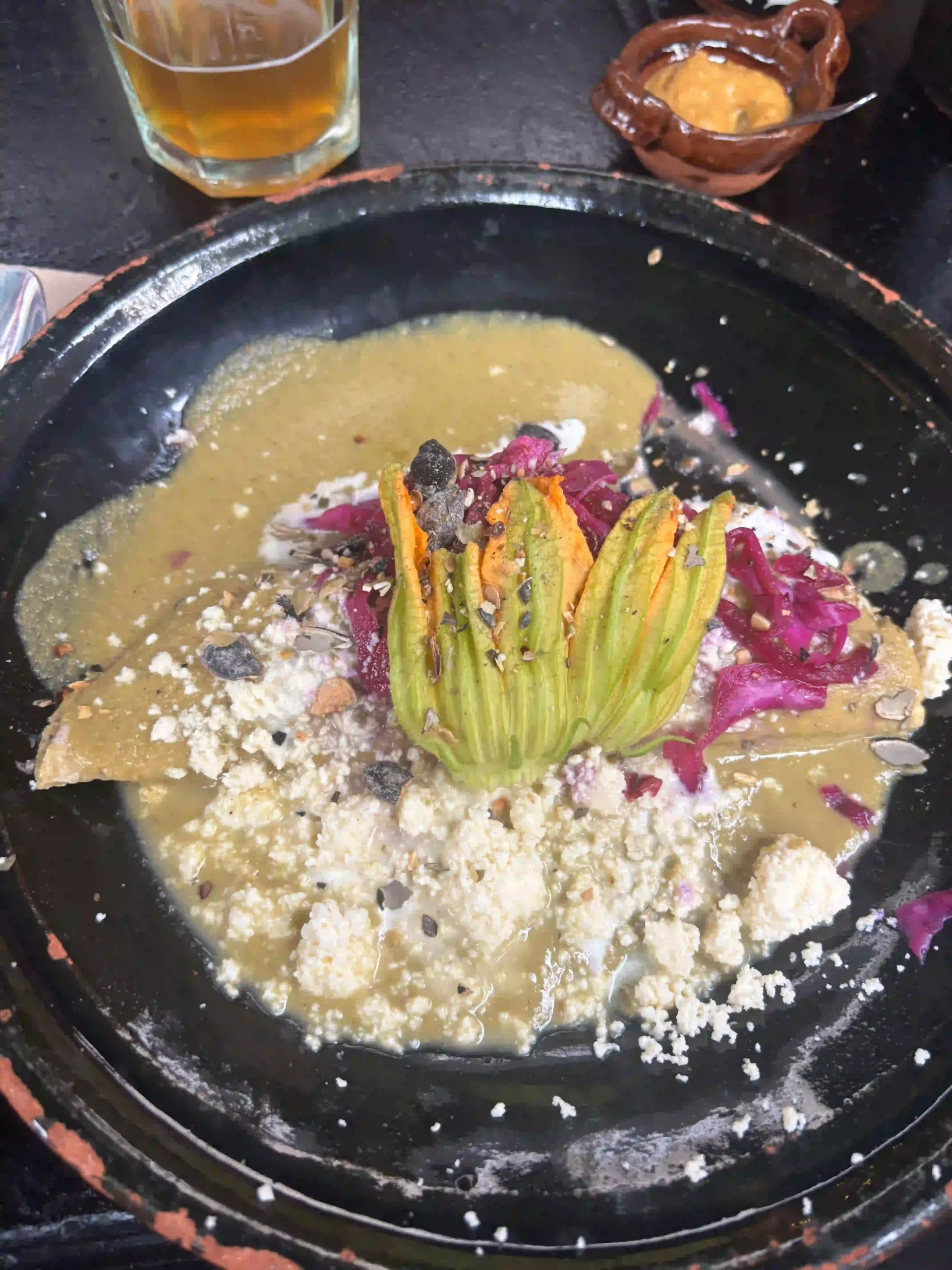
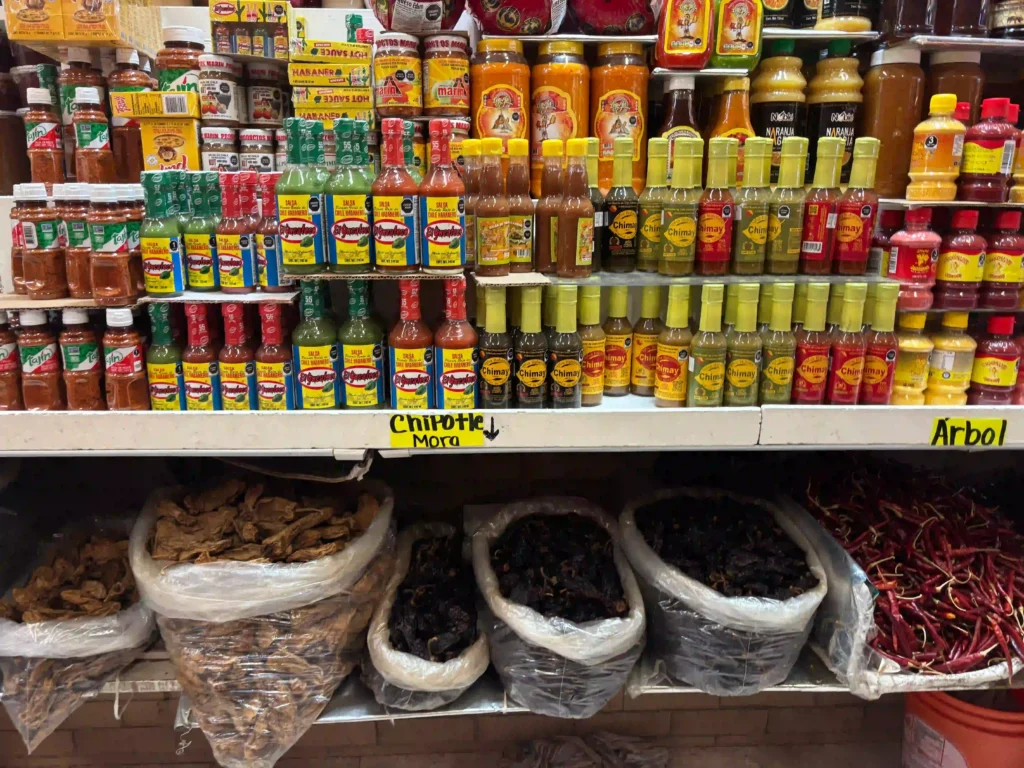
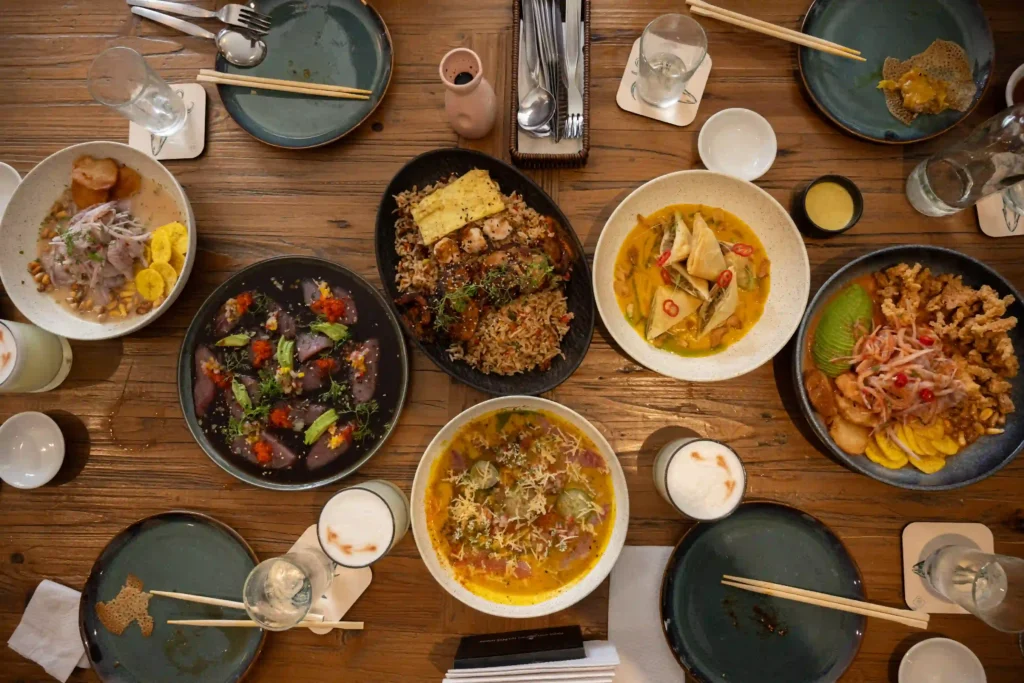
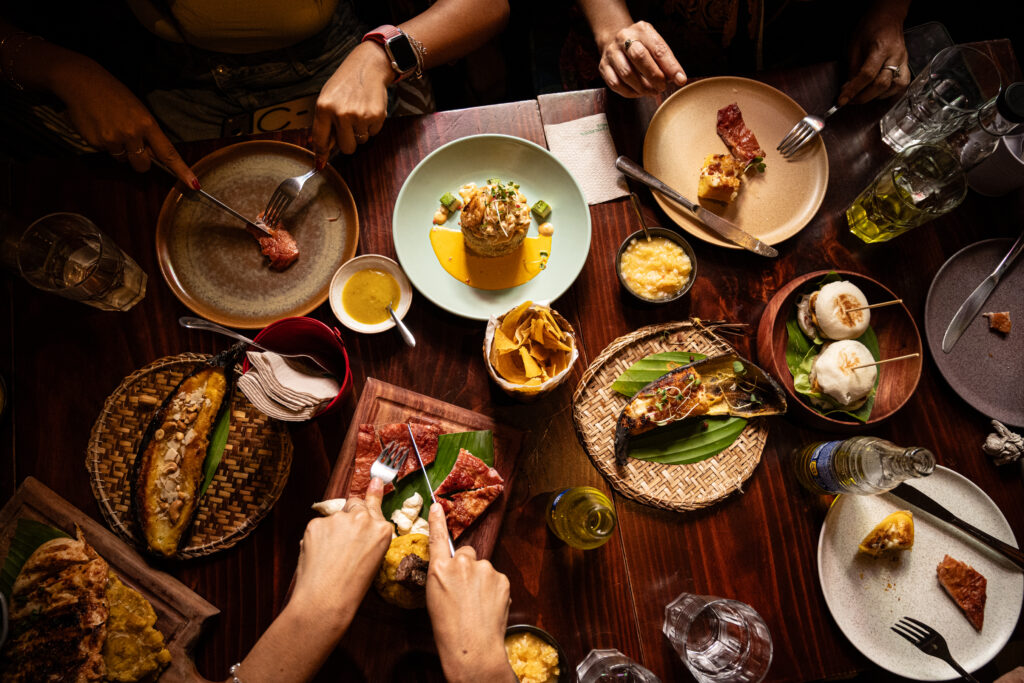
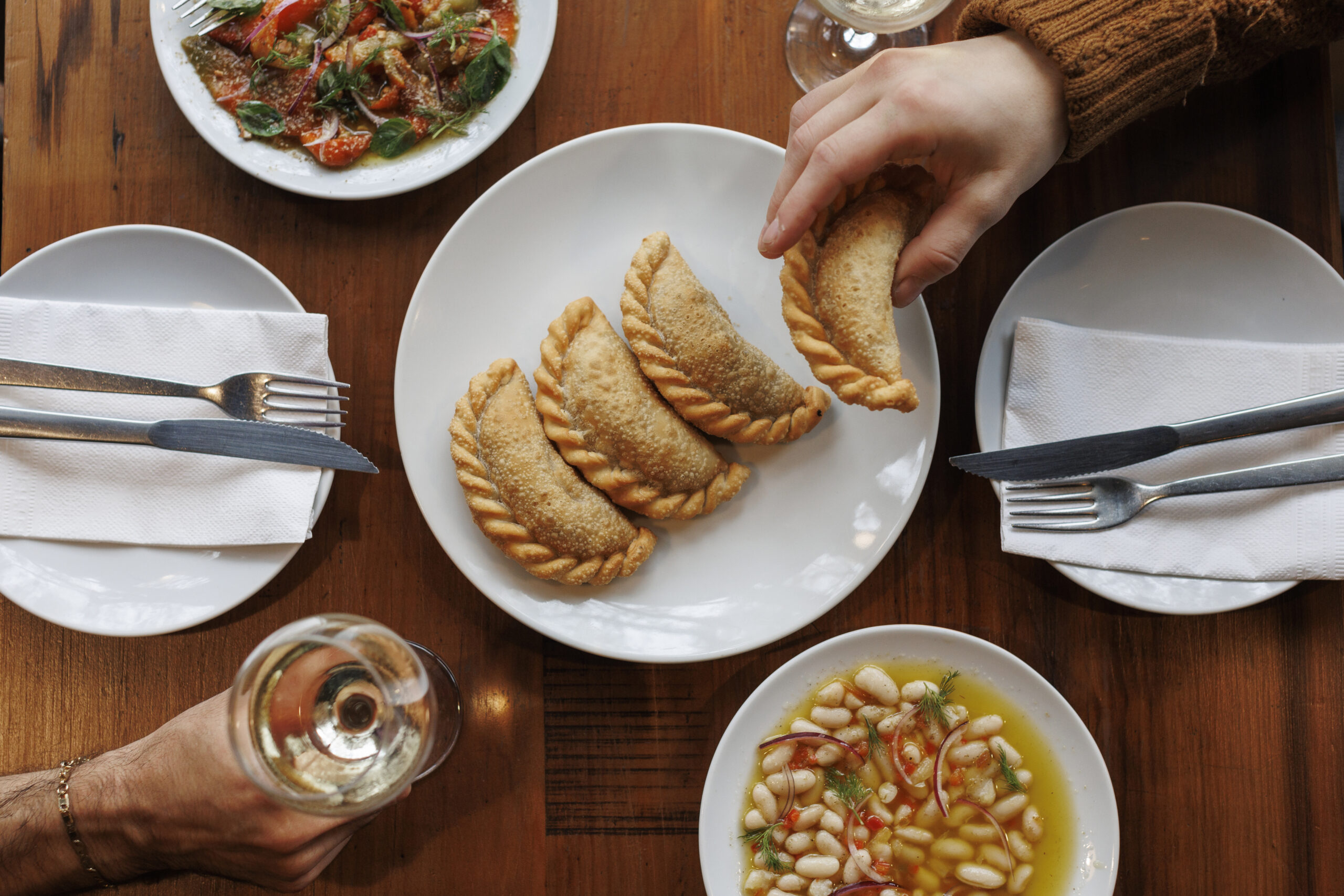
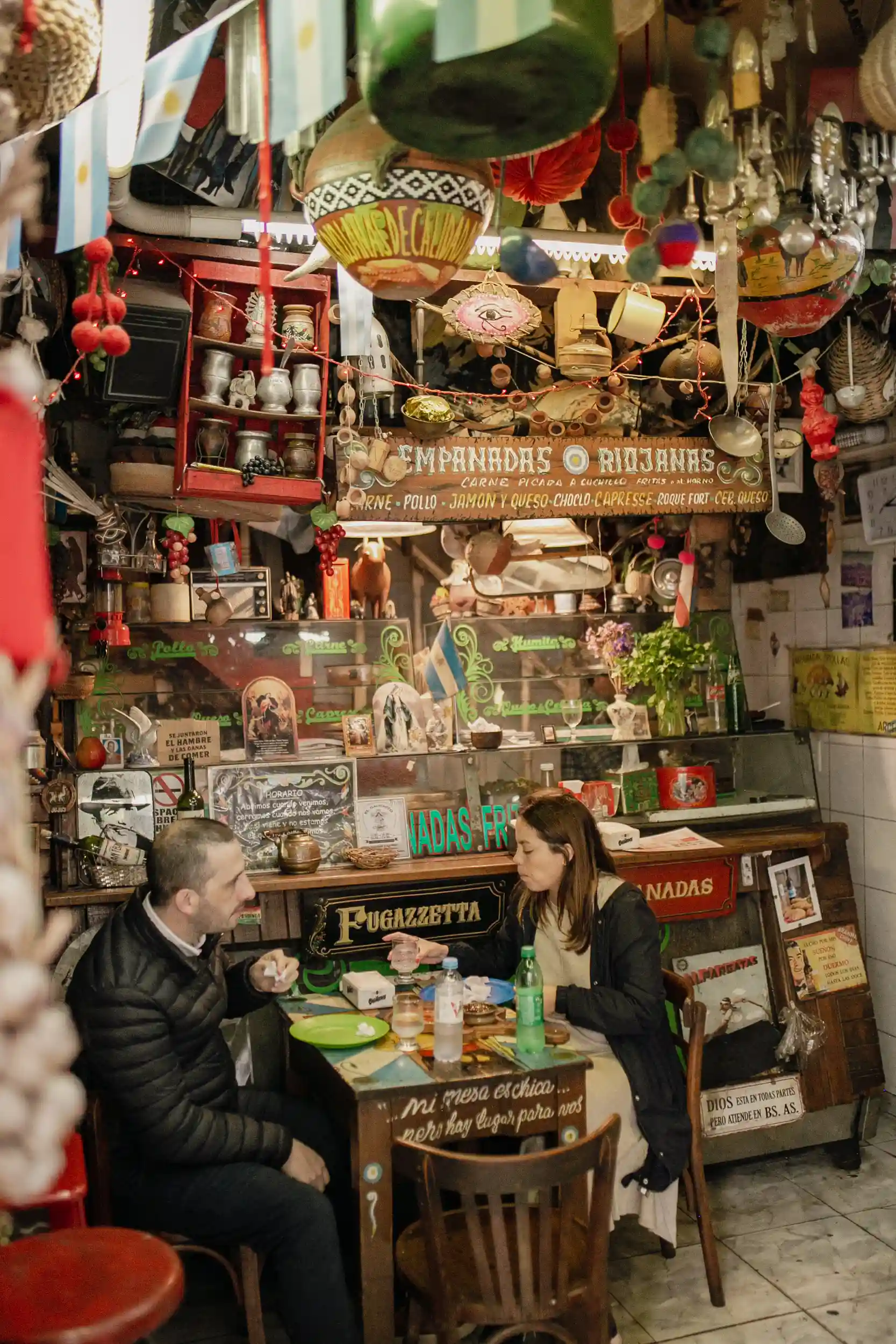
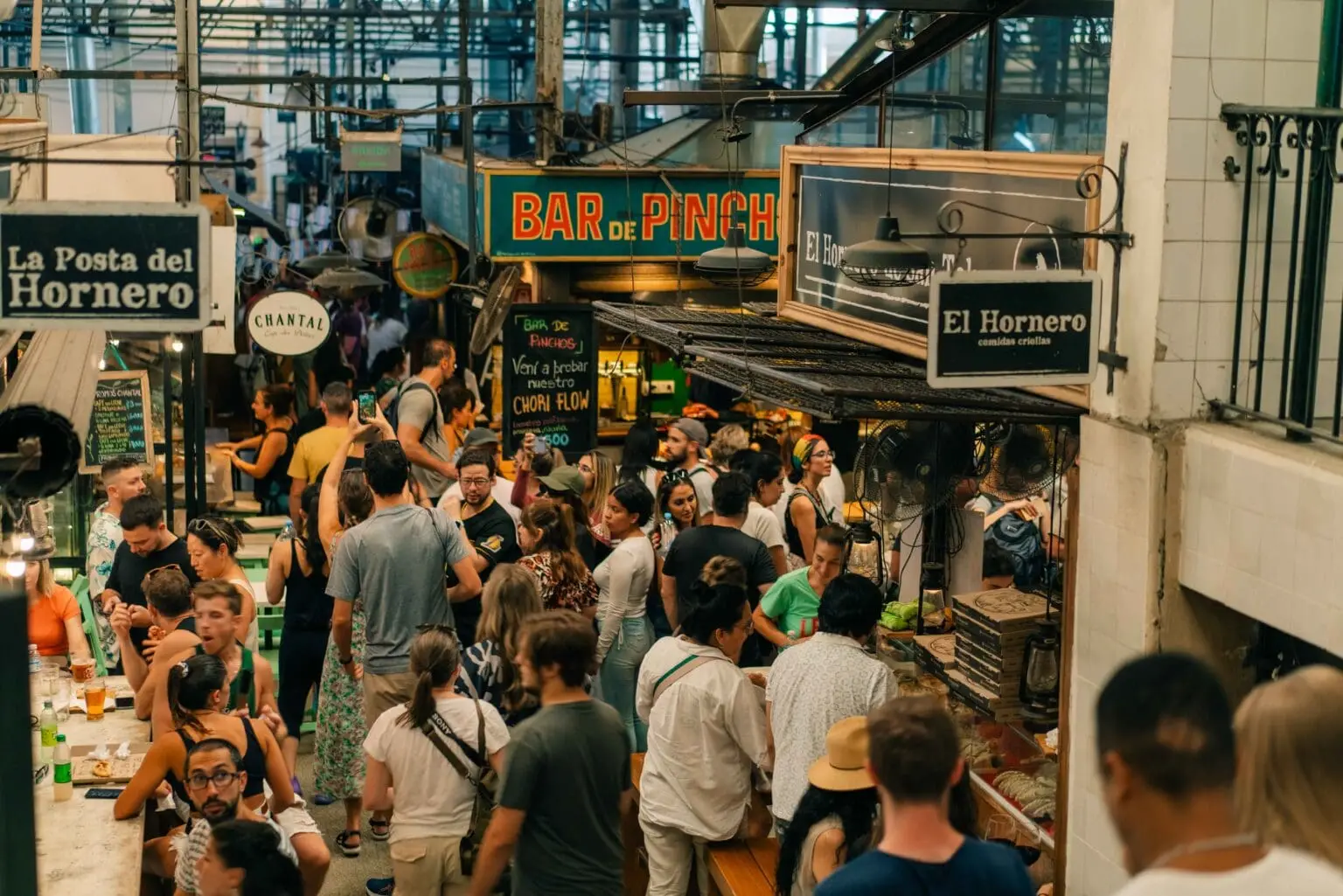
It is no secret why Rio de Janeiro is one of the most visited destinations in Latin America. The city delivers on every front: a massive urban pulse, deep cultural roots, golden beaches, towering mountains, lush jungle, and, what I love the most, an incredibly rich and expansive culinary scene.
When you think of Rio, you immediately picture something jovial, fun, alive, and intensely colorful. Its food represents exactly that. Well, obviously not the «alive» part, but it is undeniably vibrant, diverse, interesting, and intense.
In this guide, I am going to share the absolute highlights of Rio de Janeiro food. I will walk you through the true Carioca cuisine, breaking down exactly what to eat in Rio de Janeiro.
Carioca Cuisine: Food culture in Rio de Janeiro
Before we talk about specific dishes, you need to understand how Cariocas eat. In Rio, food is an outdoor sport. It is a deeply social, public, and unstructured affair. The city’s true dining rooms are not closed-off spaces with white tablecloths; they are the golden sands of the beach and the crowded sidewalks outside a neighborhood tavern. Eating here is more about conviviality. It isn’t something you stop to do. It’s part of the day, part of the beach, just an excuse to stay outside a little longer…
The Carioca Pantry: The Influences Behind Brazilian Cuisine
As I always say, the food culture of any place is intrinsically tied to its history and the people who passed through it. In the case of Brazil, and specifically when exploring the foods in Rio de Janeiro, we can clearly distinguish three main influences that shaped the local pantry:
The Indigenous Foundation
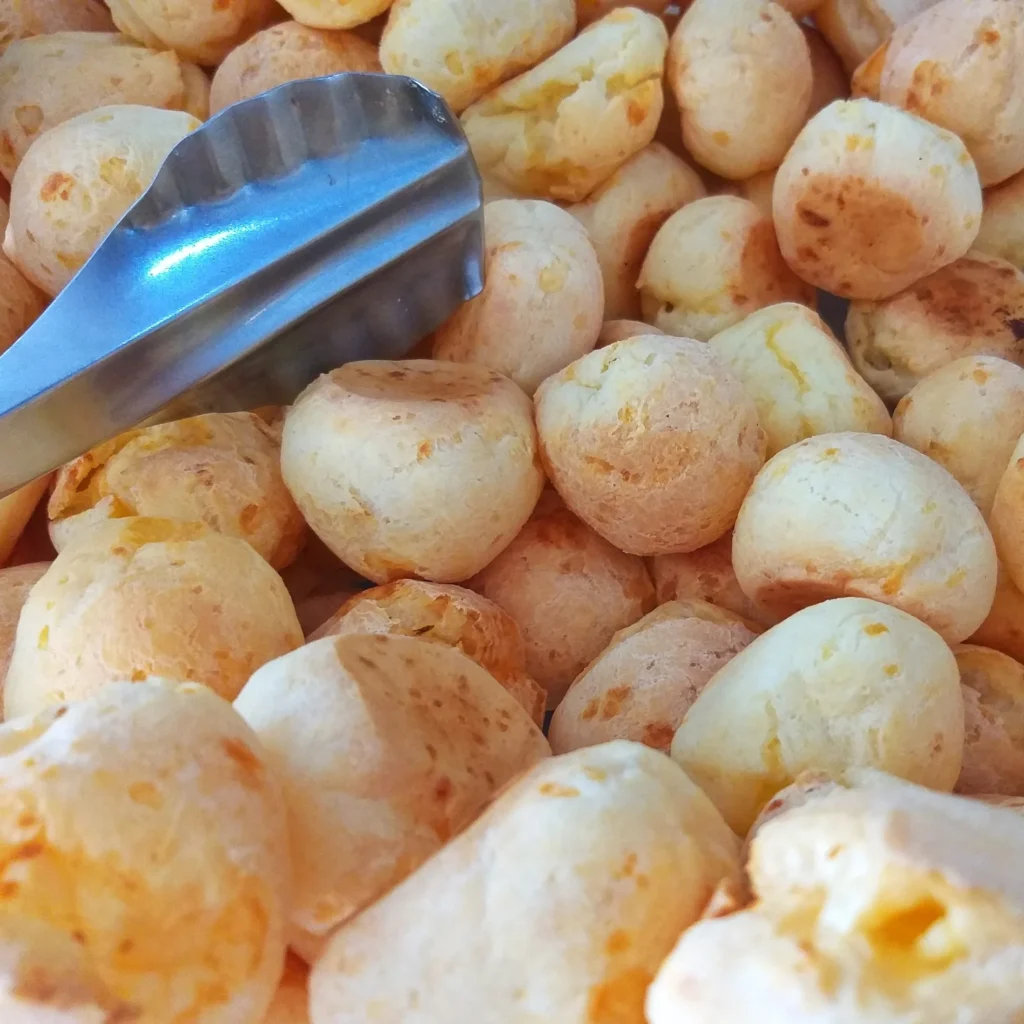
Long before colonization, Indigenous peoples mastered manioc (cassava). This root is the absolute base of the Brazilian pantry. You will see it everywhere: as toasted farofa sprinkled over stews, or baked into the famous cheese bread (pão de queijo) brought in from neighboring regions.
The African influence
Rio’s food DNA is deeply Afro-Brazilian. This influence brought dendê (a bright orange-red palm oil) that colors and flavors coastal stews, as well as the beautiful culture of feeding people generously in public. And while other parts of Brazil eat brown beans, Cariocas are fiercely loyal to the black bean.
The Portuguese Heritage
When the Portuguese royal court arrived, they brought a European cafe culture, a deep love for salt cod, and convent-style sweets heavily reliant on egg yolks and sugar.
Rio de Janeiro Restaurants and food stalls
When searching for the best Rio de Janeiro restaurants, you will quickly realize that the most authentic spots do not always look like traditional dining rooms. To experience real everyday eating and authentic Rio de Janeiro nightlife, these are the 4 main institutions I always point people toward:
The Boteco
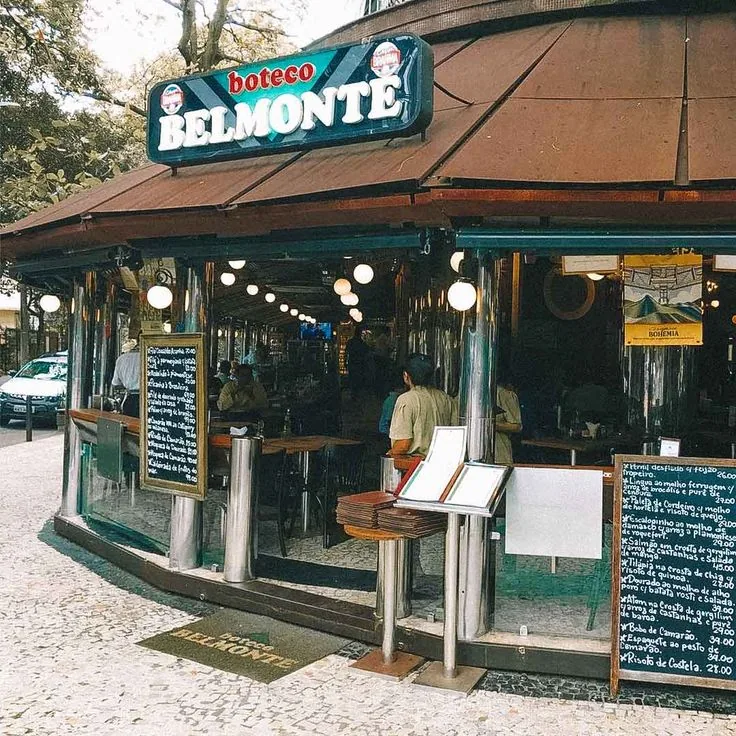
This is the actual heart of local socializing. Think of unpretentious corner bars with marble counters where locals stand on the pavement, drink ice-cold draft beer, and share deep-fried bar snacks. It is relaxed, rustic… Informal. Exactly what you’d picture for a Rio de Janeiro spot.
The Quiosque de Praia
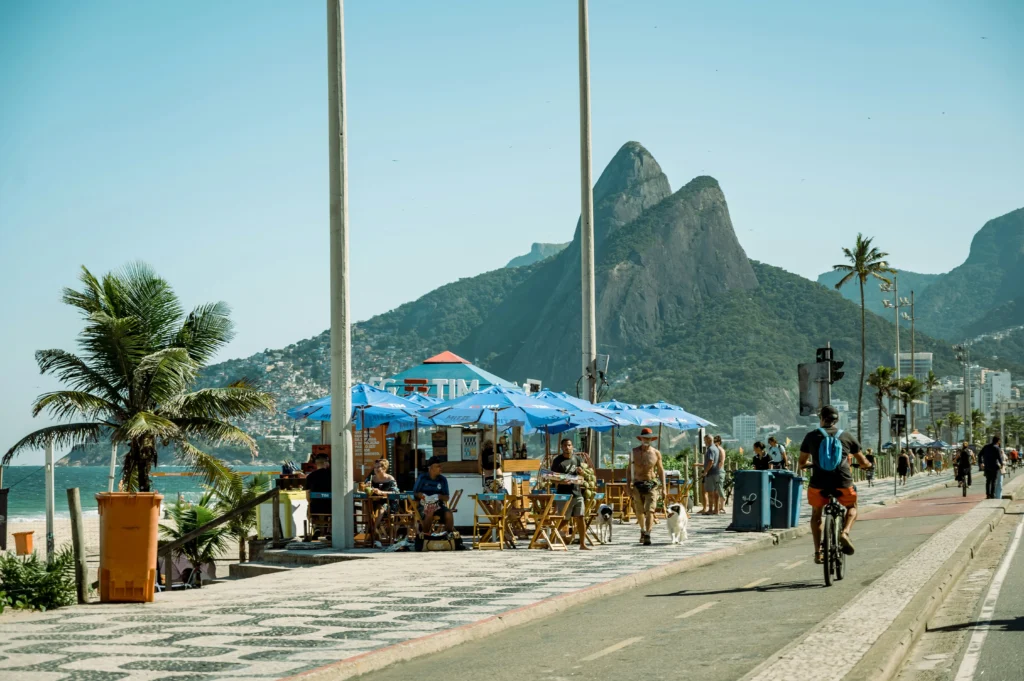
In Rio, the beach is quite literally an extension of the dining room. Picture this: you are sitting under a thatched umbrella right on the sand in Copacabana or Ipanema, wearing flip-flops, just listening to the waves. You are sipping fresh coconut water or an ice-cold drink, and snacking on a crispy, deep-fried pastry. It is the chill spot, and to me, it is where the real vacation actually happens.
The Casa de Sucos
Found on nearly every corner, these open-air juice bars are daily staples. But what truly makes them unique is the mind-blowing tropical fruit they display. You simply cannot talk about Brazilian cuisine without mentioning native fruits from the Amazon and the Atlantic Forest. The Casa de Sucos is where you experience these flavors in action.
Fine Dining Scene
Not everything is beach kiosks and botecos. Rio de Janeiro has world-class cuisine… A serious, Michelin-backed fine-dining scene. The main districts for this type of cooking are Ipanema, Leblon and Botafogo.
Iconic Brazilian Dishes: What You Can’t Leave Rio Without Trying
If you want to eat like a local, you need to know exactly what to order and, just as importantly, where you should be eating it. Here is my personal list of the essentials:
Feijoada
This is the closest thing Brazil has to a national dish, and in Rio, it is a sacred Saturday ritual. It is a rich, slow-cooked black bean stew loaded with various cuts of pork and beef, served with rice, farofa, and collard greens.
Petiscos & Ice-Cold Draft Beer
Petiscos basically are bar snacks. Think of them as Brazil’s equivalent to Spanish tapas or an Argentine picada: savory, bite-sized comfort foods meant to be eaten slowly while sharing a conversation. They go so well with an ice-cold draft beer.
My three personal favorites are:
Pastel: A large, ultra-crispy deep-fried pastry pocket filled with meat, cheese, or palm heart.
Dadinhos de Tapioca: Crispy, golden cubes of tapioca pearls and local cheese, usually served with a sweet and spicy pepper jelly.
Coxinha & Bolinho de Bacalhau: The teardrop-shaped shredded chicken croquette, and the classic salt-cod and potato fritter.
Tropical Fruits, Sucos & Açaí Bowls
Brazil’s fruit galaxy is mind-blowing, and there’s a lot you can try if you’re into fruits.
Fresh Juices (Sucos): You must try native juices like caju (cashew fruit) or maracujá (passionfruit, my favourite).
Pro tip: While you are ordering your drink, grab a warm pão de queijo (a gluten-free cheese bread made from manioc starch). I know it does not sound like a match, but a Suco paired with pão de queijo goes pretty well!
Açaí Bowls: An Amazonian super-fruit that Rio turned into a beachside lifestyle. Now it has spreaded around the world! But clearly, trying it during your perfect scape in Rio sounds better… Traditional Carioca açaí is served thick, icy cold, and blended naturally, sharing a texture similar to ice cream or thick yogurt. While fresh banana and crunchy granola are the classic toppings, many spots will let you customize it further to your liking. Grab a bowl at a Casa de Sucos or a beach quiosque in Ipanema to cool down after the beach.
Moqueca & Picanha
For a heavier, sit-down meal, these two are mandatory.
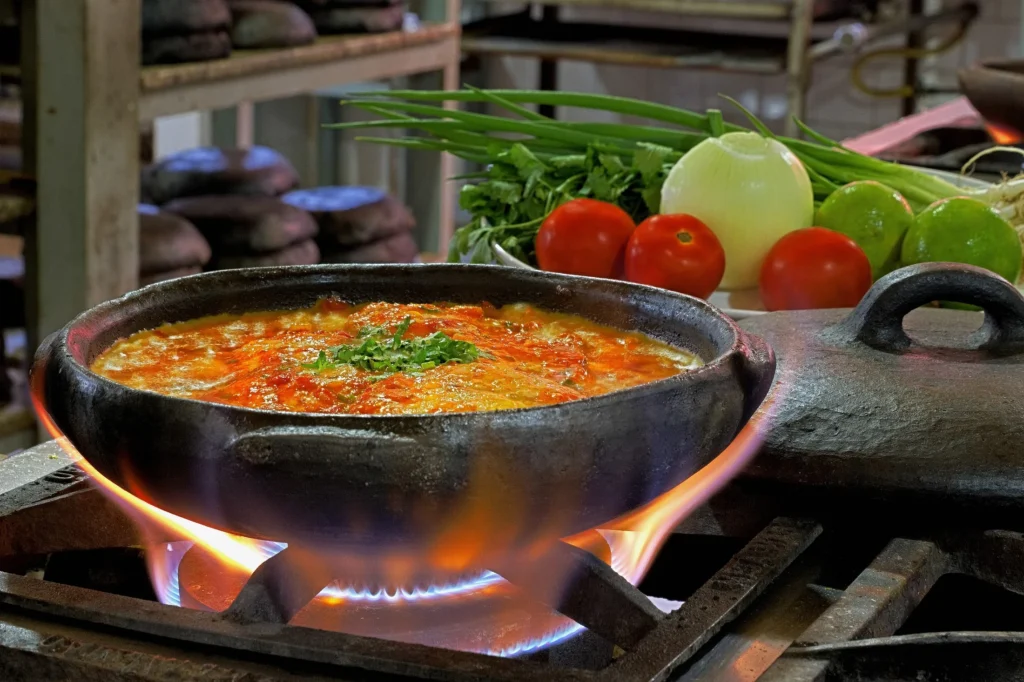
Moqueca: A glorious coastal seafood stew cooked in a slow simmering clay pot. It wraps fresh, tender catch-of-the-day fish and shrimp in a velvety, aromatic bath of coconut milk, ripe tomatoes, sweet peppers, and dendê oil. It hits your palate with both rich earthiness and coastal freshness. You’ll find it at a Restaurante Baiano (Afro-Brazilian restaurant).
Picanha: If love meat just as i do, o churrasco (Brazilian barbecue) is essential, and the picanha (sirloin cap) is the best of the grill! What makes it completely different from other cuts is its thick, succulent layer of fat that renders directly over the open fire, bathing the beef in its own juices and giving it an intensely savory, melt-in-your-mouth crust.
Where to Eat in Rio de Janeiro: The Culinary Epicenters
This is how the city’s food scene is mapped out: the actual cheat sheet. While you can find great neighborhood spots all over town, Rio’s best culinary action is heavily concentrated in a few key districts:
Leblon:
It is chic, incredibly scenic with its mountain views framing the ocean, and strikes that perfect balance of being relaxed without ever feeling sloppy. Keep in mind that it can get very quiet and residential, which is absolutely perfect if you are in the mood for a peaceful, upscale evening rather than a loud night out. It offers a sophisticated yet semi-casual dining vibe, a massive variety of spots, and an authentic, high-end vacation feel.
Ipanema:
Right next to Leblon but much more social and vibrant. If it was a song, would definitely be a bossanova. This is where neighborhood life spills onto the streets, perfect for an afternoon stroll.
Pro tip: Both in Leblon and Ipanema, the sunsets over the water are an absolute spectacle. The ultimate local plan is to catch the golden hour by the beach and roll right into dinner!
Copacabana:
I know it is the classic choice, but this is honestly one of my personal favorites. It just has that unmistakable, pure vacation vibe that instantly puts you in holiday mode. Of course, it all depends on the travel style you are looking for. It can be a bit chaotic and much more crowded than Leblon. But if you are in the mood to hop between old-school botecos and lively beach kiosks, Copacabana delivers an unapologetically fun experience.
Botafogo:
The city’s world-class restaurant hub. Here you will find high-end dining and top-tier chefs, though it has a completely different, urban energy compared to the beachside neighborhoods.
Rio de Janeiro Food and Travel Frequently Asked Questions
Do I need to tip at Rio de Janeiro restaurants?
In most restaurants and botecos, a standard 10% service charge is automatically included in the final bill. You are not strictly required to leave extra, though rounding up for exceptional service is always appreciated.
Where are the best Rio de Janeiro restaurants located?
For the best culinary experiences, the South Zone is the ultimate hub. Neighborhoods like Leblon and Ipanema are packed with everything from casual beach kiosks and lively botecos to Michelin-starred dining spots.
What is an açaí bowl and what does it contain?
Traditional Carioca açaí is an Amazonian super-fruit whipped into a thick, icy cold sorbet with a texture similar to ice cream or thick yogurt. While classic bowls are traditionally served topped with sliced fresh banana and crunchy granola, many local spots and juice bars will let you customize your toppings even further.
Is Rio de Janeiro dangerous for travelers?
Like any major global metropolis, Rio has areas you should be mindful of, but the main tourist and gastronomic hubs, especially the South Zone districts like Leblon, Ipanema, and Copacabana, are generally safe, highly walkable, and welcoming to visitors. Standard common sense applies: keep an eye on your phone while walking around.
Does Uber work in Rio de Janeiro?
Yes, absolutely, and it is generally my go-to recommendation for getting around the city. Uber is widely available, reliable, and usually much safer and cheaper than hailing a traditional street taxi, especially at night. Just make sure to keep your phone tucked away safely when stepping out of the car.
The nobel prize winner Gabriel García Márquez, who spent most of his life writing about the heat, the light, and the impossible magic of Cartagena, once said that nostalgia starts with food. In a 1990 interview, he confessed that what he missed most when he was away wasn’t the colonial balconies or the sea breeze. It was thearepa de huevo, the carimañola, the sancocho...
He wasn’t being poetic. He was being precise. Because food in Cartagena is not a complement to the experience: it IS the experience. It’s the fastest, most honest shortcut to understanding what this city actually is: a Caribbean port where African, Indigenous, Spanish and Lebanese influences have been cooking together for years.
This layered and alive cuisine is impossible to understand from a restaurant with an English menu in the Walled City.
To bring you this guide, our team at Sherpa did what any obsessive local hosts would do: we spent months logging hours at sweltering street corners, learning from ancestral cooks, and mapping out the true culinary architecture of the coast. This article is the result of that collective legwork: everything you need to navigate food in cartagena— not just what to eat and drink, but exactly what each culinary layer means, where to find it, and why it matters.
Let’s eat.
Why Cartagena’s Food Tastes Like History
Most cities have a food scene. Cartagena has a food argument — five centuries of cultures colliding, absorbing each other, and leaving their mark on every plate, every technique, every street corner. Understanding why the food tastes the way it does here means understanding two things: the geography that shaped the pantry, and the history that filled it.
The Geography: Sea, Lagoon, and Hills
Cartagena sits on the edge of the Caribbean, but its food doesn’t come from one source; it comes from three. The sea provides the fish: red snapper, shrimp, blue crab, sierra, caught fresh every morning by fishermen from La Boquilla and the villages around the Ciénaga de la Virgen.
The ciénaga — a vast mangrove lagoon that hugs the city’s eastern edge — is an ecosystem of its own, a brackish world of crabs, clams, and the kind of biodiversity that explains why the same stretch of coastline produces both delicate ceviche and hearty sancocho. And behind the city, the Montes de María hills bring a different pantry entirely: yuca, ñame, plantain, corn, the tubers and starches that anchor every Caribbean Colombian meal.
This is why Cartagena’s food feels so abundant: the land and the sea give generously, and the kitchen learned to use everything.
The History: Five Cultures, One Kitchen
Geography explains the ingredients. The way they’re cooked is another history.
The Indigenous foundations
The Indigenous foundations came first. For at least 5,000 years before the Spanish arrived, Carib-family peoples — the Zenú, the Mokaná — farmed the Caribbean lowlands. They grew yuca, corn, plantain, ají dulce, and squash. They cooked on clay griddles called budares, wrapped food in plantain leaves, fermented corn into chicha. When you bite into an arepa de huevo or a bollo in Cartagena today, you’re eating from a pantry that predates the Walled City.
The Spanish Arrived
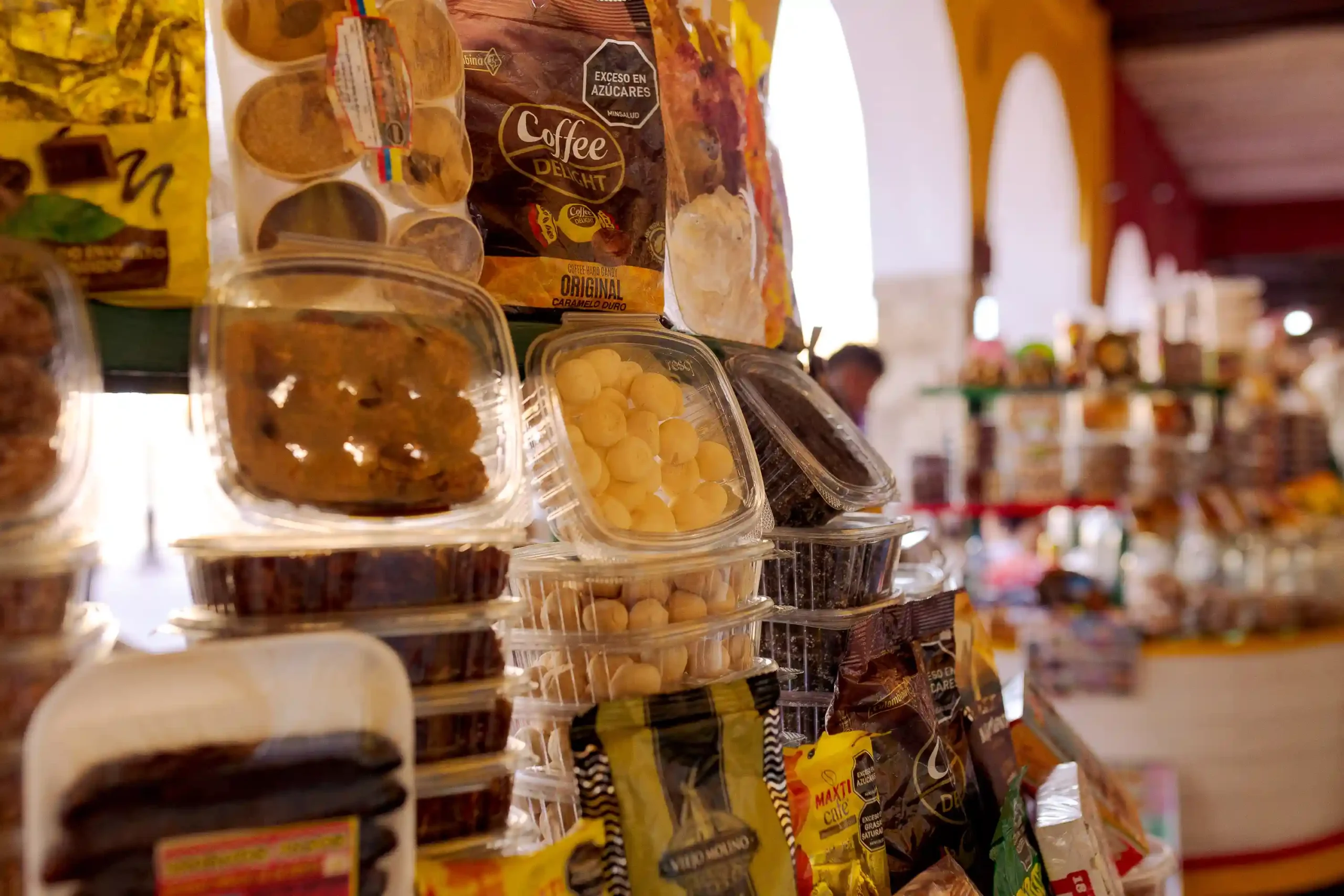
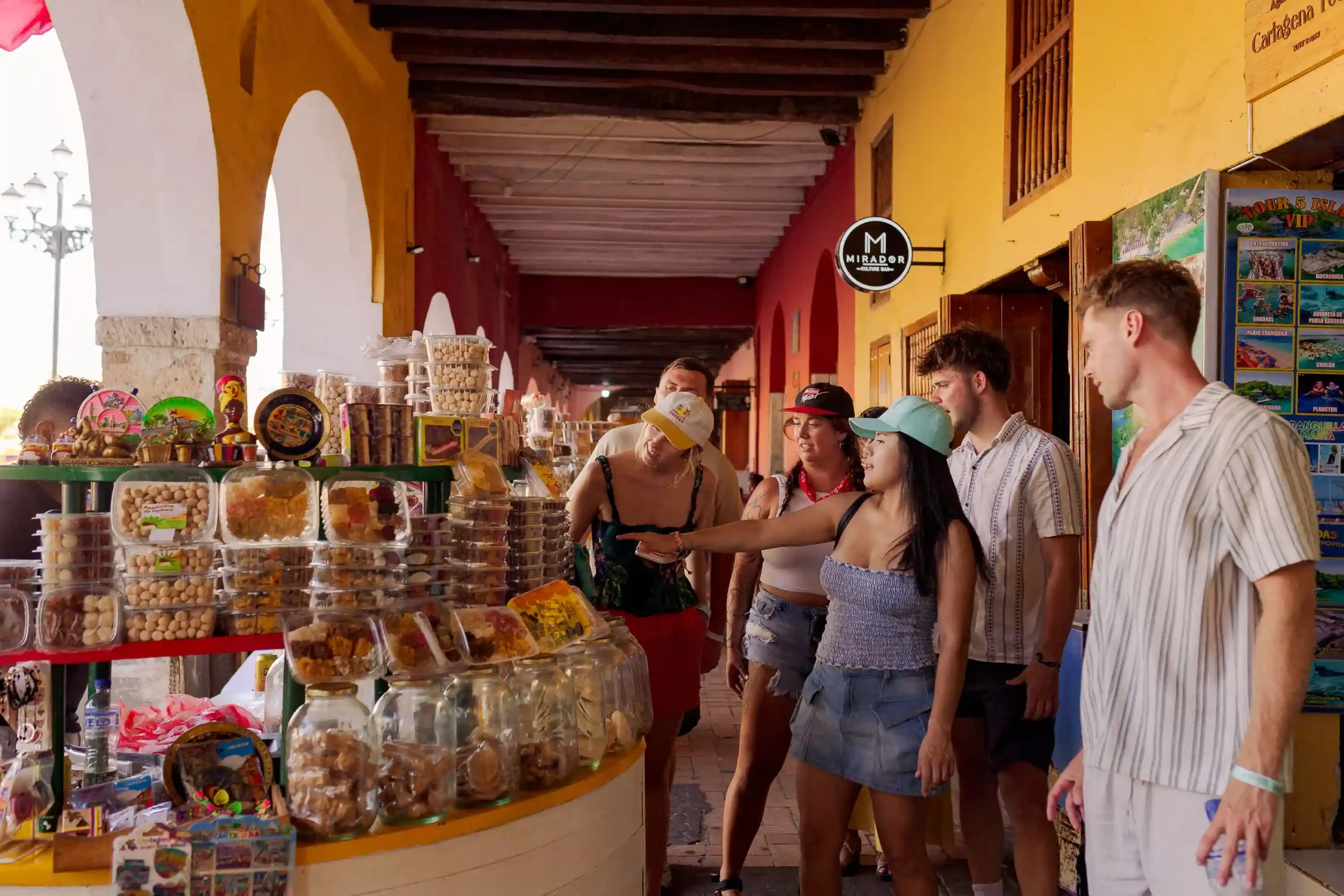
Then the Spanish arrived in 1533 and rewrote the menu. Pedro de Heredia founded Cartagena de Indias, and within a century the city became the most important port of Spain’s northern South American empire. It was basically the gateway for gold, silver, and enslaved Africans. The Spanish brought cattle, pork, chicken, rice, onion, garlic, citrus, and panela (the unrefined cane sugar that would become the sweetener of everyday life). The entire dessert tradition of Cartagena — the cocadas, the alegrías, the caballitos sold at the Portal de los Dulces — runs on panela and the Catholic religious calendar that the Spanish imposed.
The third Force in Cartagena’s food.
The force that truly defined Cartagena’s cuisine came from Africa. This was the largest slave-trading port in all of Spanish America. By 1777, roughly 72% of Cartagena’s population was of African descent.
Culinary historian Diane M. Spivey has documented how enslaved Africans brought not just labor but culinary expertise, agricultural knowledge, and cooking techniques that fundamentally shaped the food of the Americas — a contribution that has been systematically overlooked for centuries. In Cartagena, this is not a footnote. It’s the main chapter.
The deep-frying technique that gives Cartagena its most iconic street food — the arepa de huevo, the carimañola, the patacón — is African in origin. Coconut milk as a braising liquid, one-pot rice cooking, the use of every part of the animal — all of it traces back to African communities who carried their food culture across the Atlantic and rebuilt it here, under conditions of brutal oppression, with whatever ingredients they could access.
Self-liberation and cultural retention went hand in hand. The formation ofpalenques, communities established by Africans who escaped into the forests and hills of the Caribbean, allowed many African culinary and cultural patterns to be preserved. San Basilio de Palenque, about 50 kilometers southeast of Cartagena, was founded around 1603 by Benkos Biohó, an escaped enslaved leader. It became the first officially recognized free African territory in the Americas. It’s a UNESCO Intangible Heritage site.
The Palenqueras you see selling fruit and coconut sweets on the streets of Cartagena today are the direct descendants of those communities. The fruit they carry on their heads is a living, edible line connecting the present to the freedom economy their ancestors built.
A migration almost nobody talks about.
Between 1880 and 1930, thousands of Lebanese and Syrian Christian families landed at the Caribbean ports: Cartagena, Barranquilla, Santa Marta. We have this thing in Latin America where we call everyone from that part of the world «turcos» — it’s not accurate (they weren’t Turkish, they just carried Ottoman passports), but the nickname stuck decades ago and at this point it’s not going anywhere. Neither did the food.
They were small in numbers, but their influence on the kitchen was quietly massive. Kibbe became street food, sold casually next to empanadas and carimañolas on the same trays, fully absorbed into the coastal diet without anyone calling it «foreign.» Tabbouleh appeared with local twists… sometimes with mango or avocado. Arab rice became a coast staple. As a fun fact… Shakira’s family comes from this community.
The Caribbean New Wave
For a long time, the story of Cartagena’s food was written entirely in the past tense. But there is a fifth force shaping the city’s tables in real-time.
Let’s call it the Caribbean New-Wave. A modern generation of Colombian chefs realized they were sitting on one of the most biodiverse, culturally layered pantries on earth. Instead of just repeating the classics, they started looking backward at their deep ancestral roots, and outward at the rest of Latin America.
This is a Pan-Latam dialogue using coastal ingredients. Take the sharp, acidic precision of a classic Peruvian ceviche, but rebuild it entirely with local sea snail, corozo , and creamy suero costeño. Chefs are venturing into the Montes de María and the dry tropical forests to forage forgotten native crops that even most Colombians have never heard of.
The result is a culinary movement that takes the unapologetic flavor profile of a humble street-corner fry stand and translates it into world-class fine dining. Restaurants like Celele are putting this philosophy on the global map.
What to Eat in Cartagena: Our Veredict on The Dishes You Can’t Miss
Each dish below is a cultural document. I’m listing them in the order I think makes the most sense for a first-time visitor: start with the street, move to the table, finish with the sweet.
Arepa de Huevo
A round corn-dough pocket, fried once to puff it open, split, filled with a raw egg, sealed back up, and fried a second time until the egg cooks inside. It sounds like it shouldn’t work but works perfectly (and taste great too).
This is the clearest single-bite summary of Cartagena’s DNA: corn from the Indigenous lowlands, egg from the Spanish pantry, double-frying technique from the African kitchen. Three cultures, one snack, eaten standing up at a corner stand before the sun gets too hot.
Carimañola
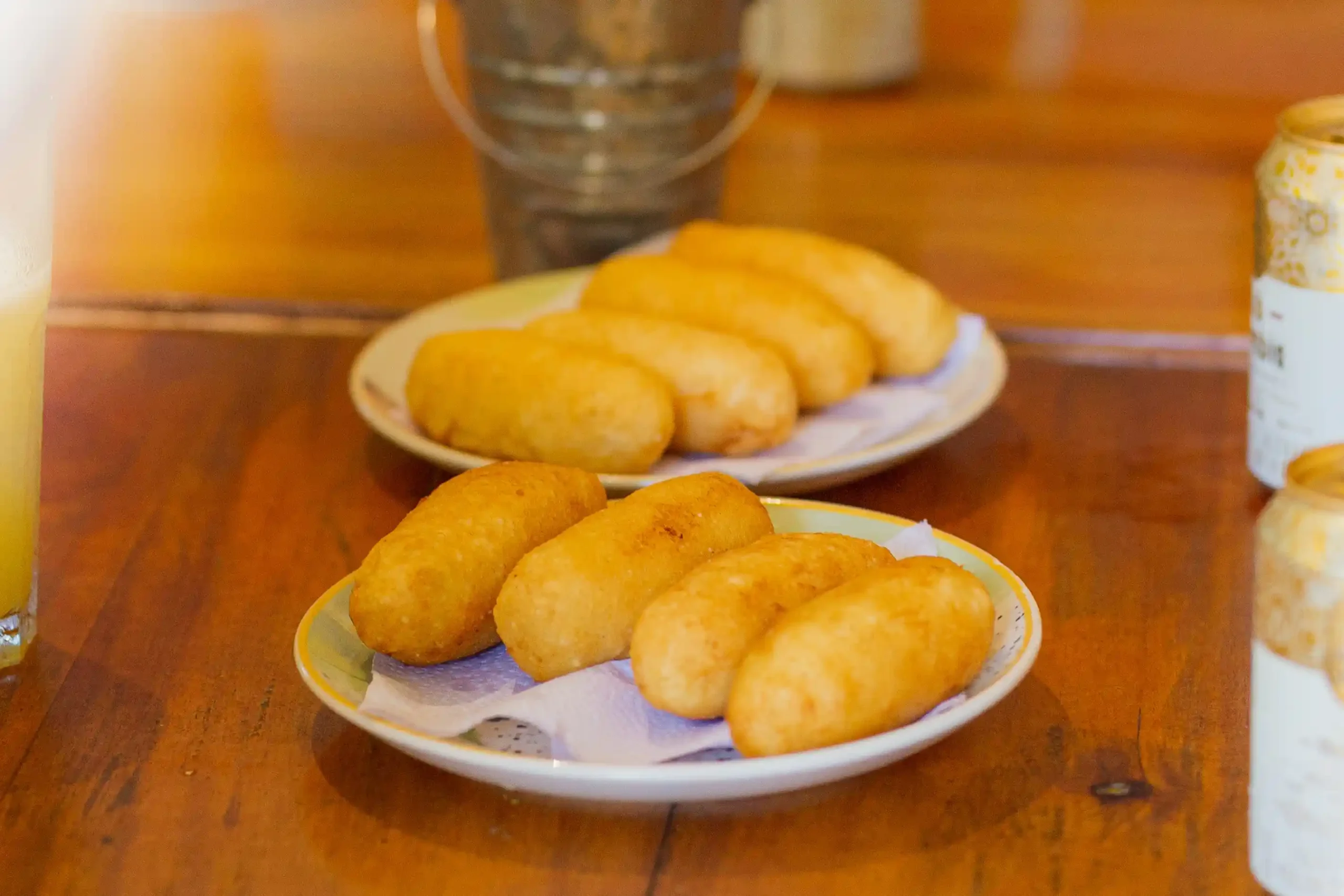
Think of it as the arepa’s cousin, but made with yuca instead of corn. A torpedo-shaped cassava-dough fritter, stuffed with seasoned ground beef or cheese, deep-fried until the outside cracks and the inside stays soft. So again… Indigenous ingredient, African technique, eaten at the same corners, at the same hours. The yuca vs. corn split runs through the entire Caribbean coast, and tasting both back-to-back is the fastest way to understand it.
Arroz con Coco (Coconut Rice)
There are two versions of this side dish (that could actually be a backbone of every plate). The white version is quick-cooked, lighter, coconut milk and rice and not much else. The titoté (brown) version is the one worth paying attention to: the coconut milk is reduced slowly until its solids caramelize to near-black before the rice goes in. It requires a lot of patience, but i really think it is worth it.
Posta Negra Cartagenera
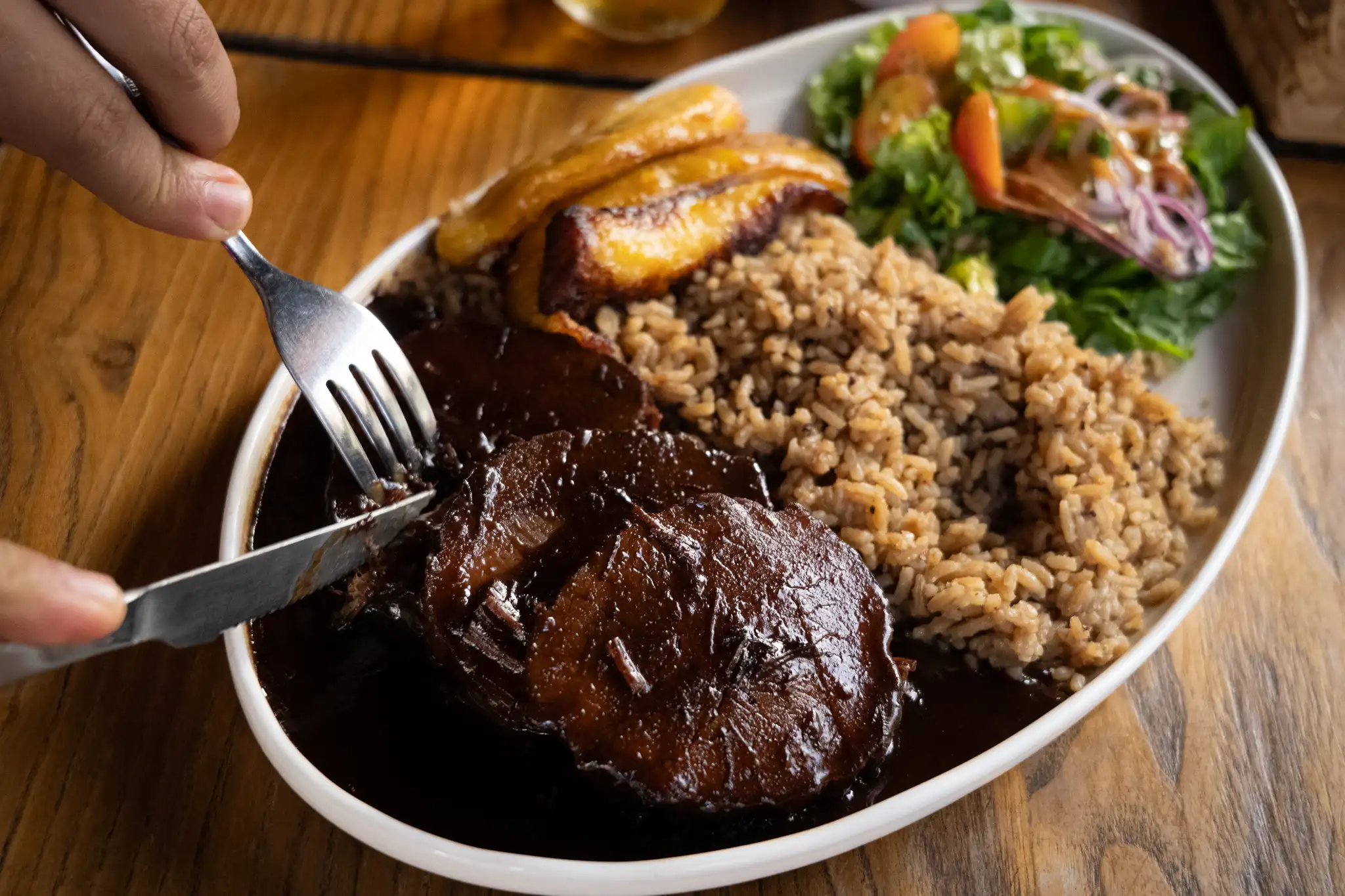
Beef — traditionally a tough, inexpensive cut like eye of round — braised low and slow in panela, Coca-Cola, tomato, onion, garlic, and spices until the outside caramelizes nearly black. It arrives glistening, sweet-savory, tender enough to cut with a spoon, always with coconut rice and patacón on the side. Despite being a heavy dish, and one whose ingredient list might raise an eyebrow or two — this is, for me, one of the best things you can eat in Cartagena.
This is the working-class dish that climbed the stairs. Like Osobuco in Argentina… Originally a way to make a cheap cut edible, it’s now on every upscale menu in the city.
Pescado Frito con Patacón y Ensalada
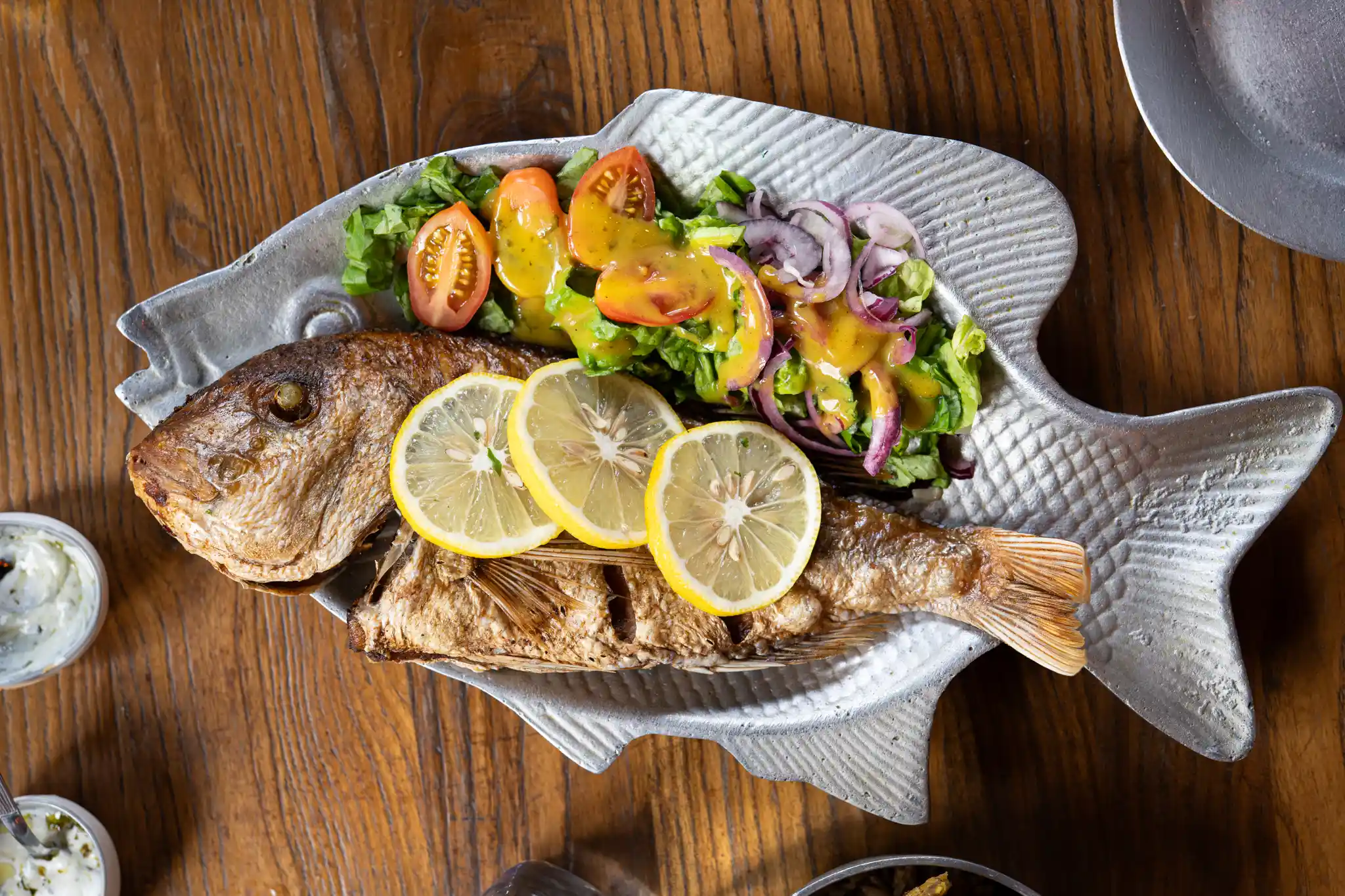
A whole fish — usually mojarra or pargo rojo (red snapper) — fried until the skin crackles and the fins turn lacy, served with salad or smashed, twice-fried green plantain (patacón) and a simple cabbage slaw with lime. This is the coast’s thesis statement: fresh catch, high heat, no fuss.
The patacón itself is an Afro-Caribbean technique found from Puerto Rico to Colombia: smash-and-re-fry green plantain. Eat the whole thing with your hands. Squeeze lime over everything. Use the patacón as your utensil. Start at the collar and tail for the most flavor. Watch for bones!!. Ask for «bien tostado» if you want extra crunch (that’s how i actually order it).
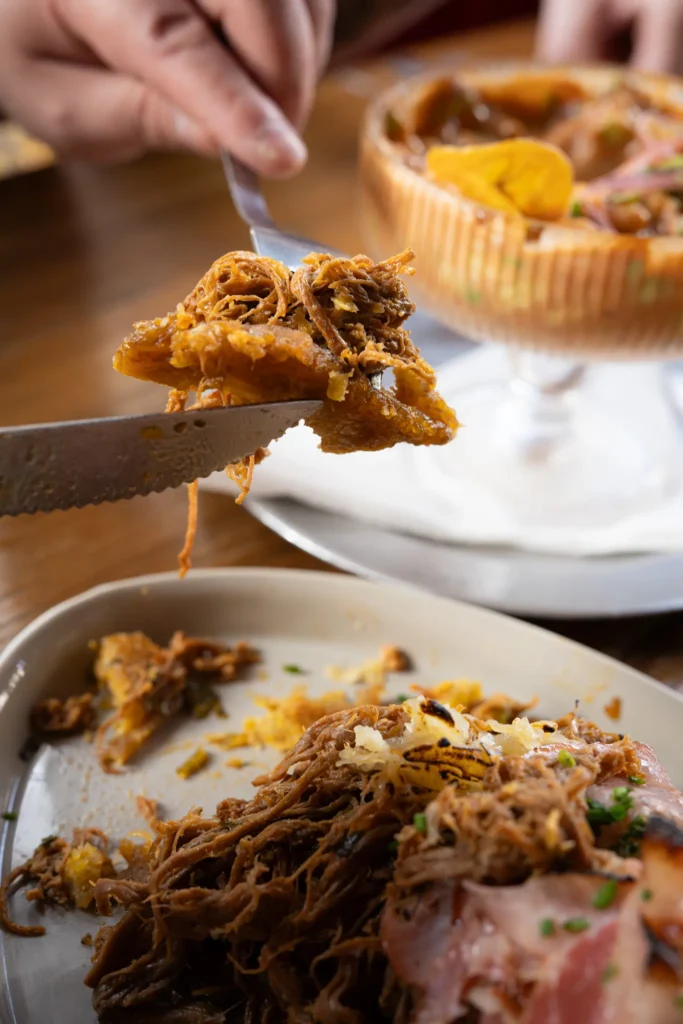
Patacón with pulled meat
Ceviche Cartagenero
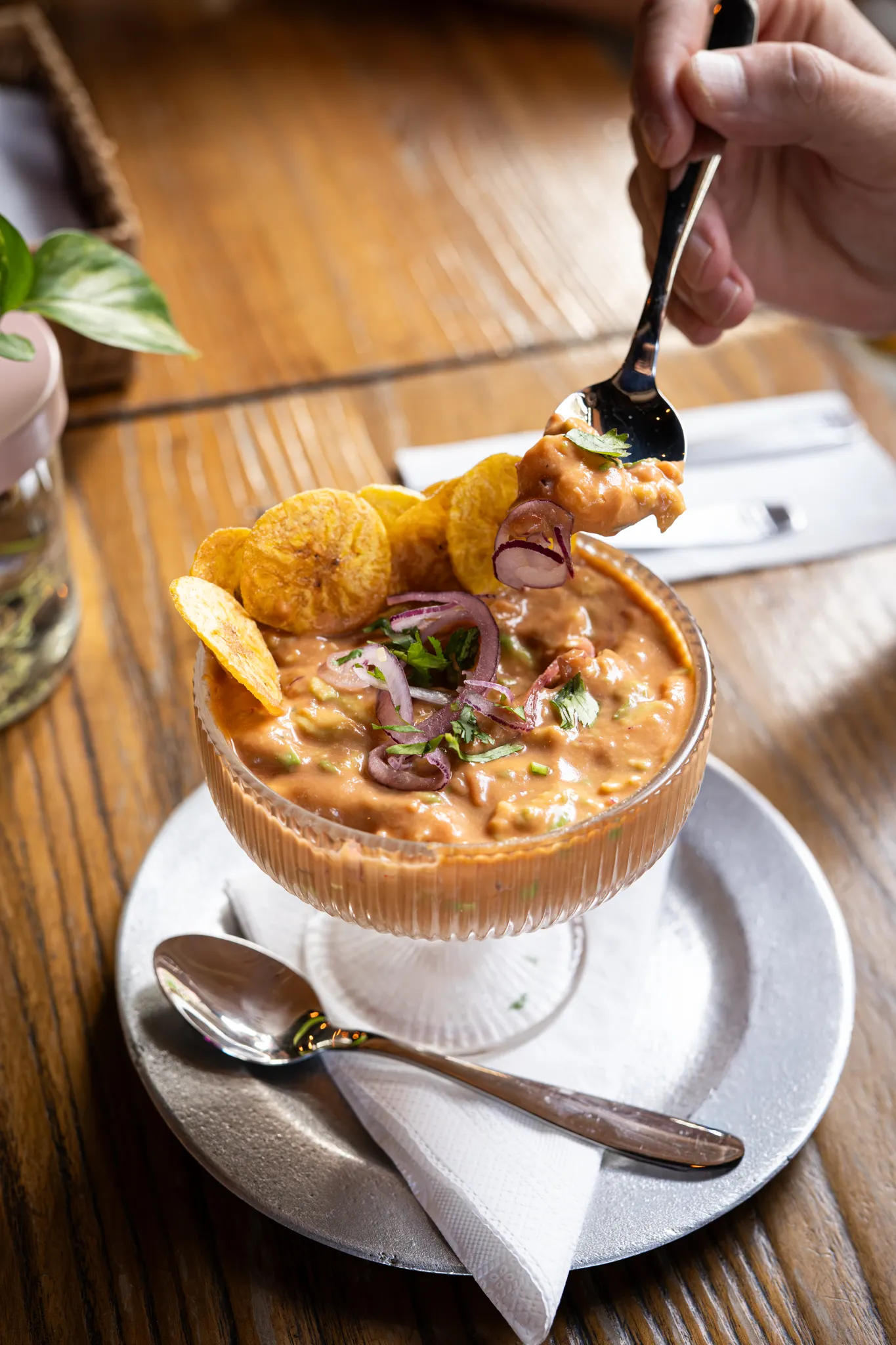
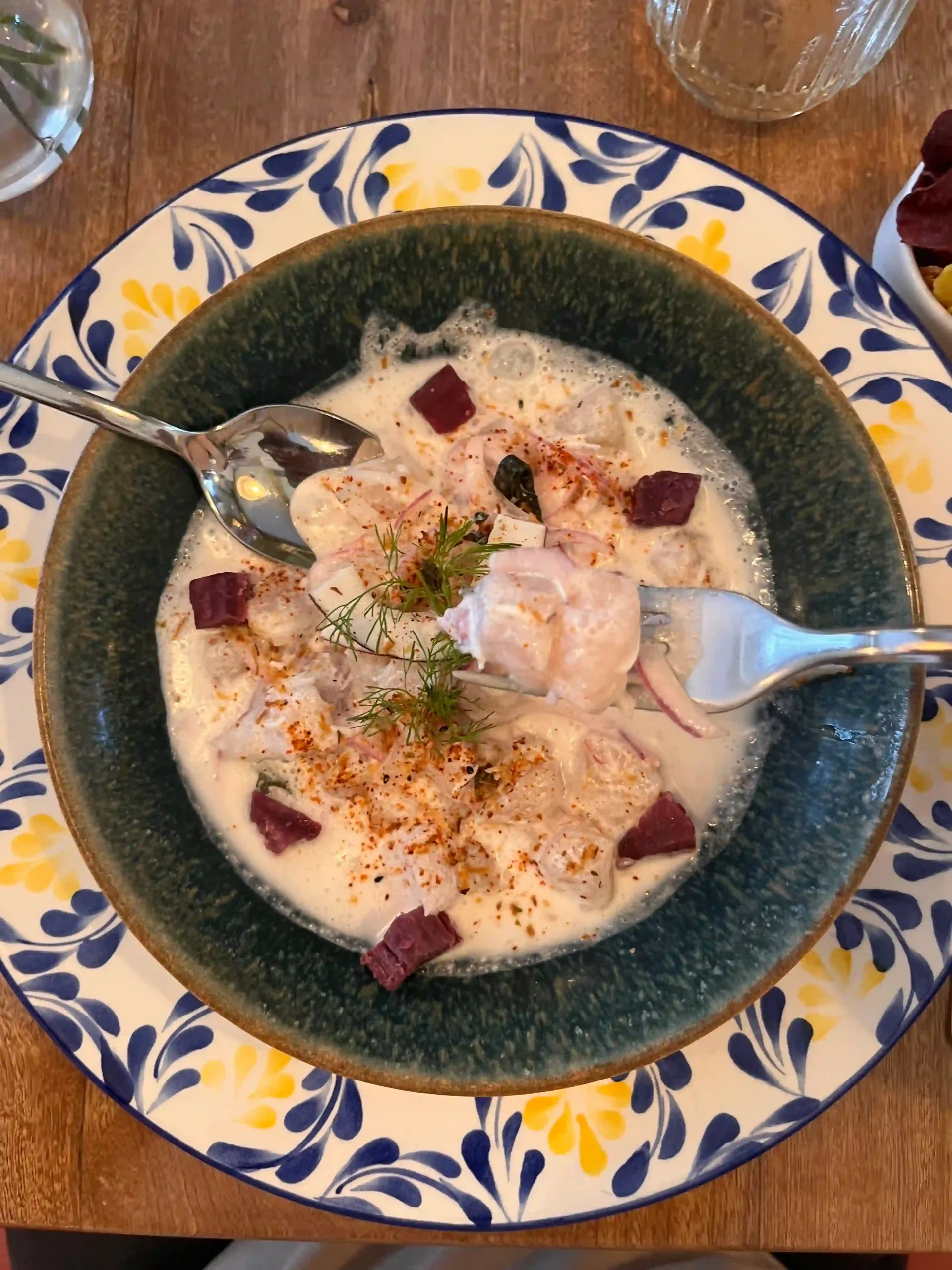
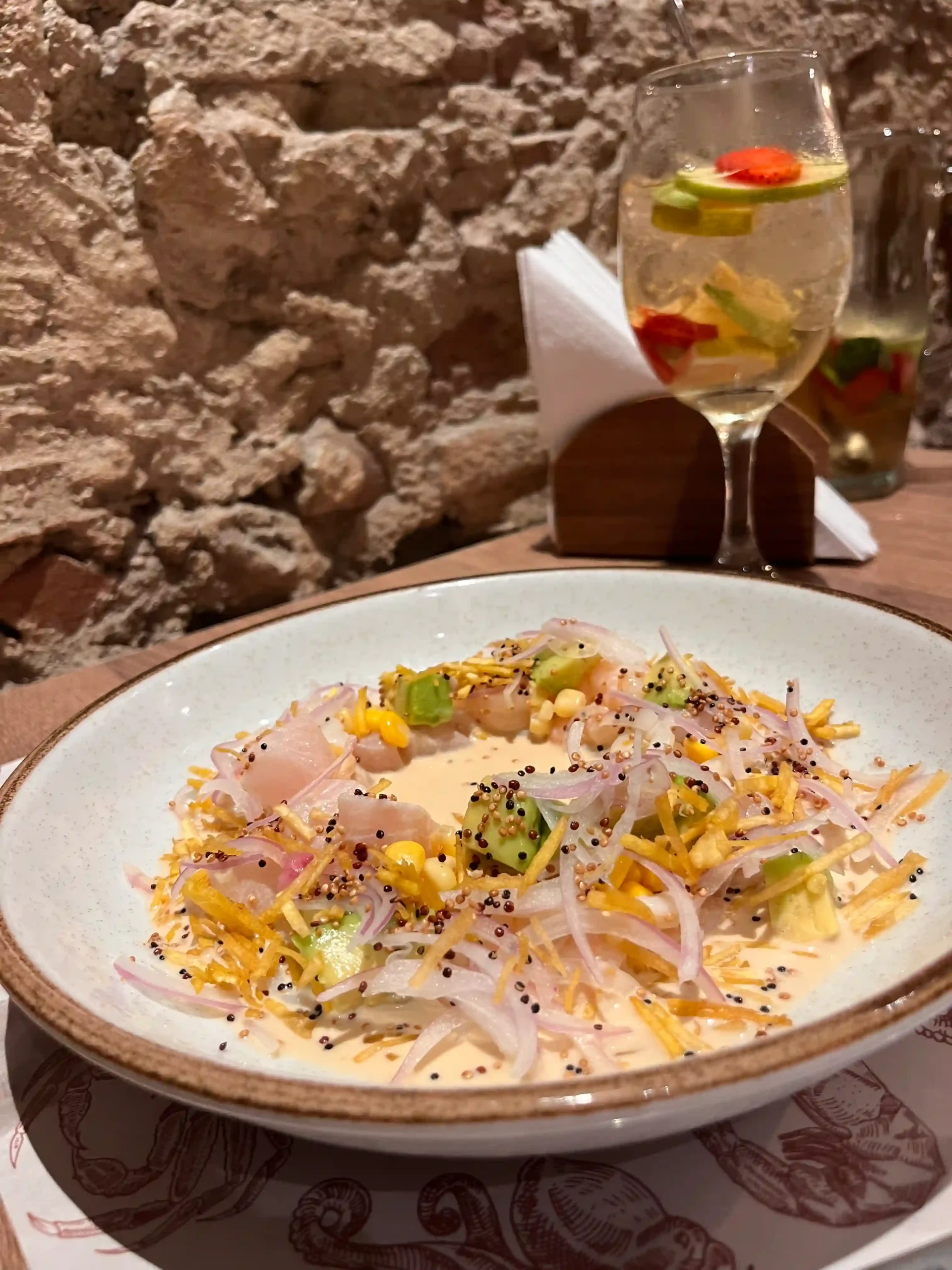
Forget everything you know about Peruvian ceviche!!! This is something else. It wouldn’t make sense to compare them cause they are just too different… Cartagena’s version is saucy, generous, often built on a base of ketchup and mayo (yes, really), loaded with shrimp or mixed seafood, lime, cilantro, and red onion. It’s more cocktail than cure, more comfort than precision.
The logic is Caribbean abundance: more sauce, more seafood, more flavor, more everything.
Sancocho de Pescado
A thick, slow-cooked fish stew with yuca, ñame, plantain, and coconut milk. This is Sunday food, family food, the pot that’s been going since morning.
The one-pot stewing logic is African in its deepest roots. The tubers are Indigenous. The coconut milk is the Caribbean twist. And the whole thing is served with rice on the side, because in Cartagena, there’s always rice on the side.
Kibbe Costeño
I love this one… A fried, football-shaped croquette of bulgur wheat wrapped around seasoned ground beef — the coastal Colombian version of Lebanese kibbeh, with beef swapped in for lamb.
It sits on the same street-food trays as empanadas and carimañolas. Most locals don’t consciously think of it as «foreign» anymore. It’s been fully absorbed into the coastal diet.
Pan de Bono
As confusing as it sounds, it’s called bread, but there’s no flour in it. Pan de bono is made with cassava starch, fresh cheese, eggs, and sometimes coconut (i know it sounds like there’s coconut everywhere.) It is soft, warm, slightly chewy, with a subtle sweetness that makes it dangerously easy to eat three in a row without noticing (guilty).
Cocada, Alegría & the Sweets of the Portal
The cocada is the one you’ll try first: grated coconut slow-cooked with panela until it turns dense, chewy, and impossible to eat just one of. Some versions fold in pineapple, guava, or passionfruit. Then there’s the alegría, which is popped millet or amaranth held together with panela syrup. It is crunchy, sweet, and yes, the name literally means «joy» (draw your own conclusions).
In Cartagena you’ll also find caballitos (candied papaya that melts on your tongue), bolas de tamarindo (tamarind paste rolled in sugar, tart and sticky), and enyucado — a baked cake of yuca, coconut, and anise that comes straight from the Palenque kitchen. That last was not my favourite but i would say it is worth trying it!
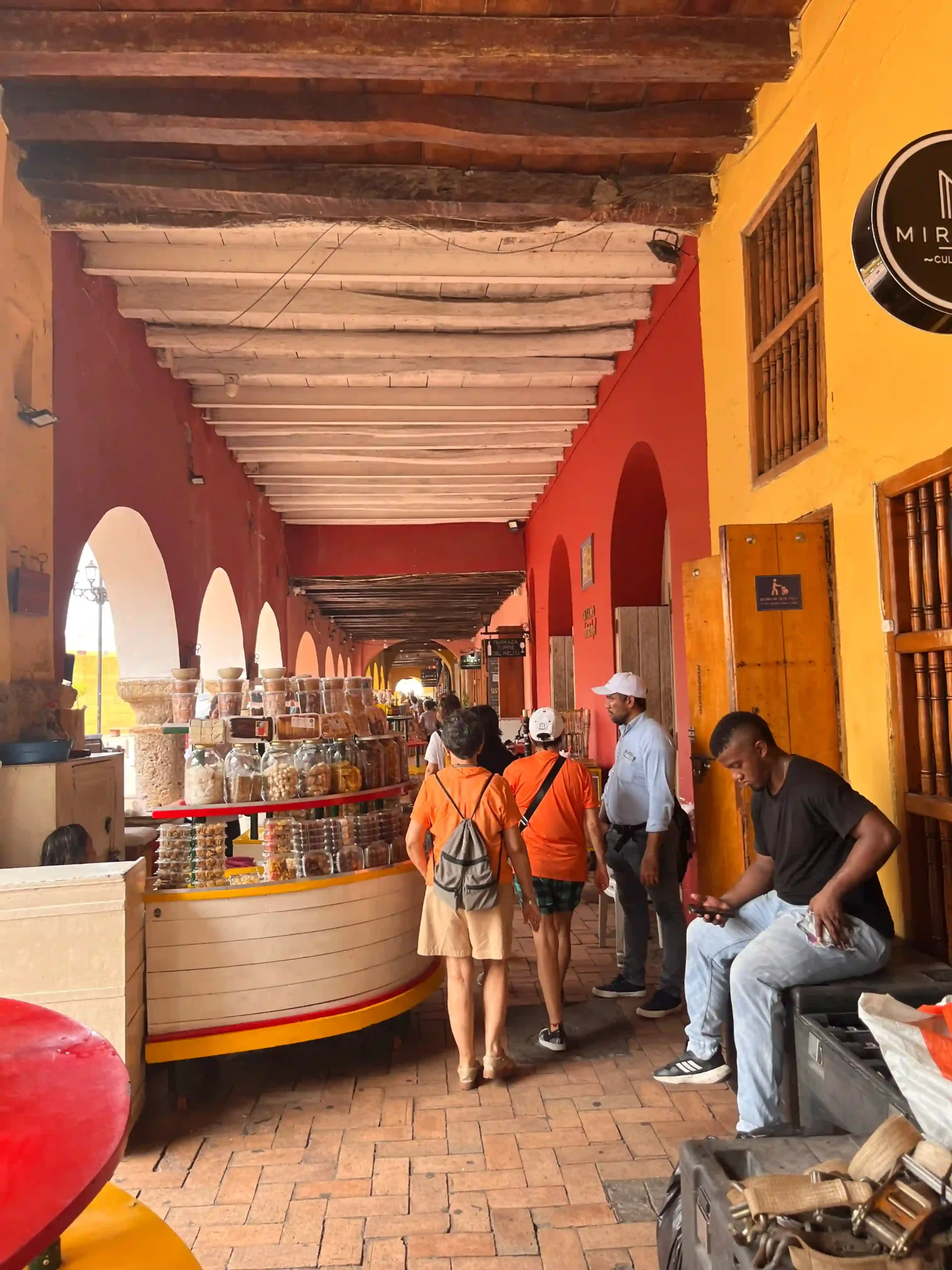
The entire dulce tradition is an African women’s economy. After abolition, Black women in Cartagena turned sweet-making and selling into their own livelihood. The Portal de los Dulces — the arcade where many of them sell today — was once the Plaza de los Esclavos, where enslaved people were sold. It was reclaimed by their descendants, who now sell sugar from the same arches (I love the irony and reclamation behind that). Buy from a palenquera when possible. And buy more than you think you need — you’ll want them later.
Fruits in Cartagena: The Tropical Pantry You’ve Never Seen
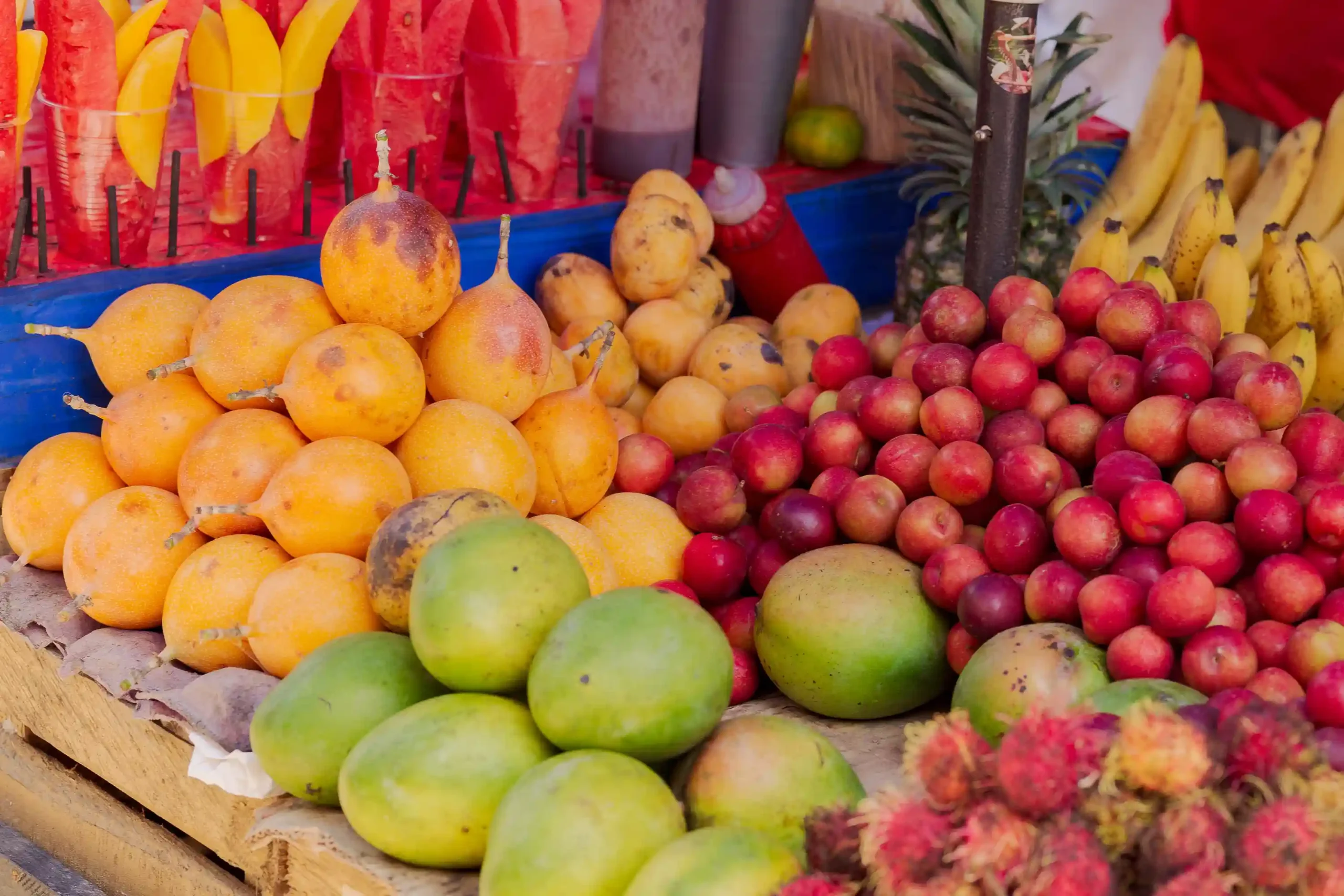
Colombia has over 400 (!!) native fruit varieties. In Cartagena, you’ll encounter dozens you’ve never heard of, and most of them don’t exist outside this part of the world. The fruit pantry is one of the city’s strongest sensory assets: biodiverse, photogenic, and genuinely surprising for anyone whose fruit vocabulary stops at mango and papaya.
My favourites to look for:
Corozo: it is a Small, deep-purple palm fruit that made into a juice tastes like tart cherry crossed with red wine. Also the base of several craft cocktails in the city’s bars.
Níspero: Creamy, dense, caramel-sweet. The kind of fruit that makes you question why it doesn’t exist in your country.
Mamoncillo: The shell looks like a lime and cracks open between your teeth to reveal a translucent, slippery pulp wrapped around a big seed. The texture might catch you off guard — to me it’s similar to a lychee, soft and gelatinous — but the flavor is tangy, and weirdly addictive. You suck the pulp off the seed and toss the shell. Then you grab another one. Then another. Honestly, this one was my favorite.
Lulo: Let’s say somewhere between a tomato, an orange and a lime. It’s used to make (add it to your must-try list).
Tamarindo: i didn’t like this one, but kinda have to add it to the list because it is turned into candy (bola de tamarindo) at the Portal de los Dulces and into juice at practically every lunch spot. So, give it a try!
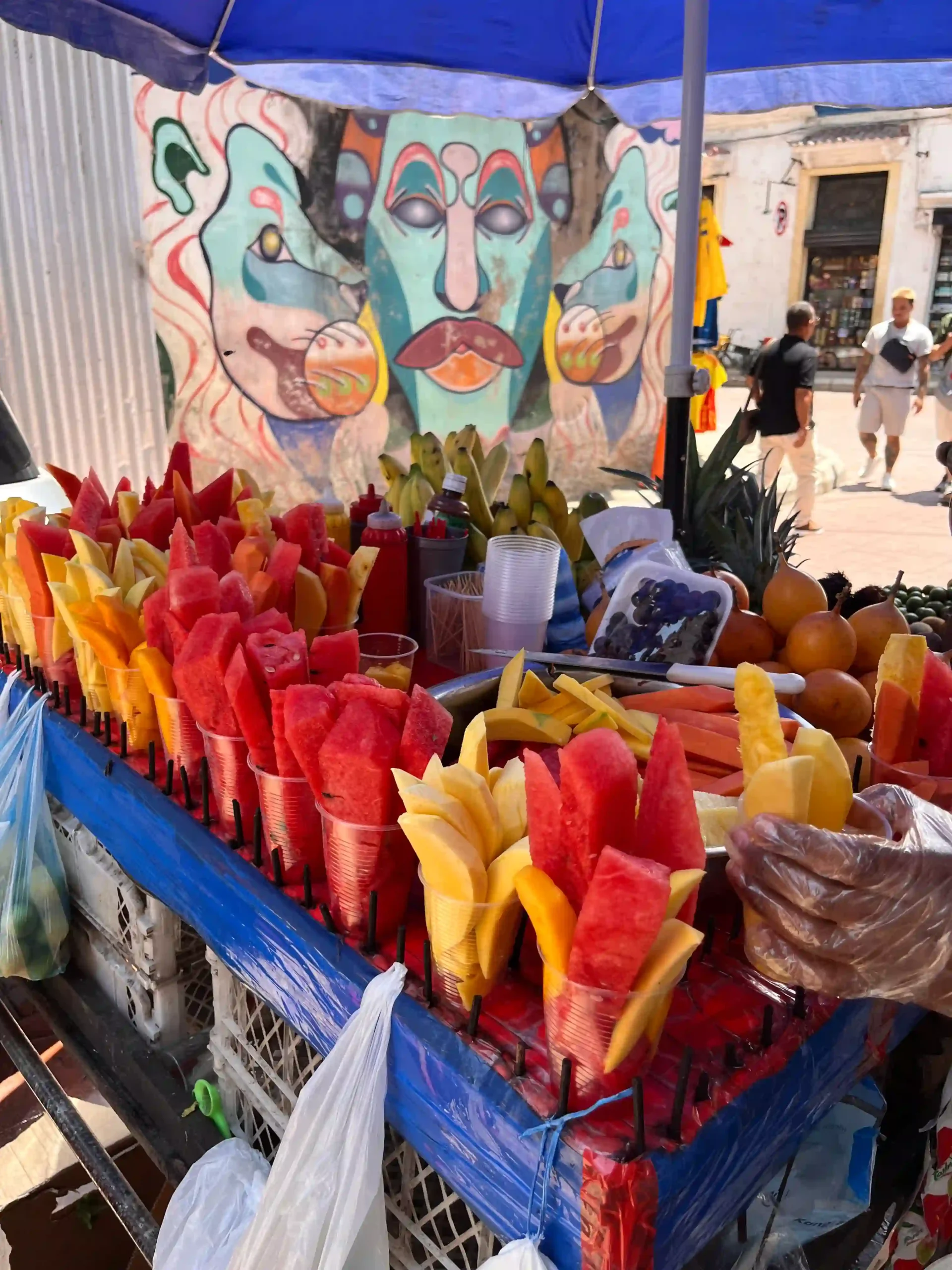
Mango verde con sal y limón: Green mango, unripe, cut and served with salt and lime. This is a costeño obsession. If you see someone selling it from a cart, stop!
Maracuyá (passionfruit), guayaba (guava), zapote, caimito, borojó: The broader Colombian tropical pantry crossing into Cartagena’s kitchen.
The best way to encounter most of these is through a Palenquera. It’s one of the most Cartagena things you can do.
What to Drink in Cartagena
Everyday drinks
Limonada de coco: Easy… coconut milk, lime, sugar, ice. The signature non-alcoholic drink of the city. Make yourself a favour and order it everywhere.
Aguapanela con limón: Panela, dissolved in water, served hot or cold with lime. The everyday energy drink of Colombia. Simple, cheap, everywhere.
Jugo de corozo: Tart, deep purple, refreshing. If it’s on the menu, order it!
Kola Román: Cartagena’s local cherry-red soda. Sweet, fizzy, nostalgic for the Cartageneros… Not objectively better than any other soda, but culturally important.
The Spirits
Aguardiente: The Colombian national spirit. Anise-flavored, sugarcane-based, and pretty strong… It’s taken as a shot, usually with a group, usually with a toast. This is what i would call a ceremony drink, birthdays, holidays, and any Tuesday that feels like it needs one.
Ron: Ron Medellín, Ron Viejo de Caldas. More Caribbean in spirit than aguardiente. Sipped neat, mixed with Coca-Cola, or used in cocktails. This is the coast’s preference over aguardiente, though both coexist.
Cartagena’s Food Formats: Where to Eat What
One of the most common mistakes visitors make with food in Cartagena is treating it like a restaurant city. It’s not. Cartagena is a street city, a market city, a stand-on-the-corner-with-oil-on-your-fingers city. Yes, there are outstanding restaurants (that we actually go to!). But the heartbeat of Cartagena’s food culture lives in the archetypes below, and knowing them before you arrive means you’ll eat better, spend smarter, and understand the city faster.
Frutería Callejera / Palenquera Stand
As i said before, The Palenqueras (in brightly colored dresses carrying trays of tropical fruit on their heads) are the living face of the city’s African heritage. They sell fresh-cut mango, corozo, níspero, guanábana, mamoncillo, and all the fruits i mentioned before. Some sell cocadas and coconut sweets alongside the fruit. You’ll find them in the Walled City plazas, especially in the morning.
Puesto de Fritos (The Fried-Food Corner)
A corner stand, a woman or a family, a vat of oil, and a lineup of golden things: arepa de huevo, carimañola, empanada, deditos de queso. You eat standing up, with ají sauce and suero costeño dripping down your wrist, ideally before 9 AM or after 10 PM. Budget around 2,000–5,000 COP per piece (roughly $0.50–$1.50USD). #SherpaTip If the oil is fresh and the line is local, you’re in the right place.
Cevichería Cartagenera
The best cevicherías tend to be small, loud, and packed at midday. Some have been in the same spot for decades. Two that stood out to me: Sierpe Caribe Fusión and Sambal Bistró Caribeño, both in Getsemaní.
Picada de Mariscos / Mesa Costeña
The shared seafood platter, piled with fried fish, shrimp, patacones, coconut rice, and whatever the sea brought in that morning. Love this one! This is the most social way to eat in Cartagena: a big tray in the center, everyone reaching in, nobody keeping track of who had what. If you’re traveling with a group, this is your archetype.
Restaurante Criollo
This is where you sit for a proper meal and eat the formation story of Caribbean Colombian identity. Posta negra with coconut rice and patacón. Whole fried fish with salad… The setting is usually a colonial courtyard, sometimes with live music, often with a palenquera greeting you at the entrance. These restaurants are rooted.
New-Wave Caribbean Cuisine
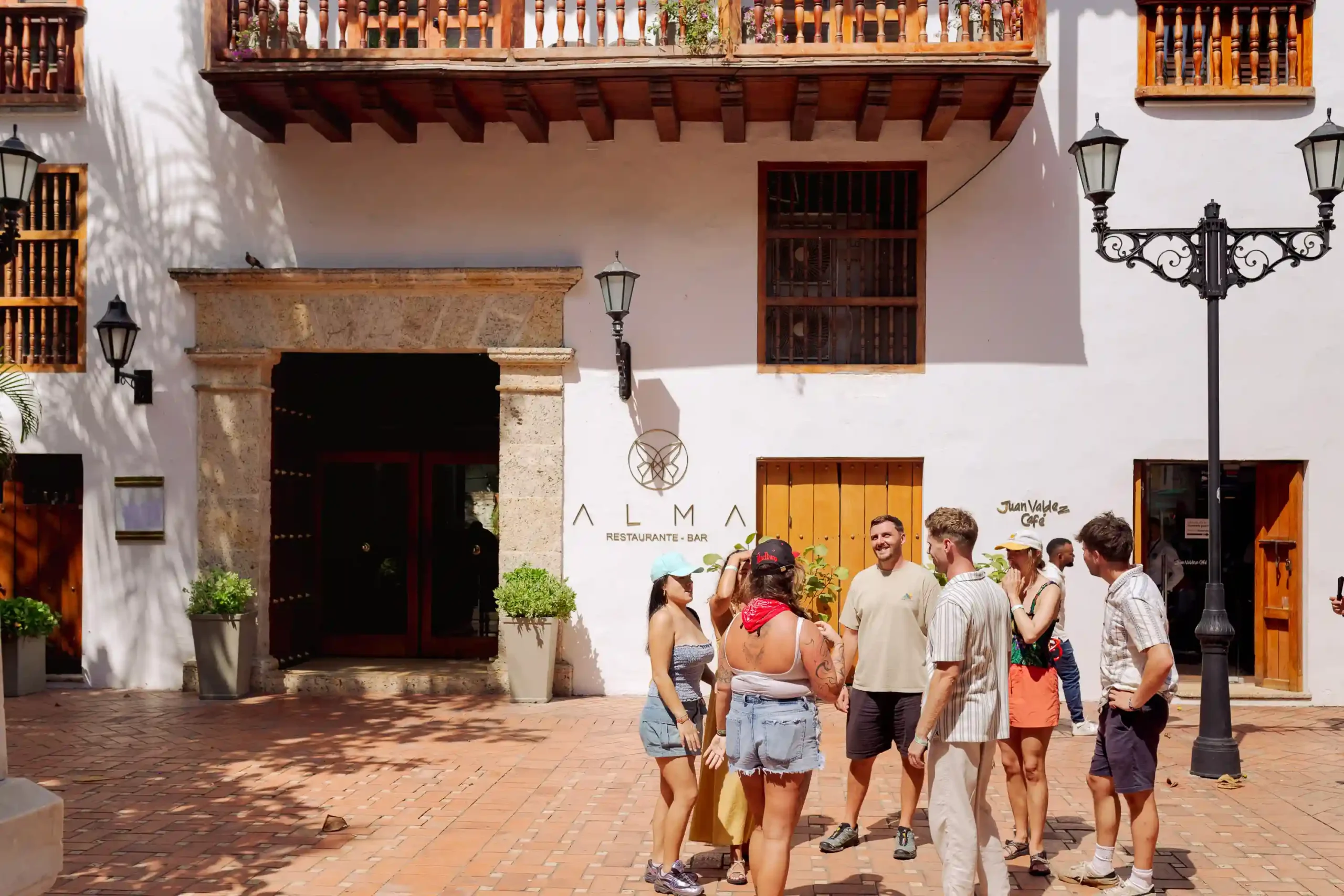
This is where Cartagena stops being «rustic» and starts being «ranked.» Celele, #5 in Latin America’s 50 Best, #48 globally, and winner of the 2025 Sustainable Restaurant Award, is the standard-bearer. Chef Jaime Rodríguez spent two years traveling the Colombian Caribbean coast documenting endangered ingredients and ancestral techniques, and turned them into tasting menus that honor where they came from. The movement includes Rabo de Pez, Carmen, Alma, and 1621. You don’t need to eat at Celele to feel the effect.
Fritanga (The Loud Fried-Food Corner)
Sounds repetitive but this is not the same as the puesto de fritos. this is the bigger, louder, later version. Chicharrón, patacón con todo (a massive plantain disk loaded with meat, cheese, and sauces), chorizo, butifarra. Cheap, smoky, real. This is where Cartagena eats after dark, where the line between dinner and street snack disappears, and where the soundtrack is champeta, salsa, or whatever’s coming out of the nearest picó sound system. Not the most refined stop, but arguably the most honest one.
Portal de los Dulces
Not a restaurant, but definitely a food venue. An open-air arcade in the Walled City where women sell handmade sweets: cocadas, alegrías, caballitos, bolas de tamarindo, enyucado.
Mercado Bazurto
Cartagena’s central market, roughly 4 kilometers from the Walled City. This is where chefs buy their fish at dawn, families do their weekly shopping, and the city eats without performing for anyone. Chaotic, sweltering, loud. Fried fish stands, fruit mountains, ceviche stalls that have been open for 50 years… This is not a tourist-friendly market, it requires navigation and ideally a local guide. But if you want to see where Cartagena’s food actually comes from, Bazurto is the unfiltered version.
Rooftop Bar / Craft Cocktail Spot
Cartagena’s cocktail scene runs on native fruits mixed with local spirits. Selva Gin, distilled in Cartagena with corozo, fermented cacao, and limón mandarino, is the standout craft product. Aguardiente and rum are ever-present. The best cocktail bars tend to be in the Walled City or Getsemaní, with rooftop views that turn sunset into a closing ceremony. This is where a great food day ends, drink in hand, old city walls glowing, the story landing.
Getsemaní: Where the Real Cartagena Eats
Most visitors to Cartagena spend their time inside the Walled City, and it’s beautiful, undeniably. The colonial architecture, the balconies, the bougainvillea, the plazas, and of course the history… But if you only eat inside the walls, you’re getting a partial version. The raw, vibrant, living version is next door.
Getsemaní hits you with color first. Murals on every surface: not decoration, but storytelling. Afro-Colombian identity, resistance, music, daily life, all painted in layers that change every few months. This is the place where the independence movement started: the streets are narrow, the music is loud, and the smell of something frying follows you around every corner.
This is the neighborhood where the fritosculture is strongest, where cevicherías have carved out their own identity, where a new generation of young chefs who grew up in these blocks are reinterpreting Caribbean food without losing the neighborhood’s energy. This is the neighborhood where Plaza de la Trinidad pulls everything together every evening: families, backpackers, musicians, street vendors, cold beer and cumbia leaking from somewhere.
Taste Cartagena With Sherpa Food Tours
We recently launched our Cartagena food tour, and building it together with our local team was one of the most fascinating processes we’ve been through. Every dish on our route connects to at least one of the cultural forces that shaped this city.
The tour walks you from Getsemaní into the Walled City over one afternoon: 12+ tastings, local guides who grew up here, and the kind of stories and context you won’t get by wandering into restaurants on your own.
This is what we do in every city: we eat where locals eat, we learn the story behind the plate, and we make sure you leave knowing the city better than when you arrived. Cartagena is our newest city, but the standard is the same one that earned our Buenos Aires tour the title of best food tour in the world.
It depends on where you eat. Street food — arepas de huevo, carimañolas, empanadas — runs between $0.50–$1.50 USD. A full (yet cheap) lunch at a local restaurant with fried fish, coconut rice, and patacón is around 8–$15 USD. Mid-range restaurants in Getsemaní or the Walled City sit around $15–$25 USD per person. Fine dining at places like Celele or Carmen can run $40–$80+ USD. So… you can eat extraordinarily well in Cartagena without spending much, as long as you know where to go.
Is Cartagena good for foodies?
It’s one of the most interesting food cities in the Americas right now. The combination of deep historical roots, a thriving street-food culture, and a new wave of chefs putting Caribbean Colombian food on the global map makes Cartagena genuinely exciting.
Is street food in Cartagena safe to eat?
Generally, yes — with common sense. Eat at stalls with high turnover (a line is a good sign). Fried food tends to be safer because of the heat of the oil. Avoid seafood ceviche at stalls that don’t look busy or where the product has been sitting out. Drink bottled or purified water. And if you want the peace of mind of eating at the right places with a local who knows what’s what; that’s exactly what afood tour is for.
What is Cartagena most famous for (food)?
Arepa de huevo is the iconic dish. Beyond that, arroz con coco, posta negra, whole fried fish with patacón, and the sweets sold by Palenqueras at the Portal de los Dulces.
What food should I avoid in Cartagena?
Not a specific food; more a specific context. Avoid restaurants directly on the main tourist plazas of the Walled City where the menu is in four languages and no locals are eating. The food at those spots tends to be overpriced and generic.
Also, if the ceviche doesn’t look like it was made recently, skip it.
Do I need to speak Spanish to eat well in Cartagena?
It helps, but it’s not essential. Most sit-down restaurants in the Walled City and Getsemaní have some English. At street stalls, pointing works fine, and the vendors are friendly enough that you’ll figure it out. That said, knowing a few words makes a difference: «con suero» (with the tangy cream), «bien tostado» (extra crispy), «sin picante» (no spice) can transform your order. Or just come on a tour with us and let the guide handle it.
Mexico City is wild. It’s loud, it’s intensely alive, and it operates at a rhythm that can easily overwhelm you the second you step off the plane. When my friend Alex and I landed here, our goal was simple: to walk the streets, sit at the right tables, and test absolutely everything we could to map out the best restaurants, bars, tours and experiences in Mexico City (Can’t complain on the mission right?).
The truth is, having only 48 hours in Mexico City forces you to make hard choices. But after spending days on the ground, eating at every relevant (and not relevant too) spot, talking to the locals, and testing the best experiences, we put together a route that we genuinely enjoyed.
Given what we do, our compass always points towards the table. So naturally, if you are wondering how to do Mexico City in 2 days, our itinerary focuses heavily on the most incredible gastronomic and cultural experiences the capital has to offer. This is exactly what we did, what we loved, and what we highly recommend.
Day 1: Afternoon Arrival and Eating Through Roma Norte
When you land in the afternoon, the temptation is to drop your bags at the hotel and take a nap. Don’t. You only have 48 hours, so you need to hit the ground running. We left our luggage and went straight to Roma Norte to start making things happen.
The Perfect Intro: A Local Food Tour
The fastest way to break the ice with a new destination is by sitting at a table. Obviously, our very first move was joining the Mexico City Foodie Adventure . I know, it sounds like a shameless plug. But the truth is, every city is a completely different beast, and walking the streets with a local expert is the only way to actually grasp its rhythm.
As said, our backdrop was Roma Norte. If you haven’t been, it’s this perfect, leafy mix of old and modern, cool but traditional, and undeniably the culinary epicenter of the capital. Walking past its art deco facades, you realize this is a neighborhood where things happen.
People usually assume a trip to Mexico is just about eating tacos. Don’t get me wrong, we had our fair share, starting with a staple barbacoa and skipping the massive queue at a Michelin-recognized fusion taquería. But a great host pushes you to taste more. We dove into ancestral recipes that instantly make you understand why Mexican cuisine is a UNESCO patrimony. We stood on the sidewalk eating hot tortillas, tried local drinks, shared plates, and made room for dessert. It gives you the exact cultural context you need, making it the perfect transition from the airport chaos to the real city.
Looking specifically for tacos? We’ve got you covered. Check out our curated guide to the Best Michelin Tacos in CDMX to see which spots are actually worth the hype.
A Nightcap at Tlecan (50 Best Bars)
After the food tour, you will be full, but the night is still young. You could call it a day, but if you want to make the most out of your 48 hours in Mexico City, you have to keep the momentum going. We took a short walk over to Tlecan.
Yes, it is featured on the World’s 50 Best Bars list, and yes, you will probably have to wait in line (unless booking experiences that include it). But once you step inside, you realize it is not trying to be a flashy, superficial lounge. It is intimate, rooted, and carries a strong native vibe perfectly adapted to the nightlife of a trendy neighborhood.
It is dark, smelling faintly of smoke and earth, with an absolute focus on artisanal Mexican spirits. The service is top-tier; the bartenders operate at the highest level, pouring proper drinks and sharing real knowledge about the agave. We leaned against the bar, ordered a couple of mezcals and Palomas (as i said, the night was still young!), ), and ended up having a genuinely interesting chat with the bartenders about the world of mezcal.
We both absolutely loved it. It’s not necessarily the kind of place you’d go to every single night if you actually lived in the neighborhood, but as a local experience, it delivers exactly what it promises: an exquisite bar to feel the real local vibe, hang out with friends, and just let the first day sink in.
If you are looking for where to drink in Mexico City and want a grounded, top-tier experience, this is the exact spot.
Day 2: Cacao, Corn & Agave
Saturday is about going deep into the ingredients that built this country.
Morning: Ancestral Cacao Workshop
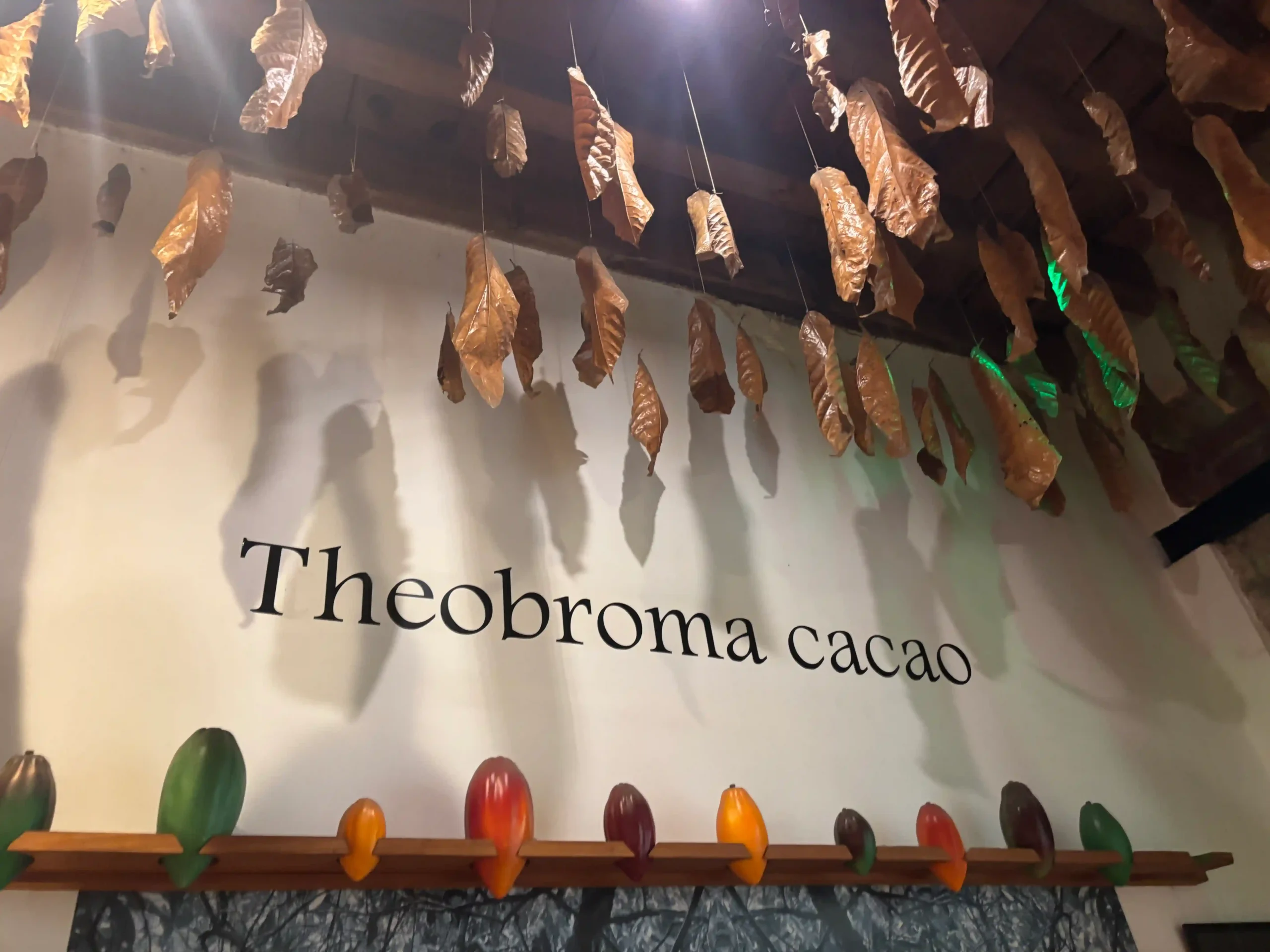
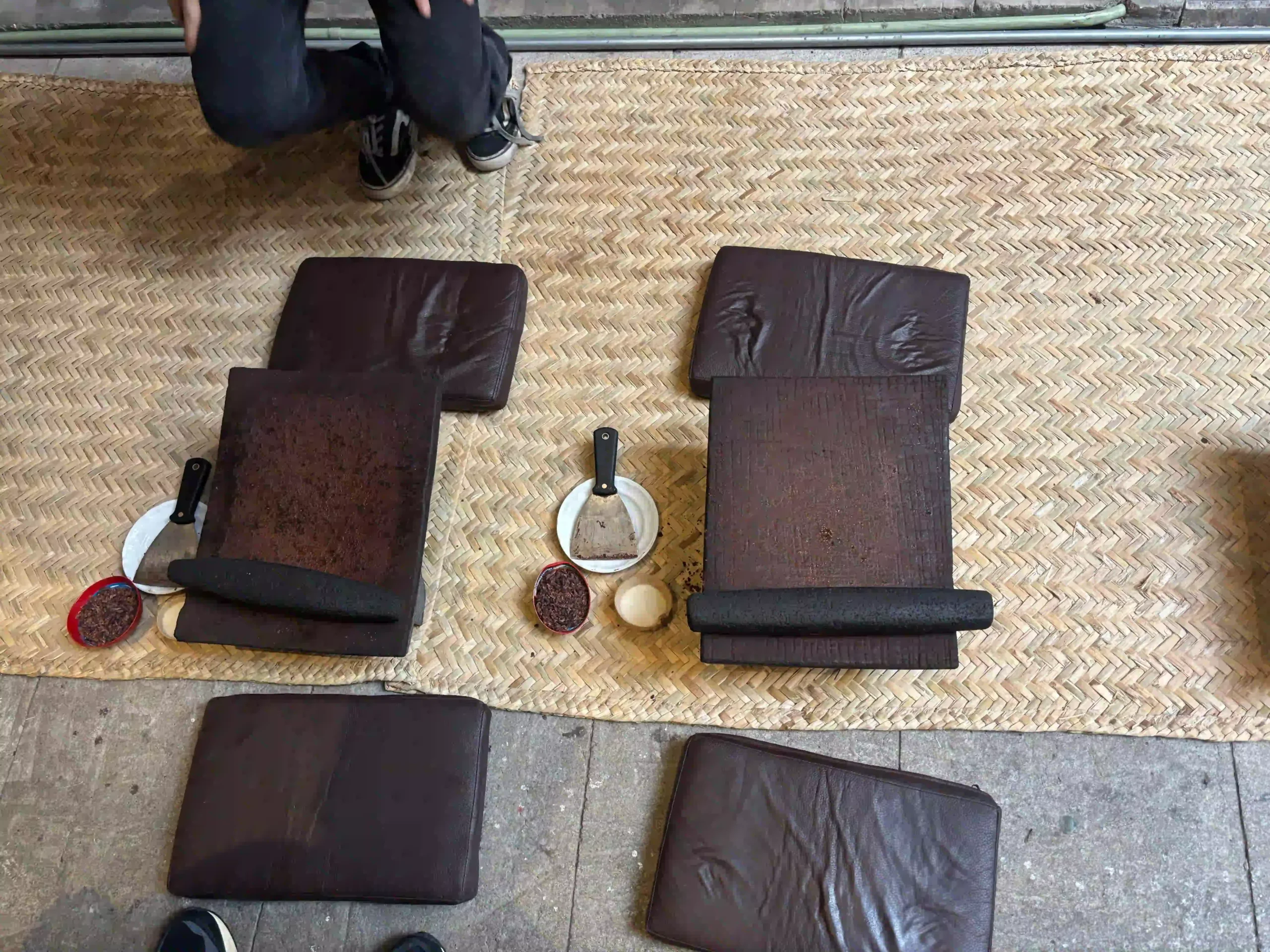
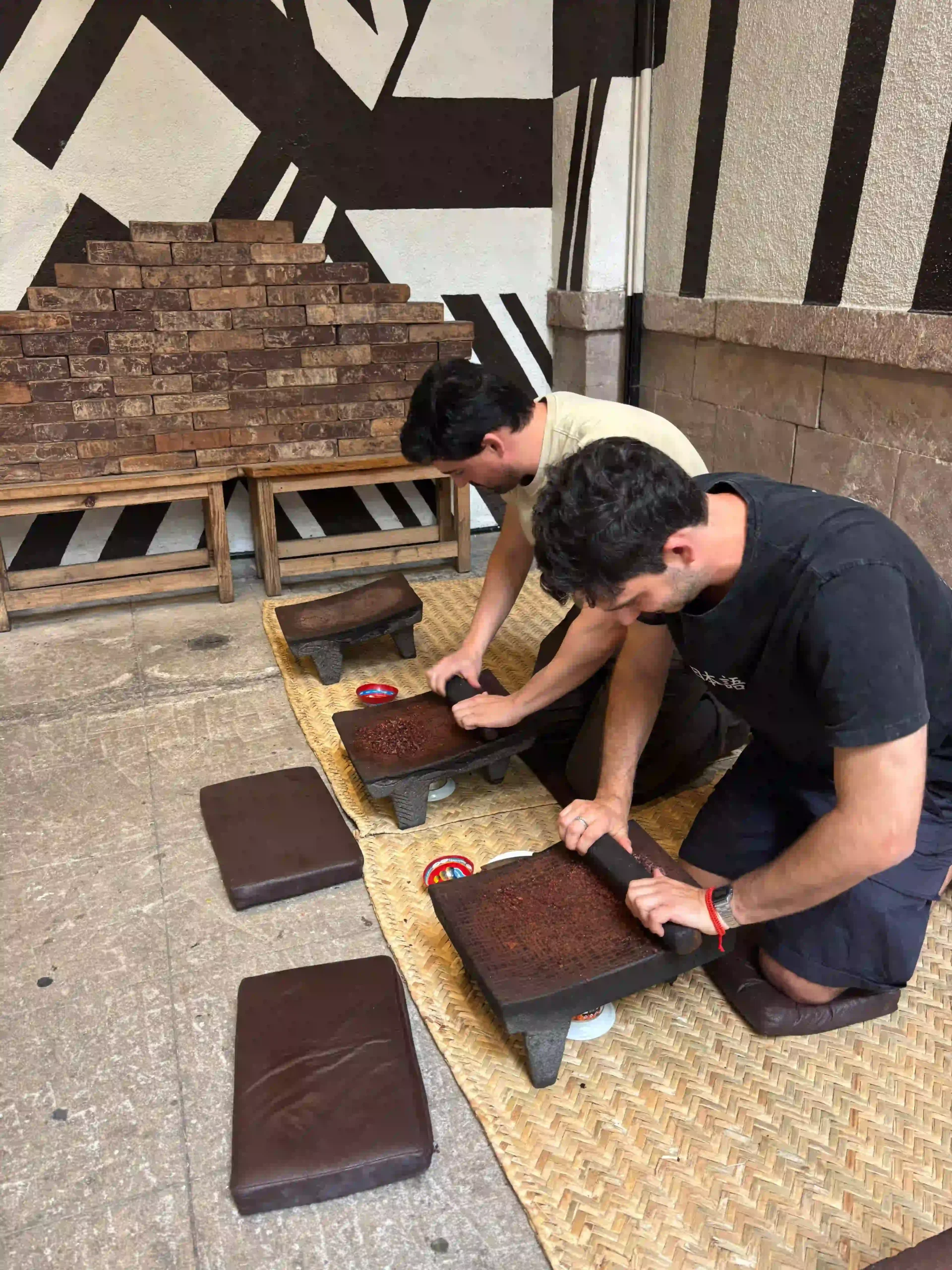
You cannot understand Mexican food without understanding cacao. We started the morning early with a hands-on workshop focused entirely on ancestral techniques. No sweet chocolate bars! This was surprisingly physical. Alex and I stood side-by-side, grinding roasted cacao beans by hand on traditional volcanic stone boards.
It feels a lot like kneading a heavy dough. It actually takes strength, precision, and a specific technique to get it right. We spent the session getting our hands dirty, testing the raw bitterness of the beans, and understanding the complex historical roots of the ingredient. Honestly, it is just an incredibly fun and interesting thing to do with a friend, and it sets a completely different, much more grounded tone for the rest of the day.
Lunch at Expendio de Maíz
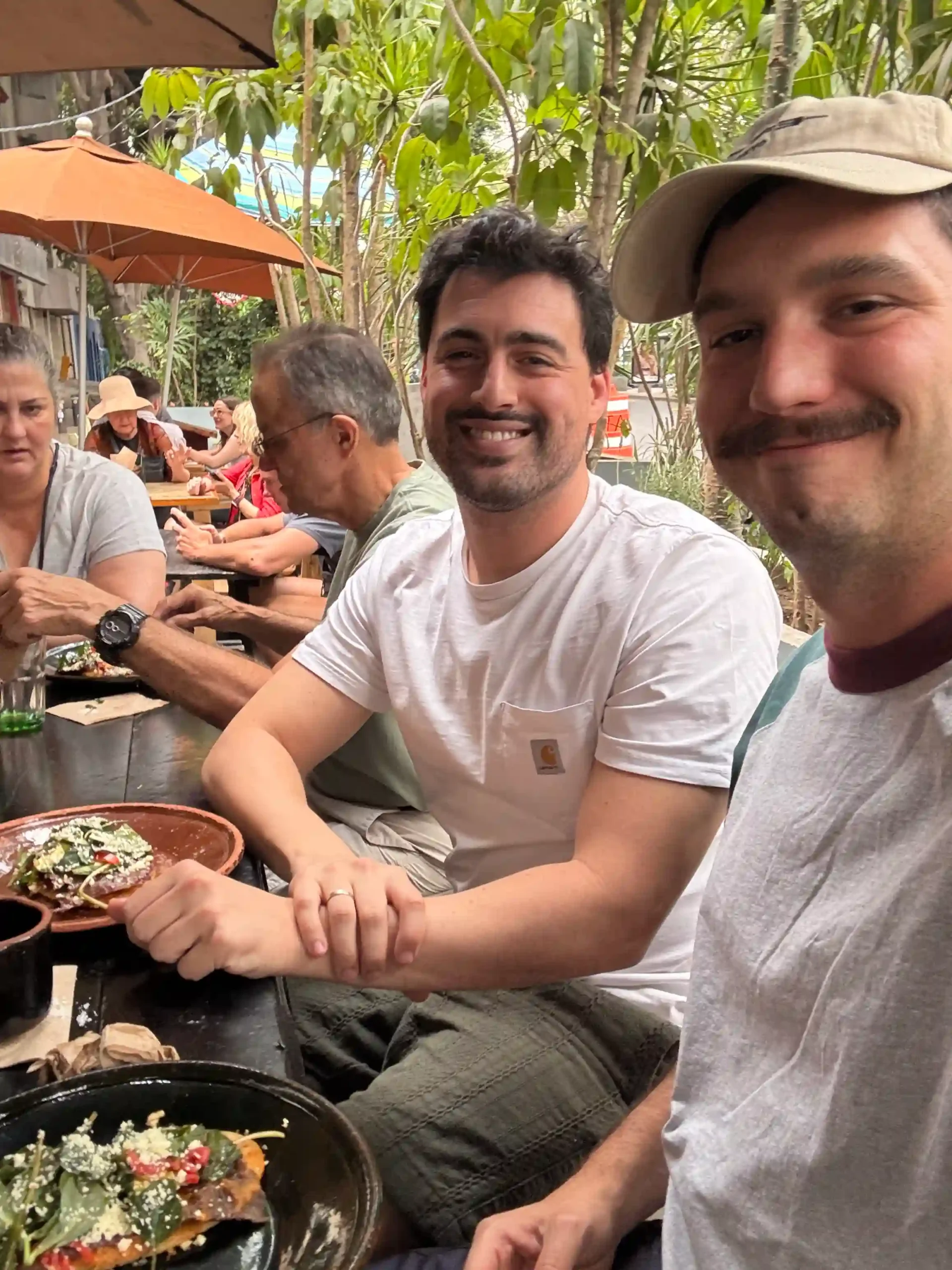
By noon, we walked over to Expendio de Maíz. As its name indicates, this place is a true tribute to corn, showcasing it in all its types and in every possible dish it can be used in. We sat on the sidewalk, taking in the smell of the wood fire, ready for a completely different experience.
There is no menu here; they simply bring out plates for you to try.Typically, getting a taste of this means showing up, writing your name on a list, and waiting around until they call you. Thanks to our Sherpa host, we bypassed the line and walked right in.
We loved it as a unique change of pace. There is a profound beauty, and a deep respect in watching them transform a single ingredient into so many different, complex flavors. It holds a Michelin star, and it is incredibly well-deserved.
Afternoon Walk & The Mexican Drinks Journey
You will need a walk after that lunch. We spent the early afternoon walking through the neighborhood, and at 3 pm we headed to our next stop: a proper mezcal tasting. We didn’t just drink; we looked at the actual agave plants and mapped out the geography of where and how each variety is grown to understand the process.
By 17:00 hs, we made a mandatory pit stop at Pulquería La Nuclear. There is nothing fancy about this place; it is humble, deeply authentic, and exactly the kind of spot you want to stumble into. We went in to try pulque: a thick, fermented agave drink. The waiters here are an absolute 10/10, serving up batches that come straight from Hidalgo, meaning it is incredibly fresh. I went with the guava flavor (my instant favorite), while Alex ordered the coconut. Both great!
This time, we didn’t want to just sit and be served for the rest of the night. So at 19:00 hs, we headed to Mux for a cocktail masterclass. Jumping behind the bar to figure out how to make a proper mezcal Paloma completely flipped the vibe of the night. Being honest, Mexico City is the kind of place where you could easily drink a hundred of these a day because they are just that good.
I will be the first to admit that I am not exactly a natural-born bartender, but that made it even better. It was ridiculously fun. You get your hands dirty, laugh at your own messed-up ratios, and completely break the usual tourist routine. It is less about perfection and more about sharing the moment, setting the relaxed mood you need to close out the second day in Mexico City.
After that much mezcal, there is only one proper way to end the night in this city, and that’s standing on the sidewalk with a taco in hand. Late-night spots like Los Alexis or La 89 are absolute lifesavers at this hour. If you want to know exactly where to cure a mezcal craving, dive into our full guide to the Best Taquerías in Mexico City.
Day 3: Coyoacán Market & Taco Cooking Class
Sunday is about heading south to change the pace.
Morning: Coyoacán Market & Colonial Walk
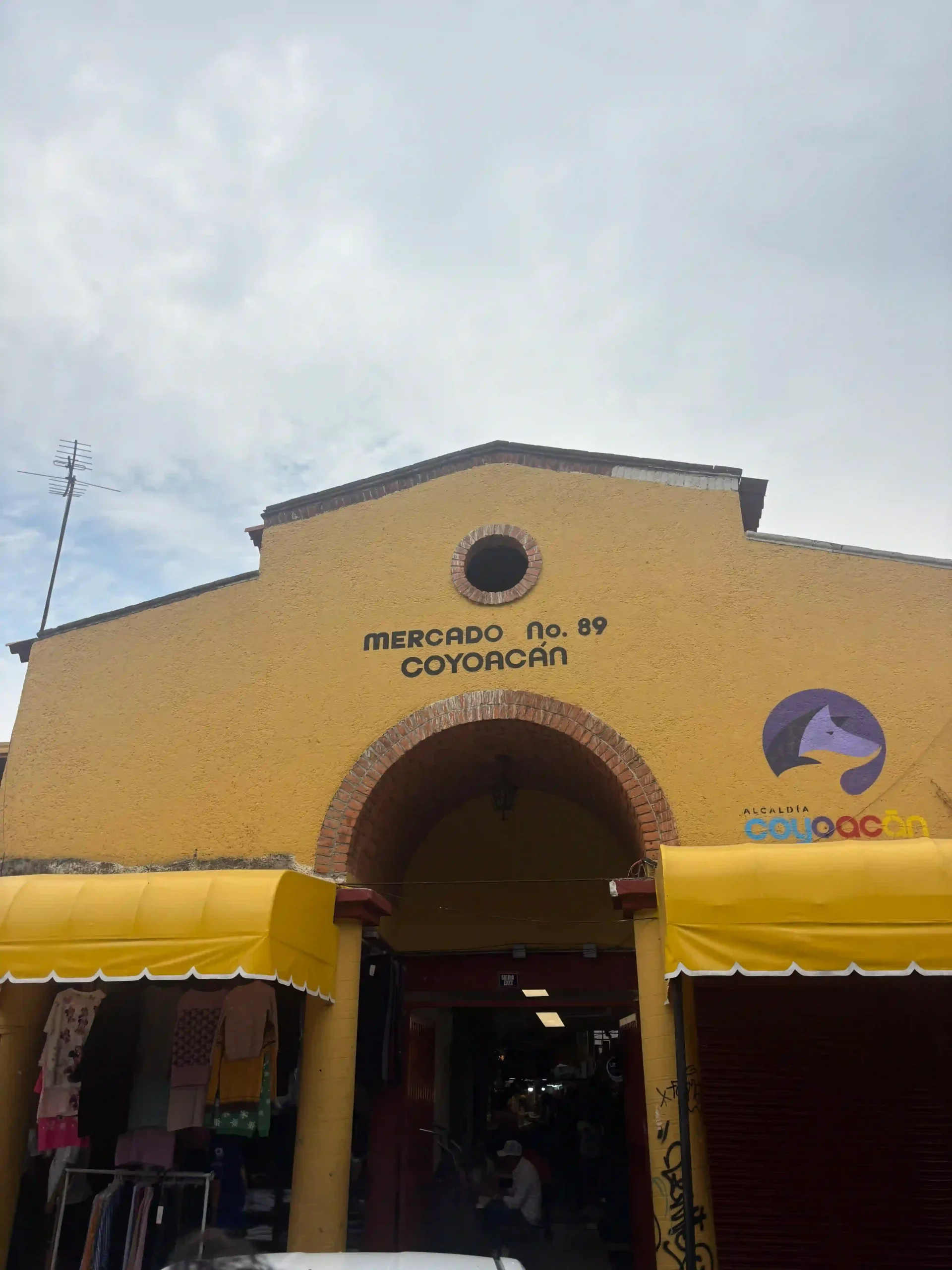
We spent the first half of the day at the Coyoacán Market. If you are still building your list of what to eat in Mexico City, a traditional market is where you get the honest answers. It is loud, chaotic, and completely packed with people. We navigated through the tight aisles, surrounded by the heavy smell of toasted chilies and fresh fruit.
When it was time for lunch, we didn’t look for a formal restaurant. Our first food stop was right inside the market at Trinidad Ritual de Sabores. We grabbed a couple of plastic stools, sharing the pretty limited space with locals, passing plates, and watching the neighborhood operate at its own rhythm.
For our second stop (yes, there was a second stop), we stepped just outside the market to find Compa Chava. It is a trusted local marisquería (seafood spot) where we simply sat back to share some incredibly seafood.
By 14:00 hs, we needed to move. We spent the afternoon walking through the quiet, tree-lined colonial streets of the area. It feels like a completely different town compared to Roma Norte, and honestly, we needed the long walk just to explore the architecture and try to walk off all the food we had been eating over the past two days in CDMX.
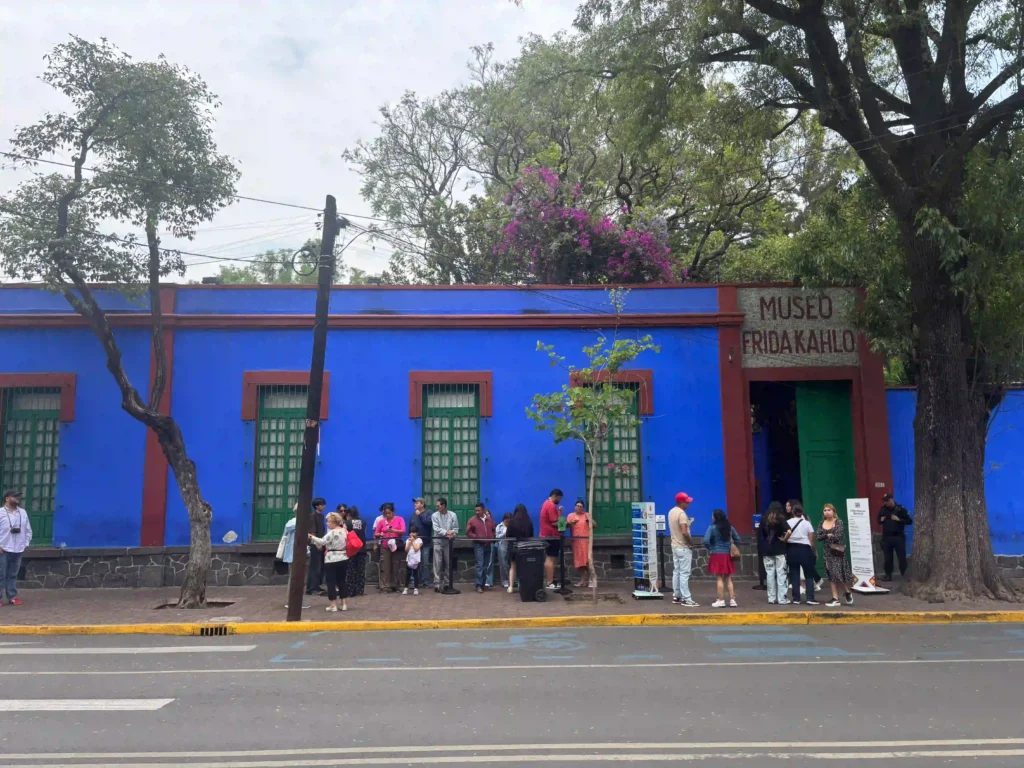
The Frida Kahlo Museum in Mexico City (Must-Do)
We generally try to avoid the massive crowds, but the Frida Kahlo museum in Mexico City is the one cultural absolute you cannot skip. The catch? The lines are notoriously brutal, and getting tickets is a whole issue on its own. However, we actually managed to get a «skip-the-queue» experience, and it completely changed the dynamic of the day. There is a bit of a trick to pulling this off, so if you are planning a trip and want the insider cheat code, just shoot us a DM and we’ll tell you exactly how to do it.
To be honest, neither of us are deep art experts. But walking through the Blue House is different. It is genuinely special.
You can actually feel her presence in the rooms, not in a spooky way, but in a very holistic, intensely artistic sense. It is completely immersing yourself in a specific historical era. Standing exactly where she lived, worked, and hosted dinners gives you a very intimate, unfiltered connection to an absolute icon of Mexican culture.
The Grand Finale: A Cooking Class in Mexico City
We wanted to end the trip by putting everything we had learned over the weekend into practice. The best way to close out an experience like this isn’t just by sitting down for another meal, but by actually making it, leaving with real recipes and new skills you can take back home. After all, that is what real travel is about.
So, we booked an express, 1.5-hour Taco cooking class in Mexico City right before heading to the airport to continue our trip through the rest of the country.
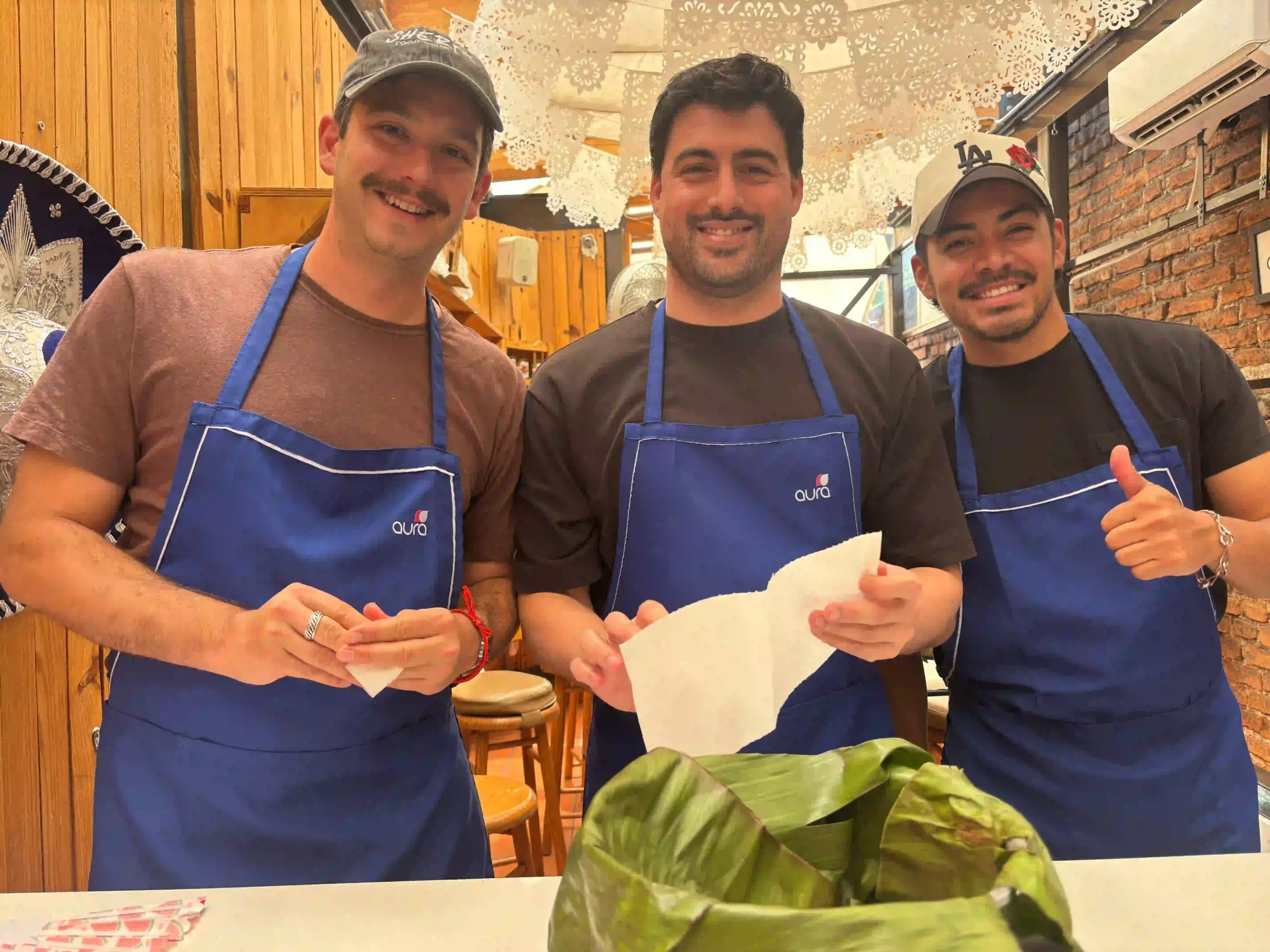
Tacos might seem like the simplest street food in the world, but actually pressing the masa and cooking a proper corn tortilla from scratch has a real local science to it. The class focused on the three essentials: pressing the masa to make our own corn tortillas, roasting the chilies to craft a proper salsa, and cooking up the fillings.
We spent the session figuring it out, laughing at the ones that completely fell apart, and then sat down at the table to eat exactly what we just made. It was fast, hands-on, and honestly, the most grounded way to close out what have been the best 48 hours in Mexico City you could have experienced.
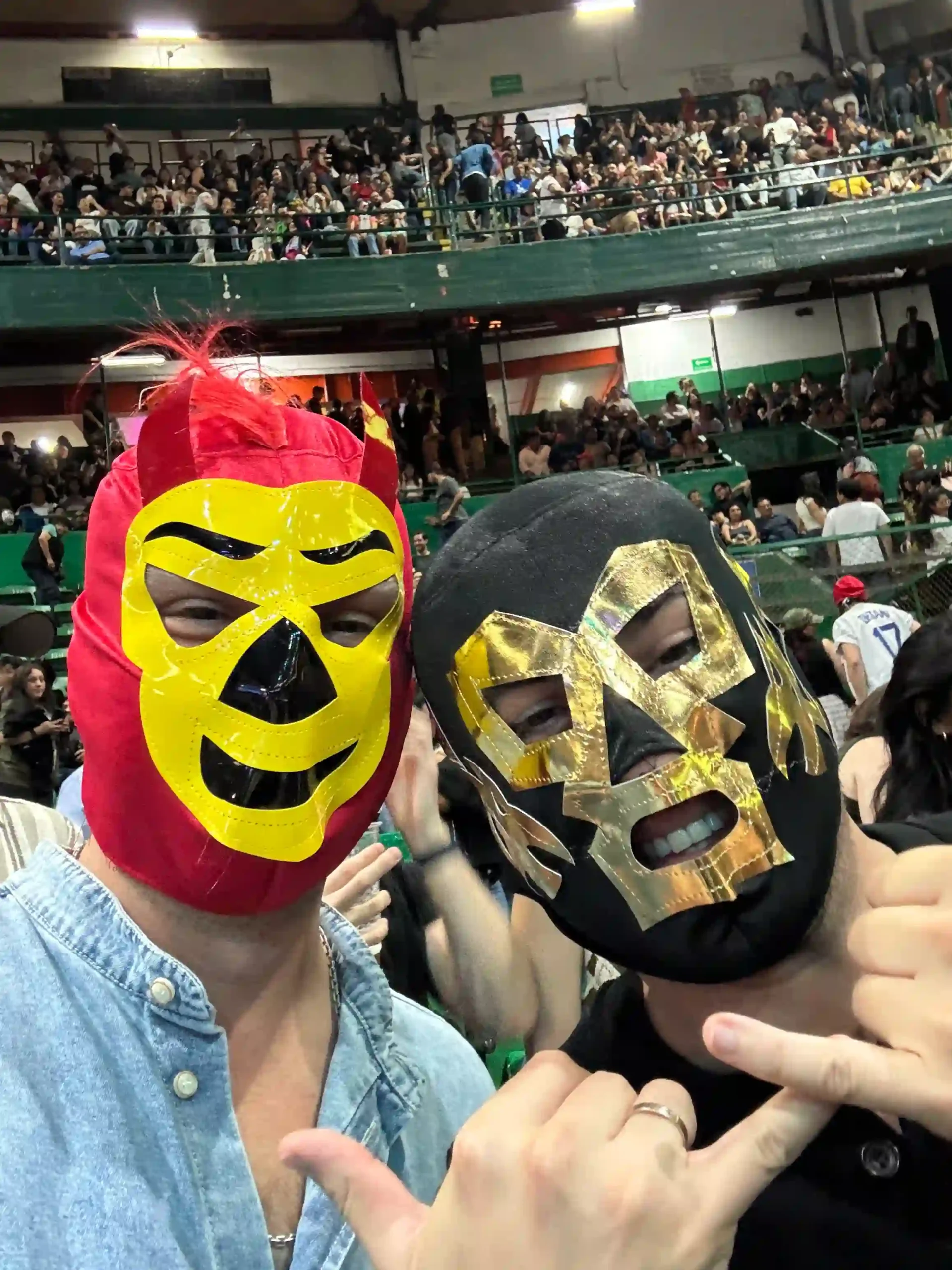
Bonus track: The Lucha Libre experience If you find yourself with an open evening, or if you simply want to swap a night at the bar for pure, unadulterated Mexican chaos, getting tickets for a Lucha Libre show at Arena México is mandatory.
Alex and I spent the entire walk back to the hotel feeling exactly like Jack Black in Nacho Libre. We were absolutely convinced we could take someone in the ring. (Spoiler: we definitely couldn’t).
Ready for Your 48 Hours in Mexico City?
This CDMX itinerary is exactly what we recommend if you want to skip the generic lists and actually experience the capital. Mexico City is absolutely incredible, and as you probably know by now, we are constantly walking the streets and sitting at new tables to craft new experiences for you.
We are always building what’s next, but you don’t have to wait to start making things happen. If you are heading there soon, you can already join us at the table. Get the absolute best of the neighborhood with our Sherpa Food Tour in Roma Norte, or dive deep into the local culture with our Gourmet Taco Tour.
More things are coming soon to CDMX, but for now, pull up a chair. We always save you a seat.
When you think of the Michelin Guide, you probably picture white tablecloths, tasting menus, and reservations made months in advance. But Mexico City plays by its own rules. When the guide arrived in CDMX, it changed the game completely by awarding stars and recognition to the street food stands and local taquerías. And honestly, it makes perfect sense. In a country with such a rich, complex gastronomy, recognizing the streets is an authentic way to reflect its true culture.
Because of our obsession with travel and food, we learned early on that the only way to build the travel company we want is by doing the legwork ourselves. We have to try it, eat it, travel, and experience it firsthand to have our own real perspective before we recommend anything to you. So, my business partner and I flew out to Mexico City and spent an entire week eating absolutely everything we could find. (Listen, someone has to do the heavy lifting; I really love my job).
After countless tortillas and rivers of salsa, we built our own list. Here is our honest guide to the Best taquerías in Mexico City.
The 7 Best Taquerías
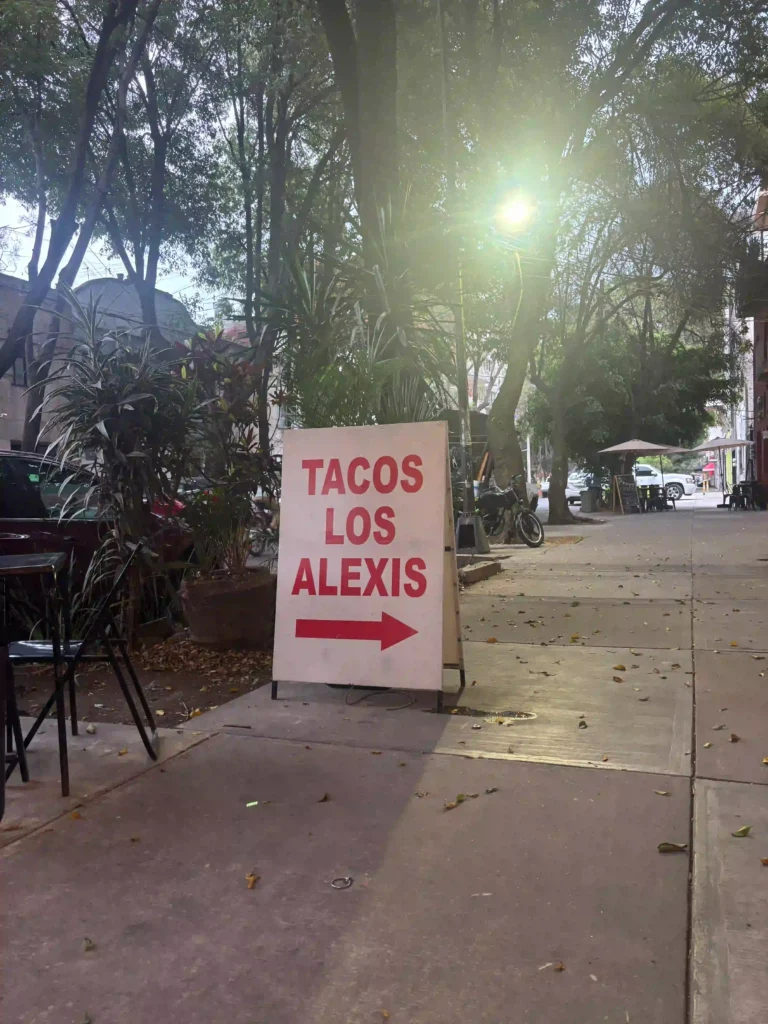
Tacos Los Alexis: Our Unanimous Favorite
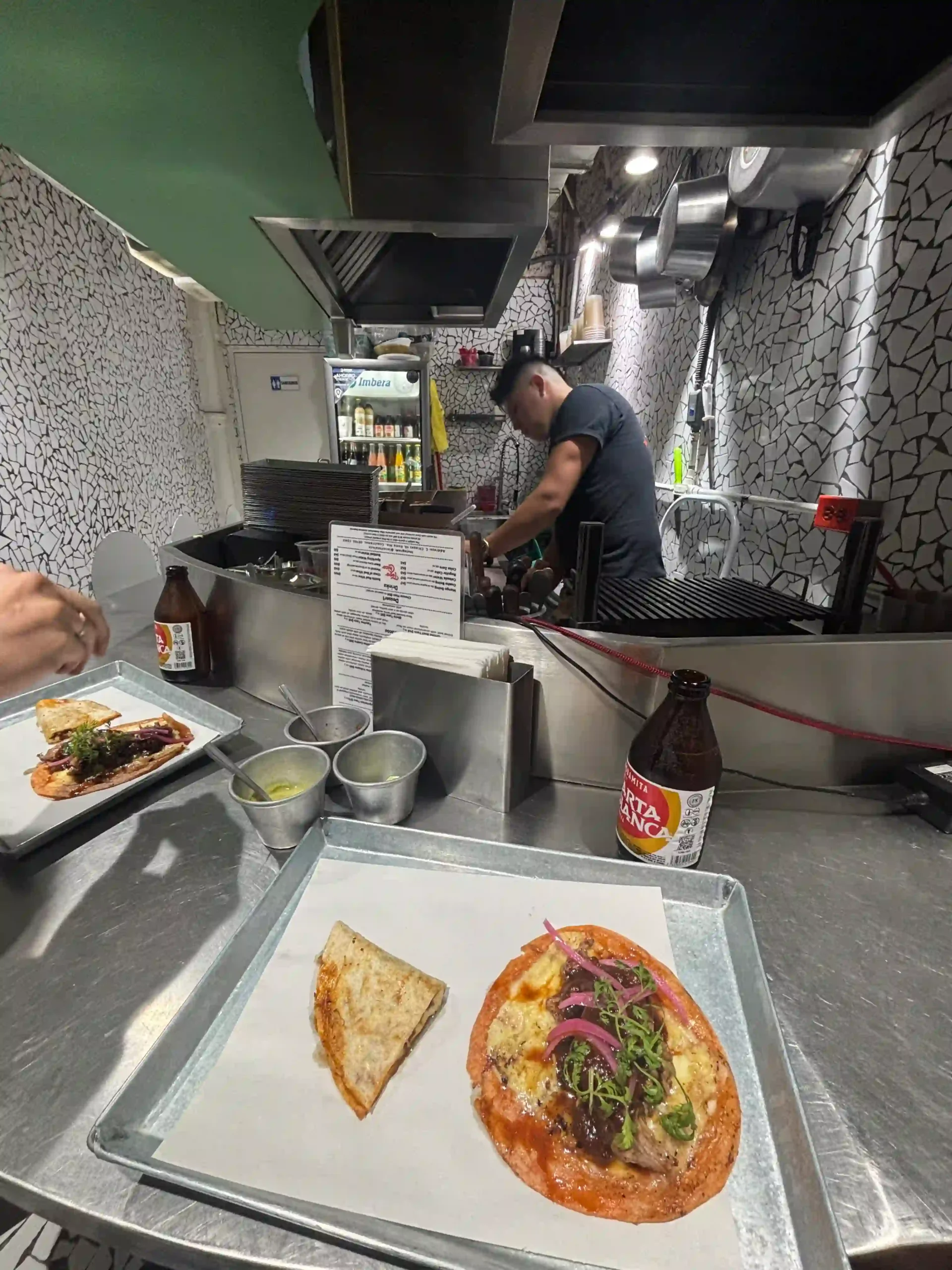
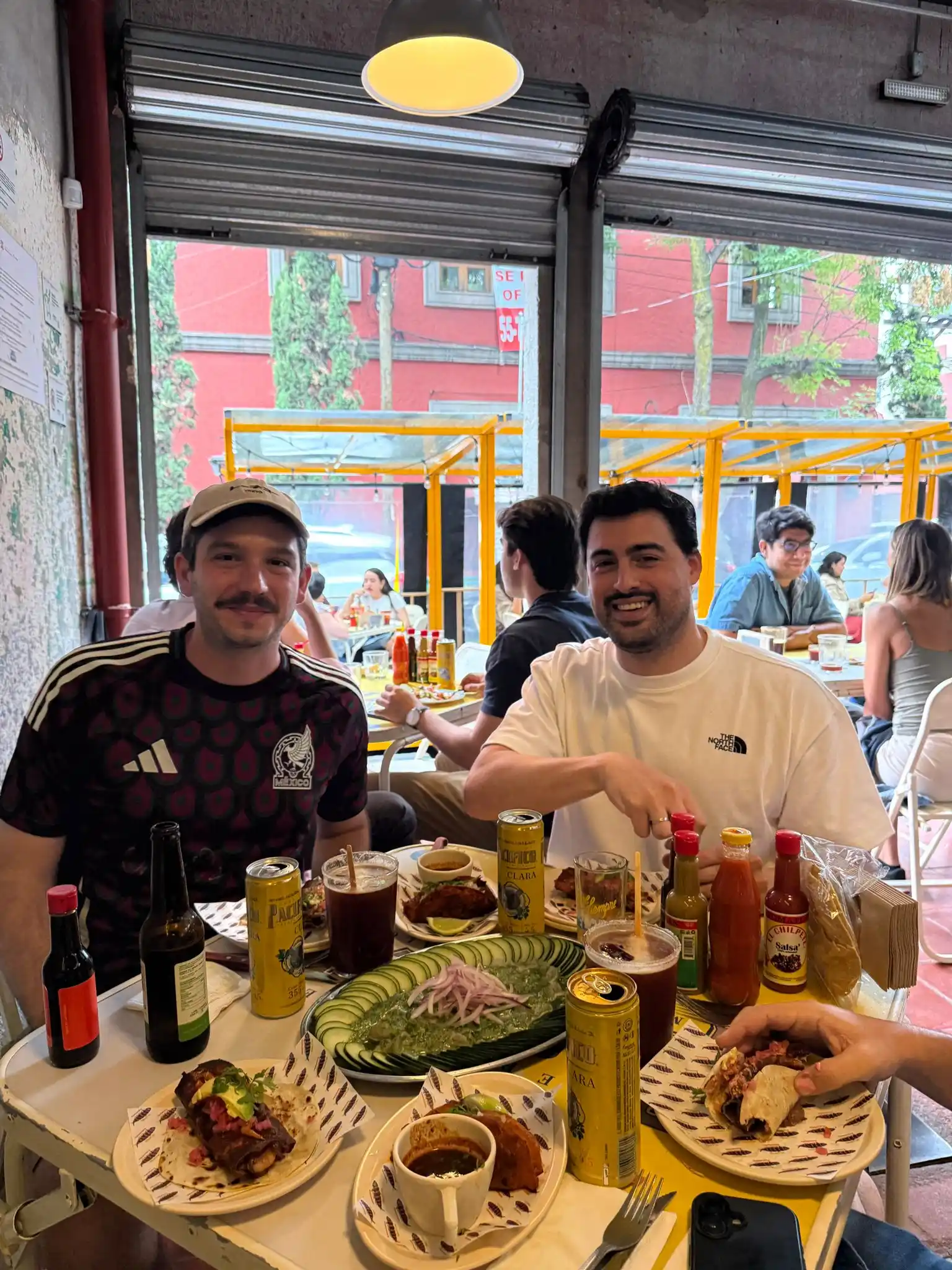
Alex and I sat right at the bar, and getting to watch the open kitchen in action is a great experience. It is a very local spot that keeps a humble profile, but out of all the places we visited, this was unanimously the favorite for both of us.
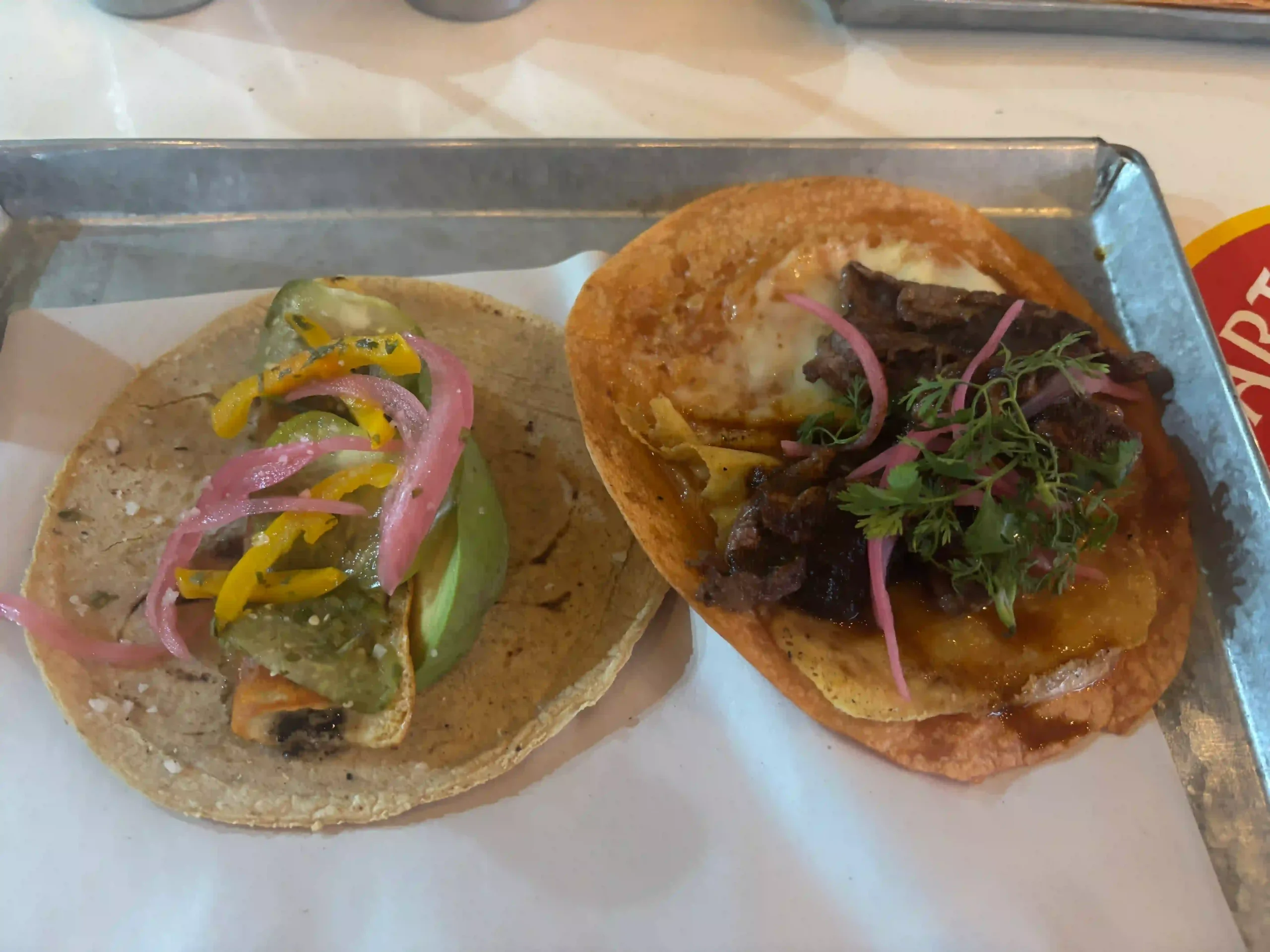
We ordered the Taco Especial, and the carne asada is simply excellent. But what really blew our minds was their salsa borracha; it is insanely good. While we were eating, we got the chance to talk to Jordan, who works in the kitchen, and it just showed us what a genuinely great, welcoming vibe the whole place has.
Also, a huge shoutout to their menu: if you don’t eat meat, their vegetarian option is an absolute must. It is honestly one of the best vegetarian tacos I have ever tried.
Address: C. de Chiapas 46, Roma Norte, Cuauhtémoc, CDMX.
Barbacoa Gonzalitos: The Northern Classic in Roma Norte
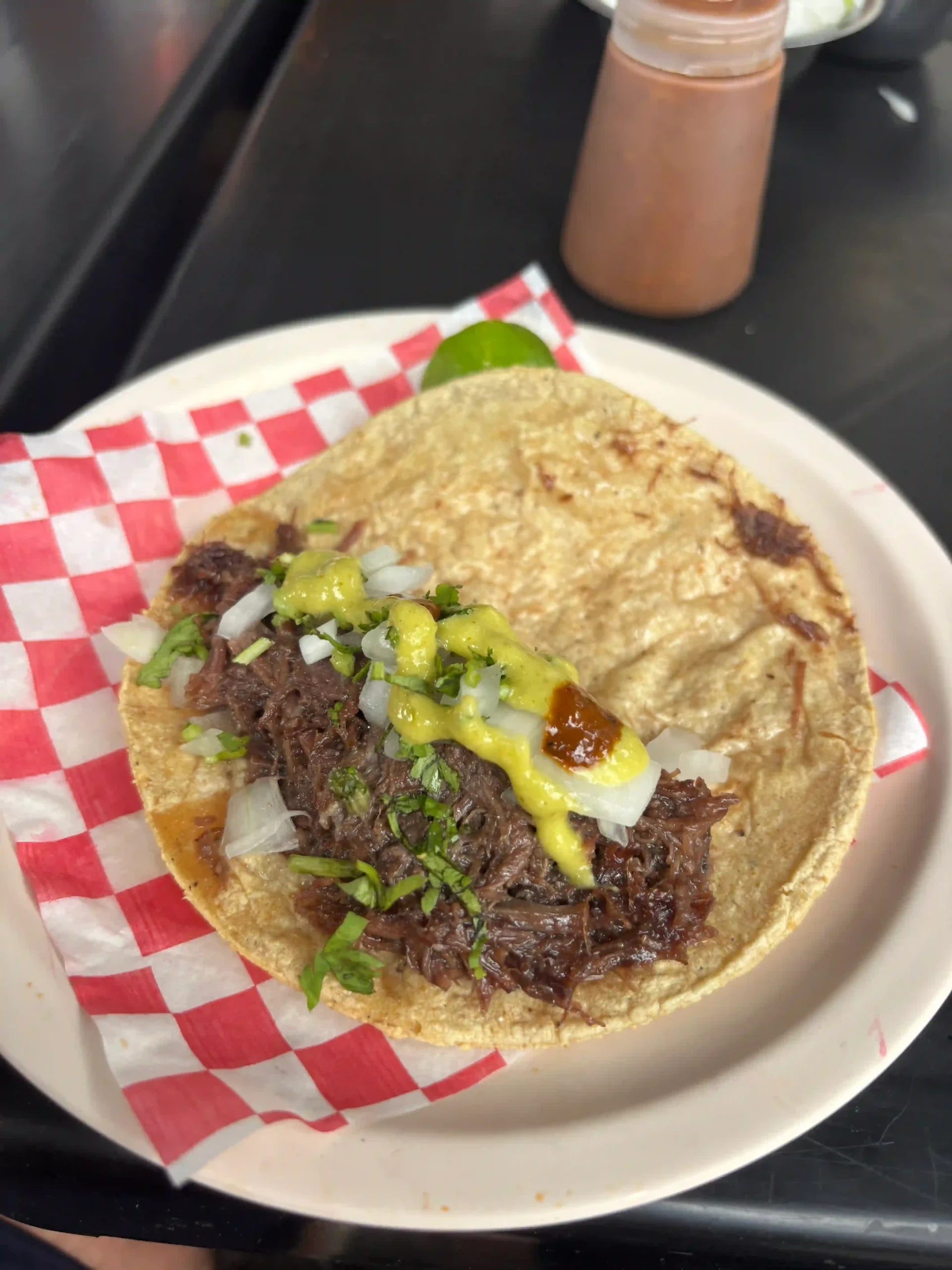
This was one of my favorites in the city. Barbacoa Gonzalitos has just a few sidewalk tables and some counter seating, but the crowd waiting outside tells you everything you need to know.
What I really loved about this place is how simple it is. If you want to play it straight down the middle with a safe bet that absolutely delivers, this is your spot.
They specialize in northern-style tacos, and their barbacoa de res(beef barbacoa) is exactly what you picture when you think of a classic street taco. You can get it on either a corn or flour tortilla (if you like it crispy, i recommend you going for the «dorado-style»). Gonzalitos is the taco that never fails: really good meat, fresh onion, cilantro, and a squeeze of lime.
Address: Calle Colima 76, Roma Norte, Cuauhtémoc, CDMX
La 89: Ricos Tacos
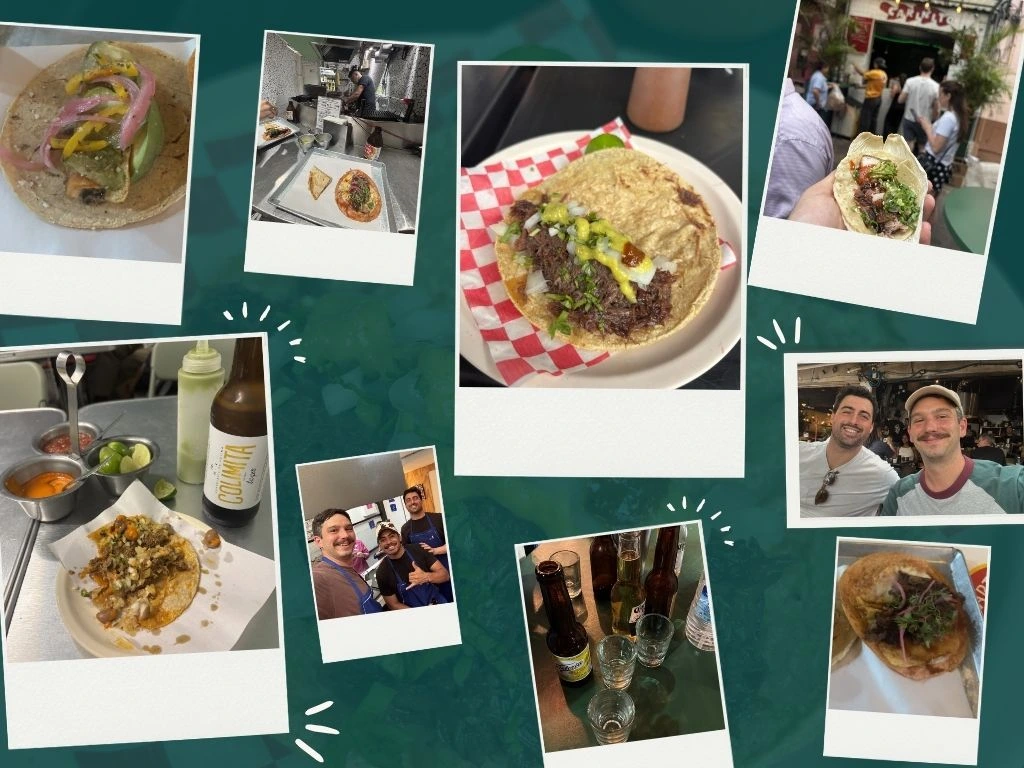
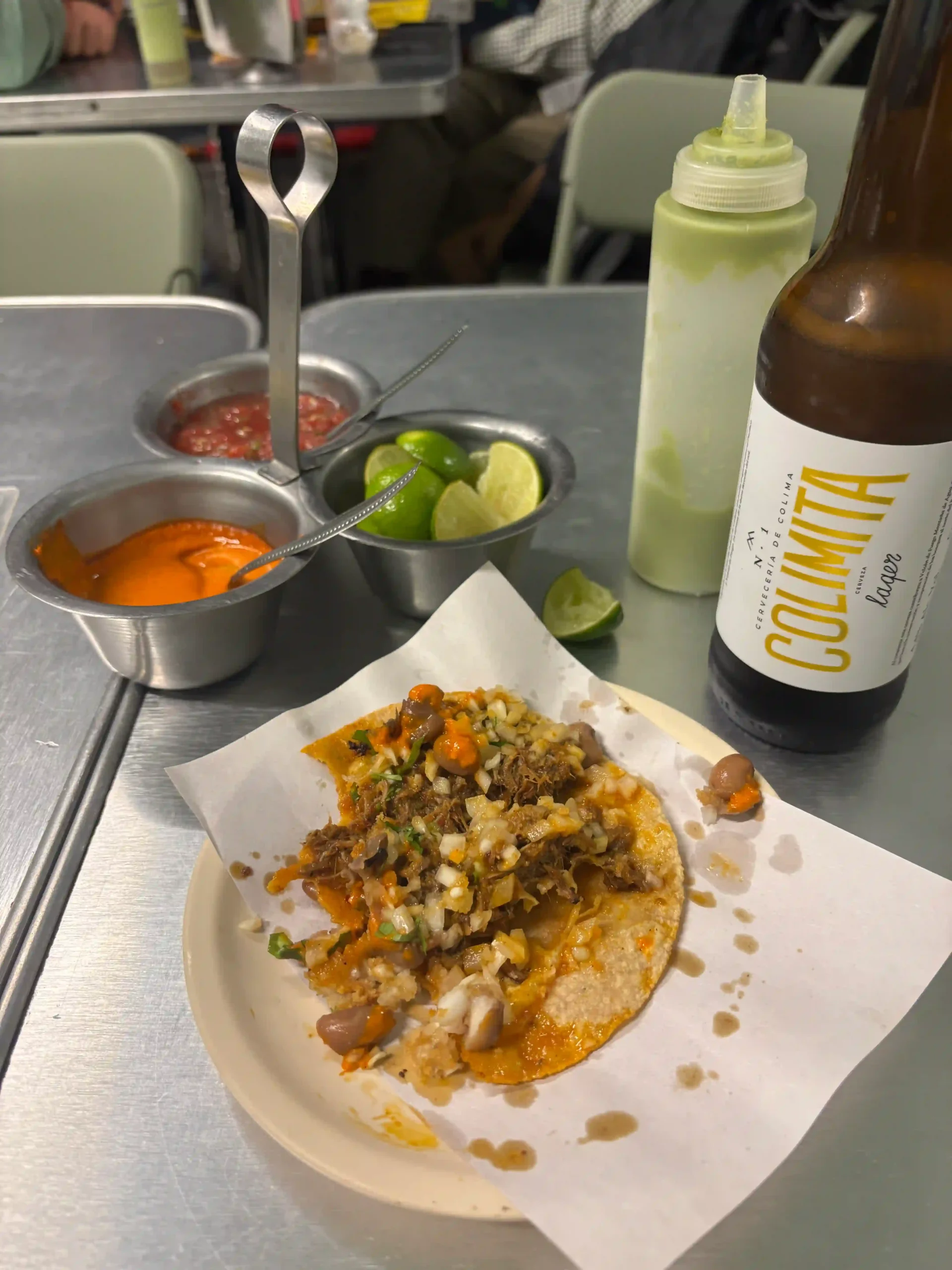
When we arrived at La 89, the first thing that set the tone was the sign right at the entrance that simply reads: «Ricos Tacos». That straightforward promise tells you exactly what you are about to get into. The place has a great atmosphere and a really solid craft beer selection, which for me is key. We cracked open a cold Cerveza Colimita to start things off and got right down to business.
The specialty here is the birria tacos, and they are absolutely incredible. These are not delicate, «aesthetic» tacos designed to look neat for social media. They are unapologetically loaded and extremely flavorful. They come with a heavy pour of salsa and a lot of everything, but the real magic is that despite all that abundance, you can still distinctly taste every single ingredient on its own. It’s a perfect mix of a great vibe, outstanding birria, and cold beer.
And honestly, this Michelin Tacos are so good that, as you can probably tell from the picture, my tortilla didn’t even stand a chance of making it intact for the photoshoot….
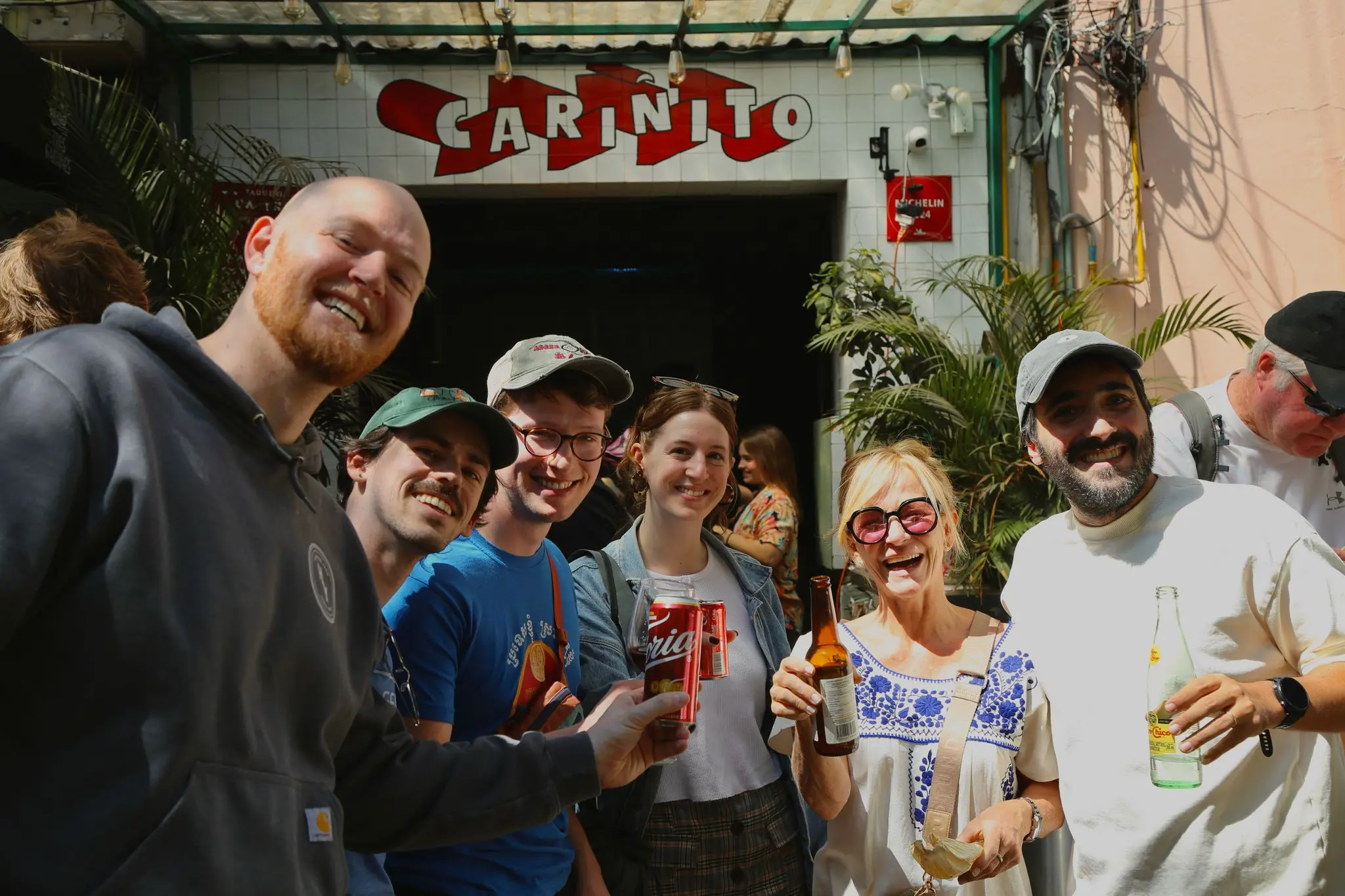
Cariñito: The Asian-Mexican Fusion
Great vibe and the incredibly friendly staff.
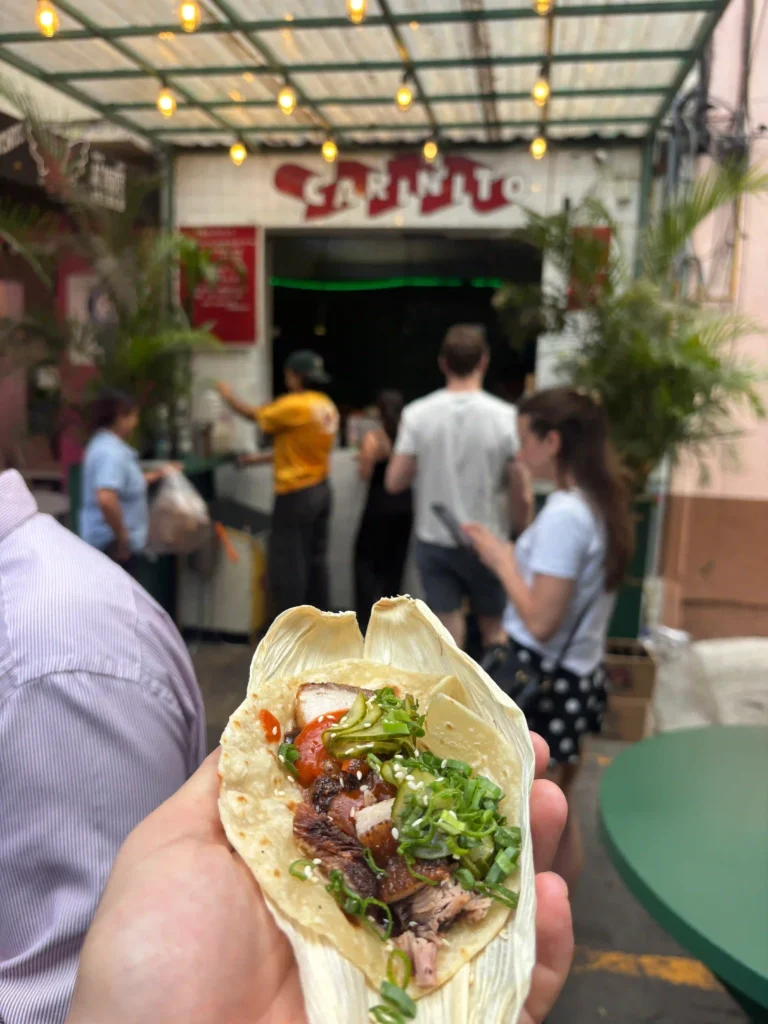
What they are doing here is a complete departure from the rest of the list: they mix traditional street food formats with bold Asian flavors and ingredients. Honestly, eating here almost feels like having a bao turned into a taco.
It is exotic, highly innovative and I personally loved it. Still, it does leave you asking: is this what you look for in a taco?
It definitely doesn’t have that typical, classic street taco flavor. So, if your plan is to visit just one taquería during your trip and you are looking for the traditional Mexican experience, this is not the place for you. But if you are willing to step outside the box and experiment with a completely different flavor profile, you absolutely should give it a go.
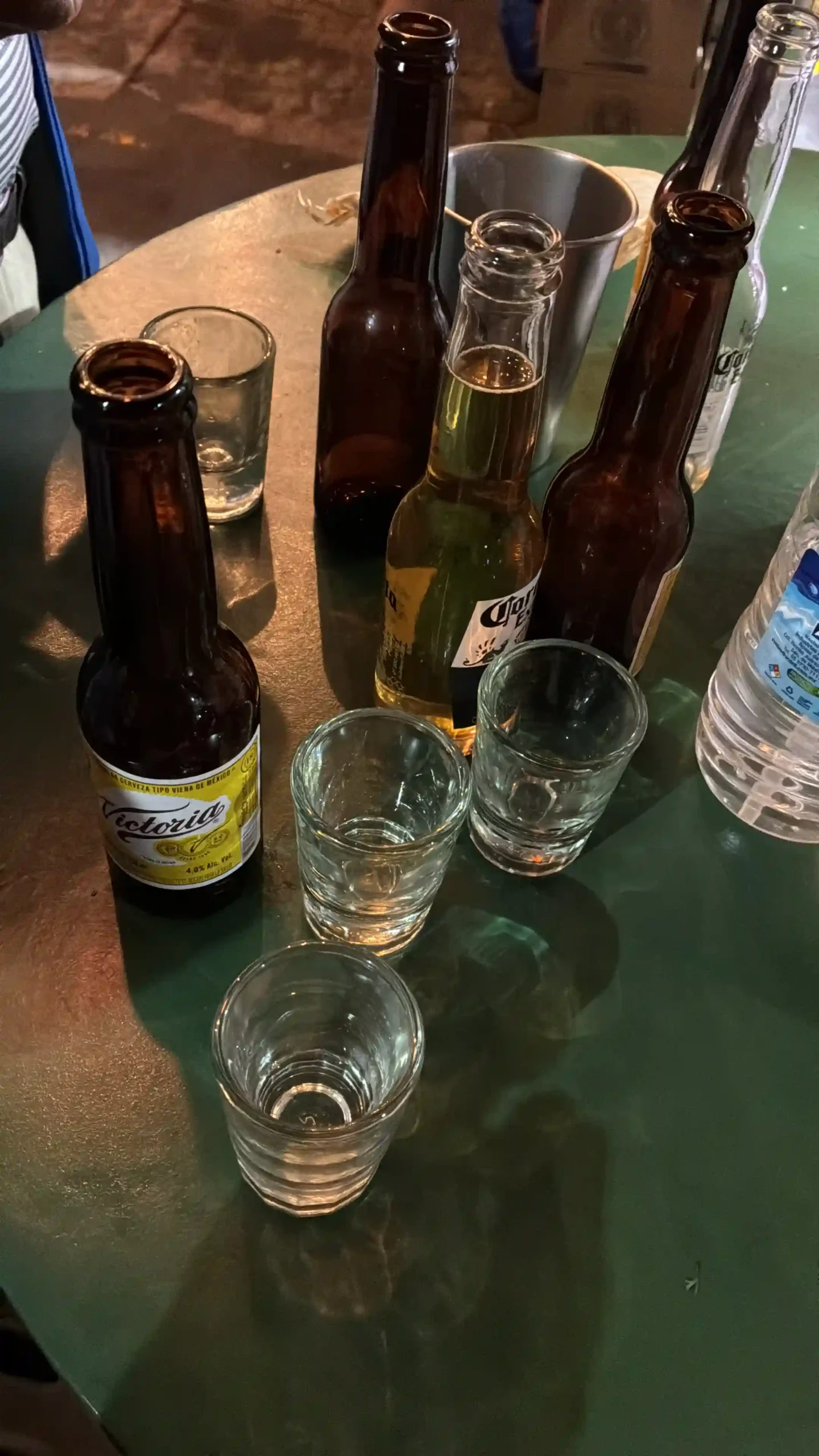
It was a fantastic night all around, and the photo shows the remains of that great vibe (and how many beers we finished).
Address: Guanajuato 53, Roma Norte, Cuauhtémoc, CDMX.
Maizajo: Commitment to Corn
Maizajo strikes this perfect balance of being cool and traditional, without giving in to that modern «aesthetic» culture. It is a place that feels completely grounded, and their focus is entirely on the food.
Their excellence and commitment to the corn is unmatched. Everything here is made completely from scratch, and it shows. The tortillas are excellent, and the tacos come out properly loaded.
Honestly, if I were looking strictly for a classic street taco, it wouldn’t be my very first option out of all the places we visited. But if you are ready to experience everything else they can do with corn and try all the other incredible masa-based creations they make, this is absolutely the place to go.
Address: Fernando Montes de Oca 113, Condesa, Cuauhtémoc, CDMX.
To wrap things up, we hit La Bonvi. This place is a really great addition to the list if you are looking for top-notch meat quality, cold beer, and excellent salsas (their stand out). It definitely delivers on all the essentials.
We ordered the taco de cochinita, and have no regrets. It was really good! If you are veggie, theirhongos al ajillo (garlic mushrooms) is a really strong option that actually holds its own.
Now, full disclosure: their fries are not the best. But if you stick to the tacos, load them up with their incredible salsas, and wash it all down with a beer, La Bonvi is an excellent stop that is absolutely worth your time.
Address: Pedregal 33, Lomas de Chapultepec, Miguel Hidalgo, CDMX
Honorable Mention: The Legend of El Califa de León
This street stand made the fine-dining world realize what locals have known for decades. El Califa de León had the undeniable grace of being the first street stand to ever earn a Michelin star. While it recently lost that status, a lost star doesn’t change a great recipe. Their Gaonera taco is unpretentiously great.
Come Eat With Us: The Gourmet Taco Tour
Picture this: you are walking through the vibrant streets of CDMX, the smell of charred meat and fresh tortillas is in the air, and instead of stressing over google maps or waiting an hour on the sidewalk just to place an order, your only job is to enjoy the food.
After eating our way through the city, we built our Gourmet Taco Tour so you can experience a carefully curated lineup of the absolute best taqueríasin one perfect evening.
Yes, we completely skip the lines (and honestly, walking right past a massive crowd to your reserved spot feels pretty great). You get to taste a wide variety of incredible Michelin tacos, all guided by a local expert who knows the real stories behind the food.
The best part? Sharing the meal with a great group of travelers, and wraping it all up exactly how a proper night in Mexico City should end: sharing laughs and toasting with some amazing mezcal.
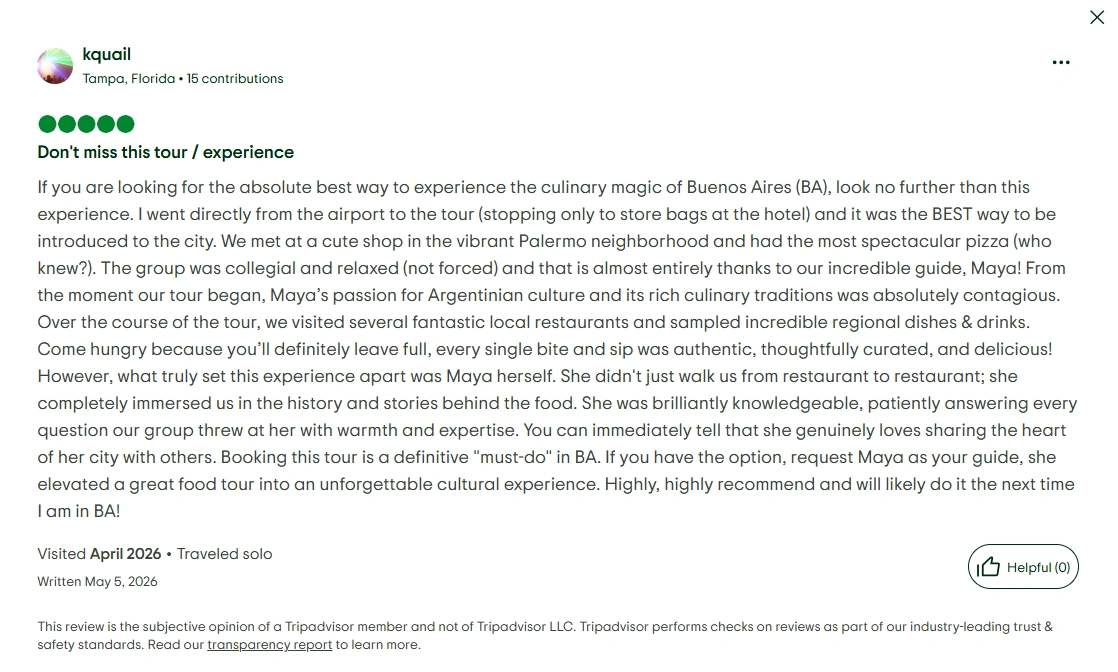
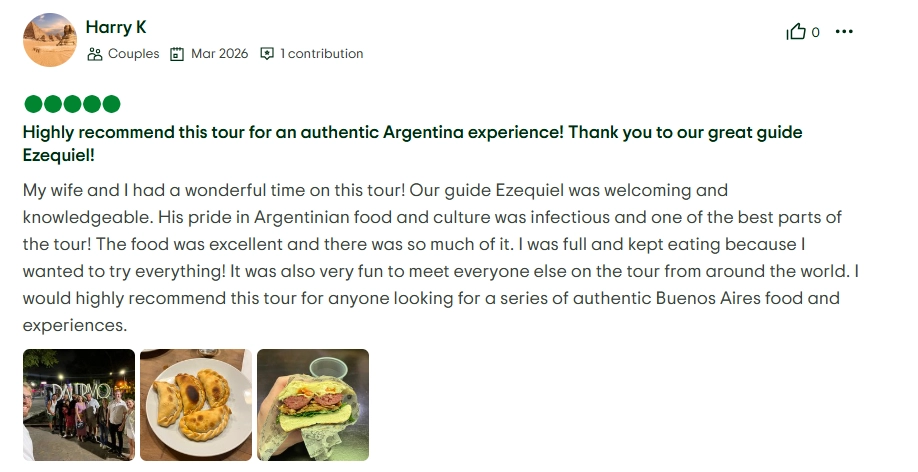
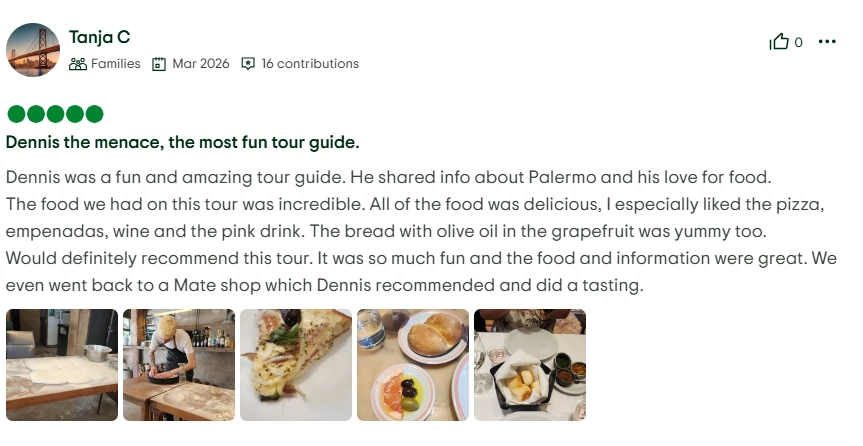
We are beyond excited, and honestly, truly honored, to share some massive news with you. TripAdvisor officially named our Buenos Aires food tour the #1 best food tour in the world!
Though we’ve been recognized among the Travelers’ ChoiceBest of the Best before, this is still a massive milestone because we didn’t just top our specific category but also ranked as the #2 overall out of all global food and drink experiences. We were up against more than 400,000 experiences worldwide, competing shoulder-to-shoulder with global capitals that have massive, established tourism industries. Standing at the top of this podium is amazing, but definitely not a coincidence; it is the direct result of a team that pours their heart into every single tour.
If you’ve ever pulled up a chair with us, shared a laugh with strangers over a fugazzeta, and trusted us to show you the city exactly as it eats, this award belongs to you, too.
Let’s break down what made us the best food tour in the world, and where in the world we are setting the table next.
What ‘TripAdvisor’s Best of the Best’ Actually Means
You might be wondering how TripAdvisor actually decides who gets the top spot. The Traveler’s Choice Best of the Best is the platform’s highest honor, but it’s not handed out by a panel of hidden judges or food critics in suits.
It is based entirely on the real, unfiltered opinions of actual travelers. TripAdvisor calculates the winners by analyzing the quality and quantity of reviews and ratings collected over a 12-month period. Out of the millions of listings on the platform, fewer than 1% are awarded this title.
For us, that is the most important part. We don’t measure our success by Michelin stars, or white-glove service. We measure it by the connections made at our tables. Winning an award that is 100% driven by the people who actually walked the streets, drank the wine, and shared the food with us is the validation of the way we do things.
High Fidelity Local Experiences: The Sherpa Difference
We borrow the concept from music. In the world of audio, High Fidelity is about staying true to the original source: no distortion, no filters, no added noise. We apply that same philosophy to our tours. We want you to experience the city in its purest form, capturing the real pulse of the neighborhoods and the authentic rhythm of our tables.
The Origin: Two Friends, One Vision
Sherpa was born from a friendship that goes all the way back to 1998, when Alex Pels and Guillermo Borthwick met as eight-year-olds playing soccer in Buenos Aires. What started as a childhood bond eventually grew into a shared mission to showcase the best of our culture to the world.
Guillermo is a former lawyer whose path took some unexpected turns. After living in four different countries and working in Innovation at IBM, he decided to drop the corporate world entirely to build the best food travel company on the map.
Alex Pels was born in Argentina but spent some time living in the US: an experience that only deepened his appreciation for his roots. Now married to his Danish wife, he has dedicated his career to sharing Argentine culture through immersive projects like The Argentine Experience, Secreto Tango, and Fogón Asado (which even earned recognition from the Michelin Guide).
By 2013, the idea for Sherpa was already brewing while the two worked together at The Argentine Experience. In 2019, the very first Sherpa Food Tour finally hit the streets.
Like the rest of the world, we had to hit pause when 2020 halted all operations, but the vision never faded. We kept the tables waiting. Fast forward to today, and that same passion has led us right to the top, earning the #1 global food experience on TripAdvisor.
Buena Onda and Host Mentality
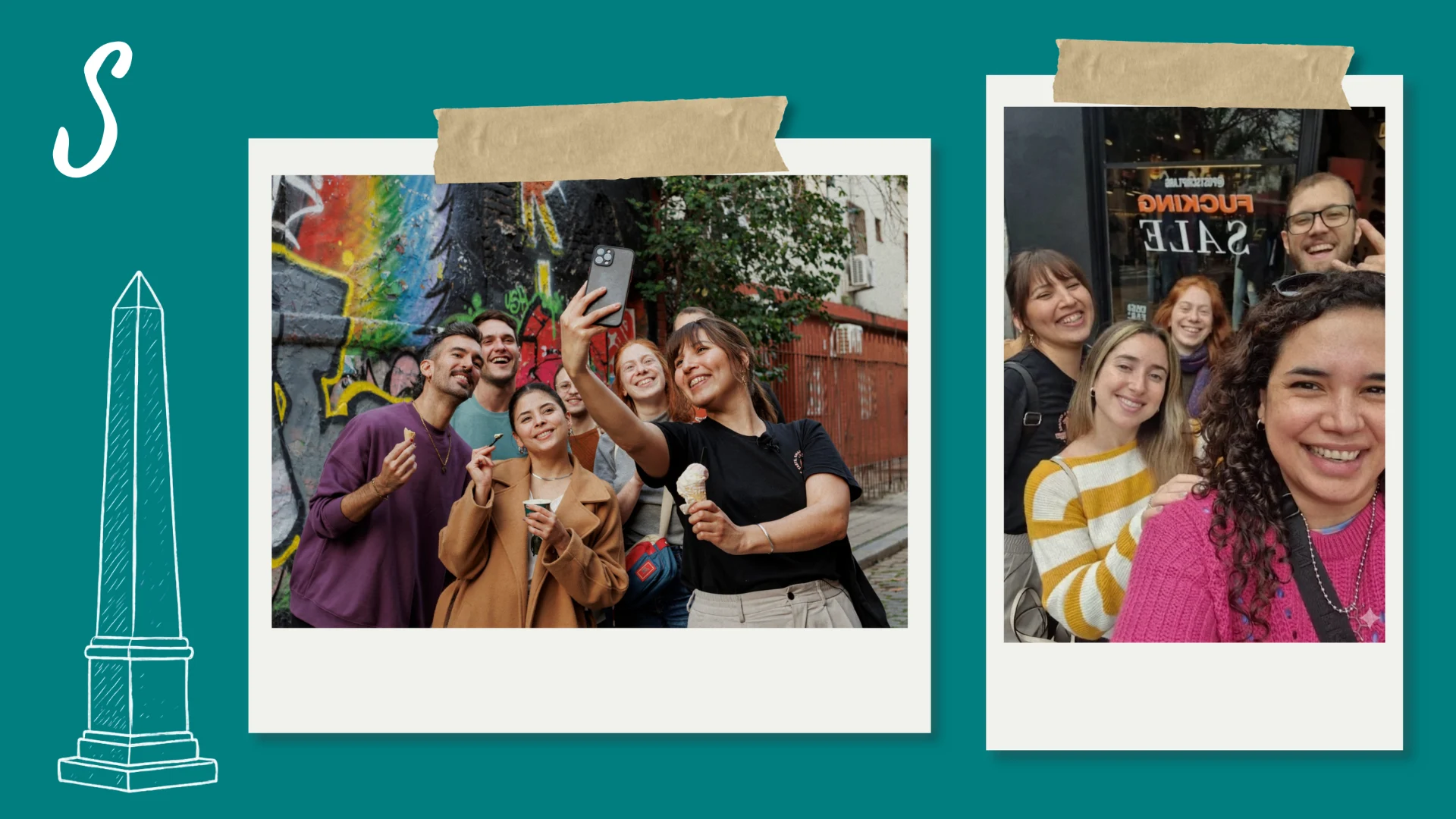
For us, the key to a memorable experience is the energy we bring to the table, or as we call it «Buena Onda».We want to be your local friends welcoming you to our city. When you pull up a chair with us, our main goal is to make you feel completely at home. We handle all the meticulous, behind-the-scenes details so you can just relax, drop your guard, and enjoy the night.
As you may have noticed, we believe that what’s on the plate is never just a meal but the most honest way to understand a destination. Every beloved street food bite and ancestral recipe tells the real story of the neighborhood. We use food as a vehicle for human connection. At the end of the night, we measure our success by the traces left behind: the used napkins, the empty wine glasses after a deep conversation, and the laughter shared across the table by people who started the evening as total strangers.
None of this would be possible without our local allies. We don’t see these spots as just stops on a route; we work together as a single, cohesive team. We are proud to collaborate with iconic places like El Preferido de Palermo, Wino, PICSA, Cabernet Fuego y Vino, Chori, Beba, El Federal, Antiche, and more.
These aren’t just venues; they are partners who share our pulse for the city and uphold the same high standards of quality that we bring to every single table. They are the ones who open their doors so you can feel like a true part of the neighborhood from the moment you walk in.
Our Guides: The Soul of the Experience
Our guides are the true hosts of the tour. They are passionate people who don’t follow a rigid script; they put their heart and soul into every tour to make things happen.
As Alex and Guillermo say, this award is, above all, a source of immense pride for the entire team. Seeing the hard work and passion our guides pour into every single night recognized on a global stage is incredibly gratifying. They are the ones who ensure that every guest feels welcome and that the food remains a vehicle for real human connection.
The Best Food Tour is Setting the Table Globally
Buenos Aires is our home. It is where we started, where we fine-tuned every detail, and where we earned the title of the #1 food tour in the world. But the philosophy that got us to the top wasn’t built for just one city; it was built for anyone who craves an authentic connection to a new place.
We are taking the exact same standard that earned us this global recognition and bringing it across the map. Whether you are exploring the vibrant culinary scene inLima, tasting your way through the streets ofMexico City, discovering the hidden spots ofLondon andAmsterdam, or uncovering the soulful, local side ofParis, you will find the exact same Sherpa Way. And, spoiler alert, we have a lote more coming soon!
Of course, we don’t copy and paste the menu: every destination has its own unique, unfiltered pulse, but we do replicate the excellence. You will experience the same Buena Onda, the same unwavering respect for our local partners, and the same high-fidelity approach that won over the world in Argentina.
No matter which city you visit next, our promise remains the same: we are turning off the tourist autotune, pulling up a chair, and setting a table where things actually happen.
It is a well-known fact: Peruvian gastronomy is consistently ranked as some of the best in the world. And naturally, with that kind of global prestige comes a lot of questions for anyone planning a trip: Is Peruvian food spicy? What exactly makes it stand out on a global scale? What about nikkei cuisine?
As a traveler and a massive food lover, this guide is my way of answering all the questions I had when I first started exploring this culture. As I always say, food is never just food. It is a social event, it is living history, and it is the result of the soil, ingredients, migration waves, and rituals that shape a country.
In Peru, this runs even deeper. Gastronomy here has proven to be a true tool for social transformation. We are talking about a country where children dream of becoming great chefs instead of soccer players, and where extreme biodiversity meets the deep pride of its farmers and fishermen every single day.
That is why in this guide, we are not just going to talk about how incredibly delicious the cuisine is. We are going to understand it. I am going to break down the secrets behind the flavors, and then I will tell you exactly what dishes you need to eat during your stay in Lima so you do not miss a single thing.
The Superpower: Peru’s Native Ingredients and Biodiversity
Peru is famously divided into three immense worlds: the Pacific Coast, the Andes mountains, and the Amazon rainforest. This extreme geography creates an unmatched biodiversity; long before a chef even touches a pan, the ingredients have already done half the work.
The Coast and the Abundance of the Pacific
Beyond being a world-renowned surfing capital, Lima sits on one of the richest fishing grounds in the world thanks to its cold ocean currents. This is the cradle of the firm white fish, octopus, and shellfish that flood the morning markets and the city’s lunch tables. In Lima, the culinary philosophy guided by the Pacific is clear: the catch of the day is eaten incredibly fresh, never heavily cured, stored, or masked with thick sauces. It gives the world a masterclass on how to treat the ocean’s bounty in its purest state.
The Andes and the Ancient Pantry
Long before the Spanish arrived, Indigenous populations had already mastered high-altitude agriculture, creating a pantry that sustains the entire country today. Peru is the original home of the potato, harboring thousands of native varieties with completely different colors, textures, and starch levels. Add to this choclo (a giant, tender, and deeply savory corn) and high-energy grains like quinoa that grow thousands of feet above sea level.
The Peruvian Ají: A flavor flame, Not a Wildfire
One of the most common questions travelers ask before visiting is: Is Peruvian food spicy?Unlike other cuisines where chilies are used to overpower a plate, in Peru, ají is pure color, perfume, and depth. As someone who absolutely loves spicy food, what fascinates me about Peruvian peppers is that they do not sting in an annoying or invasive way. They bring the heat, yes, but they allow you to actually taste every single layer of the recipe without burning your palate. Varieties like the fruity ají amarillo(the backbone of local stews), the citrusy ají limo (essential for ceviche), and the intense Andean rocoto act as conductors of flavor, rather than a raging wildfire.
The Amazon as the New Culinary Frontier
While the coast and the Andes dominate the classics, the immense rainforest is transforming Lima’s high-end dining in fascinating ways. Beyond its incredible exotic fruits (which we will cover in detail later), the Amazon brings unique herbs and is home to entire communities that have changed their history. Many farmers transitioned from growing illicit crops to producing high-quality cacao that now shines in global gastronomy.
The 5 Forces Shaping Peruvian Gastronomy
To truly understand what to eat in Lima, you first need to understand who built its kitchens. The sheer diversity of the city’s menu does not just come from its geography; it comes from the magic that happened when different civilizations applied their techniques to those native ingredients. Lima did not erase incoming cultures, but absorbed them.
Every dish, street food cart, and market stall in this city is supported by at least one of these five cultural forces:
Indigenous & Andean Foundations
This is the baseline of survival and agriculture in Peru. Long before any outside influence arrived, pre-Columbian cultures had already worked the land. They provided the unmatched pantry that is the core of the Peruvian diet today: the thousands of potato varieties, quinoa, choclo, and the ají peppers. Without this intimate connection to the earth, Peruvian cuisine simply would not exist.
Spanish Colonial & Criollo Cuisine
With the arrival of the Spanish, the local pantry collided with European ingredients like dairy, wheat, onions, garlic, and citrus (which, spoiler, would eventually change the history of ceviche forever). While this collision of worlds happened across all of Latin America in countries colonized by Spain, in Peru, the resulting fusion reached extraordinary depths. It gave birth to criollo (creole) cuisine. Historically, the term «criollo» referred to people of Spanish descent born in the Americas, but in the kitchen, it represents the mix of cultures: Spanish cooking methods seamlessly blended with Indigenous ingredients and, eventually, African flavors. This rich cultural melting pot is responsible for Lima’s famous creamy, comforting stews, as well as a deep tradition of convent-style pastry making that still sweetens the city today.
Afro-Peruvian Influence
Without a doubt, Lima’s street food has strong Afro-Peruvian roots. Enslaved populations, who were often given only discarded cuts of meat or offal, used charcoal fires, spices, and immense creativity to invent deeply flavorful dishes. This is the heritage of resilience and flavor that still rules Lima’s nights around the glowing street grills.
Chinese Migration (Chifa)
If you are looking for the true, everyday comfort food in Peru, you will find it in the «Chifa.» The massive wave of Chinese migration brought the wok, high-heat cooking techniques, ginger, and soy sauce (known locally as sillao). Instead of remaining an isolated cuisine, immigrants integrated their techniques directly with native potatoes and ají. The result is not a trendy «fusion». It is the daily food of all Peruvians.
Japanese Migration (Nikkei)
Last but certainly not least, Japanese migration transformed Lima’s relationship with the ocean. Immigrants brought unmatched precision in knife work and a profound respect for raw fish. Before their arrival, fish for ceviche was often marinated for hours; Japanese techniques shortened the curing times, prioritizing freshness and texture. This integration, known as Nikkei cuisine, is currently booming in the fine-dining scene and is widely considered one of the world’s favorite culinary fusions. Today, this precise, umami-rich cooking style is largely responsible for elevating Lima to its current status as a global gastronomic powerhouse.
Where to Eat in Lima: The 5 Types of Restaurants You Need to Know
Deciding where to eat in Lima can feel as vast and overwhelming as the country itself, especially with so much information out there. But do not worry. To experience the city like a true insider, you just need to know how to read its streets.
Lima, like every other city in the world, eats in very distinct formats.
Here are the clear keys and clues to help you recognize the five essential types of restaurants and choose exactly what fits your craving.
The Cevichería (The Coastal Rhythm)
This is a seafood-focused restaurant centering on raw or lightly cured catch, heavily influenced by Nikkei precision.
They operate on a strict daytime schedule, usually bustling at lunch and closing by late afternoon.
Why choose it: Perfect when you want the absolute freshest daily catch and vibrant, citrus-forward flavors.
The Huarique (The Hidden Gem)
These are small, often hidden neighborhood spots known mostly by locals.
It operates by word-of-mouth. Look for an unassuming, often unmarked storefront packed with locals.
Why choose it: Ideal when you want short menus based on deeply guarded family recipes, focusing on authentic regional or criollo comfort food. It is the perfect spot to experience incredibly generous portions at very affordable prices.
The Chifa (The Everyday Comfort)
This format seamlessly combines Asian methods and soy sauce with Peruvian ingredients.
These are characterized by the sounds and smells of flaming woks, high-heat cooking, and bustling dining rooms.
Why choose it: Go here if you love Chinese food and want to experience it through a Peruvian lens.
The Contemporary Bistro or «Neo-Criollo»
They represent a modern Peru that shows culinary confidence without the need for stiff, white-tablecloth formality.
You’ll recognize by its casual but highly intentional atmosphere, often blending modern aesthetics with traditional touches.
Why choose it: The right choice when you want refined, elevated versions of classic dishes. Expect to eat reinvented traditional comfort foods, like ají de gallina, or crispy croquettes filled with rich, historic stews.
The Anticuchería / Street Grill (The Night Shift)
They tell the powerful story of Afro-Peruvian resilience. As I said earlier, during colonial times, enslaved populations were given only discarded cuts that they would transform into culinary masterpieces. I do not want to romanticize this: it was not a culinary choice, but a way to survive and transform an awful reality. Yet, that sheer power of culinary alchemy and the capacity to invent new flavors out of hardship is exactly what brought us here, making this street-side grilling a central, communal part of Lima’s nightlife today.
You will find them easily by following the dense smoke, the smell of sizzling charcoal, and the crowds gathered on the sidewalks after dark.
Why choose it: Centered entirely around the charcoal grill, this is exactly what you want for late-night, intensely flavored marinated cuts of meat and offal. You absolutely must order the Anticuchos de Corazón!
What Food is Peru Known For? 5 Must-Try Dishes in Lima
It is time to talk about what goes on the plate. These five dishes are absolutely non-negotiable if you want to truly experience Peruvian gastronomy, plus a few extra alternatives just in case you want to dive even deeper.
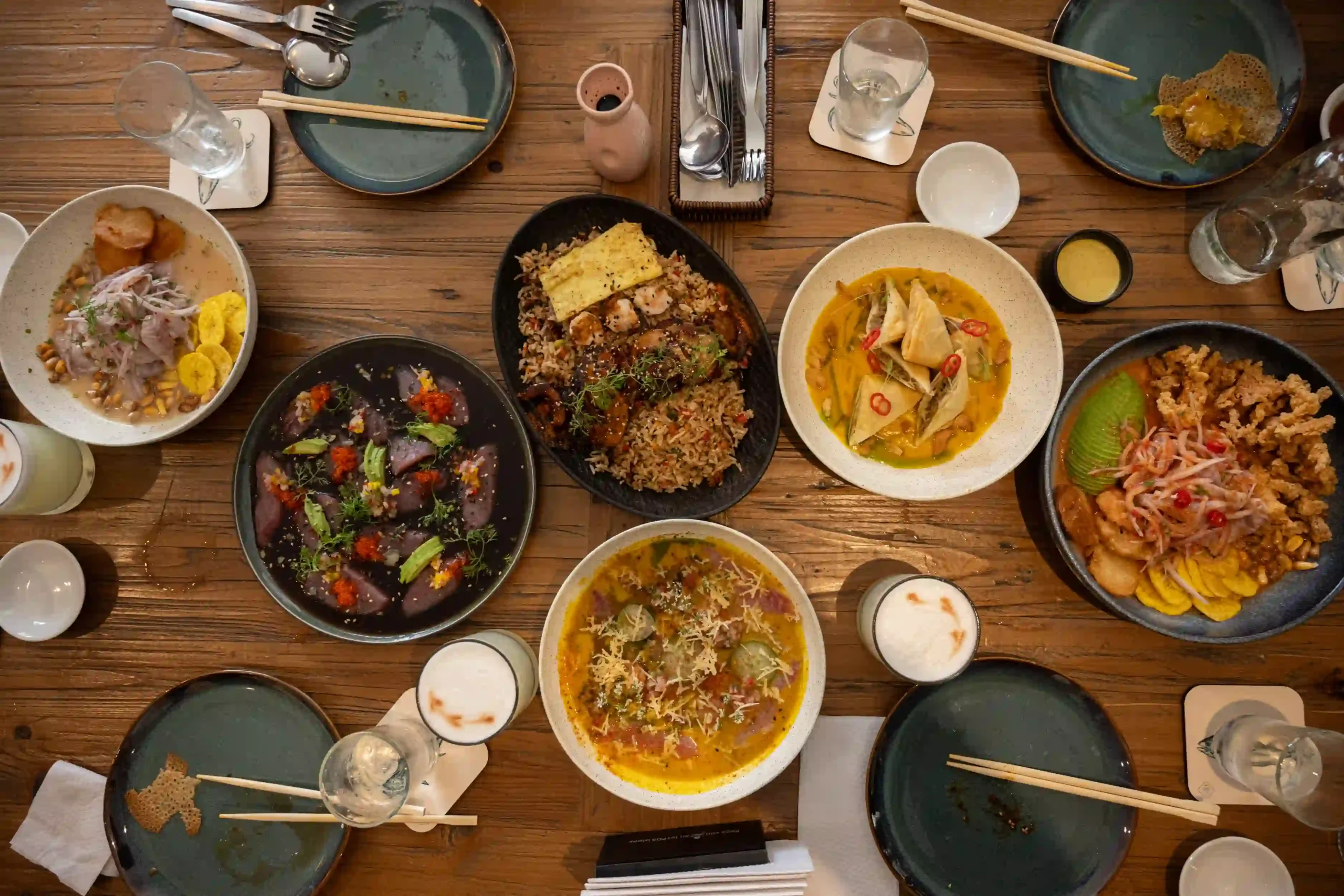
Classic Ceviche
Ceviche is not only the most famous dish in Peruvian gastronomy; but also my absolute favorite. I am not a big fan of fish, and yet, I am completely obsessed with this dish. It consists of fresh white fish briefly cured in freshly squeezed lime juice, seasoned with ají limo, salt, and thinly sliced red onion, served alongside camote and choclo.
Sensory-wise, it is a dish of endless stimuli. It truly has it all: a brilliant mix of textures and bold, vibrant tastes. You get the sharp, bright acidity of the citrus, the firm bite of the fresh fish, the crunch of the raw onion and the choclo, and the comforting, creamy sweetness of the sweet potato to balance everything out. And then there is the kick. It hits you with those citrusy, spicy notes, but as we talked about earlier, it is deeply flavored, not hot. It wakes up your palate.
Causa Limeña
At its core, causa is a bright, beautifully layered dish made from mashed native yellow potatoes seasoned with freshly squeezed lime and ají amarillo. In a way, it reminds me a lot of Dominican mofongo, and I know I am not the only one who thinks this, since even Luisito Comunica made the exact same comparison!
It acts as a soft, flavorful canvas that can be stuffed with chicken or avocado, but personally, I absolutely love it as an appetizer, especially when it is filled with fresh seafood. Served cold, it is incredibly refreshing and proves exactly how Lima elevates humble, native ingredients into elegant culinary staples.
Lomo Saltado
While it is born from the Chinese-Peruvian (Chifa) tradition, what you really need to know right now is how incredibly satisfying this plate is to eat. This is a smoky, hearty stir-fry of tender beef strips, crunchy red onions, and thick wedges of tomato, all tossed in a flaming wok with soy sauce. The high heat gives the meat that irresistible, charred flavor. But the absolute best part is the unapologetic carb-on-carb perfection. The dish is served with a massive portion of crispy french fries tossed right into the savory gravy, soaking up all those incredible wok juices, right alongside a mound of white rice.It is rich and of course, messy.
Tiradito
Tiradito exists because of Japanese migration. While ceviche uses cubed fish that cures in citrus, tiradito features sashimi-style, thinly sliced raw fish that is covered in vibrant, ají-based sauces right before serving, meaning there is virtually no curing time. It highlights delicate knife work and umami over acidity. This dish is the clearest proof of how Lima absorbs incoming cultures.
Ají de Gallina
This is colonial Lima on a plate. Ají de Gallina is a rich, creamy shredded chicken stew made with a base of ají amarillo (i know, it is everywhere), milk, bread, pecans, and parmesan cheese. It is a brilliant example of how European ingredients (like dairy and wheat) were layered over Indigenous chilies to create something deeply comforting. Often served with rice, boiled potatoes, and black olives, it is the definition of Sunday family dinners in Peru.
Peruvian Street Food and Market Culture
Lima’s informal dining operates on two very distinct clocks: the late-night glow of the street carts and the early morning hustle of the local markets.
Anticuchos (The Street Cart Origins)
I know I already mentioned Anticucherías as a specific type of restaurant earlier, which might cause a bit of confusion. Here is the deal: anticuchos started strictly as street food. People would set up a small charcoal grill cart on a street corner and serve these marinated, flame-grilled beef heart skewers directly to the crowds. Over time, they became so wildly popular that permanent, sit-down restaurants were built around that exact same concept. Today, they exist as both. You can sit down in a neighborhood spot, or you can do it the classic way: standing on the sidewalk, following the dense smoke, and eating this tender, smoky, and intensely savory bite right off the street cart.
Pan con Chicharrón (The Market Breakfast)
If the carts own the night, the bustling local markets and sandwich shops own the morning. The king of Peruvian breakfast is thePan con Chicharrón. This sandwich is a complete masterclass in contrasting flavors and textures. You get thick cuts of savory, incredibly crispy fried pork belly paired with soft, sweet slices of fried sweet potato, all tucked into a crusty bread roll. To cut through the richness of the pork, it is topped with a sharp, fresh relish made of thinly sliced red onions and lime juice. It is salty, sweet, crispy, and acidic all at once. Pair it with a strong, high-quality cup of properly roasted coffee (none of that cheap, sugar-roasted stuff) and you have the absolute best fuel for a day of exploring the city. Just a quick heads-up, though: if you come from a country where breakfast is usually just a simple piece of toast, you might want to take it easy. It is incredibly delicious and as local as it gets, but definitely listen to your body when tackling a massive fried pork sandwich first thing in the morning!
Peruvian Sweets, Desserts and Fruits to Try
Peruvian food is globally famous for its savory dishes, not necessarily its sweets. But make no mistake: Lima has a massive sweet tooth with more than enough to satisfy your sugar cravings. I know I am starting to sound like a broken record here, but we are back to the exact same story that built the rest of the city’s food scene: European techniques colliding with native ingredients. In this case, the city’s dessert culture is largely a direct legacy of the Spanish colonial era, where nuns in convents adapted their traditional pastry methods using the incredible abundance of the Peruvian pantry. Here is exactly what you need to look for.
Picarones (The Street Sweet)
This is Peru’s undisputed street dessert champion. Think of it as a local doughnut, but instead of regular flour, the dough is made from a mix of local squash and sweet potato. The vendor quickly fries them into crispy, airy rings and instantly drenches them in a dark, rich, spiced syrup made from raw sugar cane (chancaca). Eating these warm, sticky, and completely addictive treats while standing on the sidewalk is the perfect way to close out a night in Lima.
Suspiro a la Limeña (The Colonial Sugar Rush)
Translated as the «Sigh of a Lima Lady,» this dessert is the ultimate expression of the city’s colonial refinement. The bottom layer is a rich, silky caramel calledmanjar(similar to a traditional dulce de leche, made by slowly reducing milk and sugar until it thickens). It is then topped with a cloud of port-wine-infused meringue and a sprinkle of cinnamon. I will be honest: it is intensely, unapologetically sweet. I highly recommend ordering it alongside a strong coffee; the bitterness of a good brew balances the sugar rush.
Mazamorra Morada & Arroz con Leche (The Perfect Contrast)
Why choose one dessert when you can have two in the same bowl? Known locally as «El Clásico,» this is the ultimate Peruvian dessert. On one side, you getArroz con Leche, a rich, heavy, and spiced rice pudding. On the other side, you get Mazamorra Morada, a thick, jelly-like pudding made by boiling native purple corn with pineapple, apple, cinnamon, and cloves. The true magic happens right in the middle of the bowl, where the bright, fruity acidity of the purple corn cuts directly through the heavy creaminess of the rice.
Exotic Peruvian Fruits
While not technically desserts in the traditional sense, Peru’s exotic fruits are an absolute delicacy and a crucial part of the morning market routine and dessert menus. These are insanely delicious, highly unique fruits that you simply will not find in most other parts of the world.
My absolute favorite was the Chirimoya. It is a green, scale-covered fruit with a creamy, custard-like center, and eating it is a wild sensory experience because it literally tastes like a blend of several different fruits at once (kind of a banana, pineapple, and strawberry mix).
Beyond that, keep your eyes peeled for Lúcuma, which tastes exactly like a mix of caramel and sweet potato when blended into ice cream, or grab a Granadilla to slurp up its sweet, jelly-like seeds for a quick morning snack. If you are exploring the markets, you will also find a massive bounty of Amazonian and Andean flavors, like the ultra-acidic Camu Camu, the tart Aguaymanto (golden berry), or the Pacay, an elongated pod filled with sweet fuzz known as the ice cream bean.
The Peruvian Bar: What to Drink in Lima
You simply cannot analyze a country’s gastronomy without looking at what they pour into the glass. Drinks are not just an afterthought used to wash down the food; they are an integral part of the culinary identity. Here are the three pillars of the Peruvian glass you need to know.
Pisco Sour (The Heavy Hitter)
This is like the national cocktail. It is made with Peruvian Pisco (a potent, unaged grape brandy), freshly squeezed lime juice, simple syrup, a raw egg white for texture, and a few drops of Angostura bitters resting on the foam. It is thick, aromatic, perfectly balanced between sweet and sour, and packs a massive punch. You absolutely have to order it at least once to experience the classic, but be careful, they go down dangerously easy, and the alcohol hits hard.
El Chilcano (The Local’s Choice)
Here is a tip: tourists drink Pisco Sours all night, but locals switch to Chilcanos. This is a much simpler, incredibly refreshing highball made with Pisco, ginger ale, a squeeze of fresh lime, and lots of ice. Because it skips the heavy egg white and thick sugar syrup, it is highly drinkable and pairs far better with a massive, hearty dinner. It acts as the perfect, fizzy palate cleanser between bites of intense, spicy food without making you feel uncomfortably full.
Chicha Morada (The Everyday Staple)
If you are not drinking alcohol, or if you are just sitting down for a standard midday lunch, this is exactly what will be on your table. Chicha Morada is a non-alcoholic beverage made by boiling native purple corn with pineapple rinds, apple, cinnamon, and cloves, served ice cold with a squeeze of lime. It is sweet, spiced, fruity, and visually striking with its dark, inky purple color. I’d say it is the everyday fuel of the city.
Sherpa Food Tours: Decode the Culinary DNA of Lima
Navigating Lima’s food scene is a dream for any traveler (or foodie), but let’s be honest: it can also be incredibly overwhelming. You can read all the guides in the world, but truly understanding how Japanese precision, Chinese wok techniques, and ancient indigenous ingredients created the world’s best food destination requires more than just a dinner reservation.
At Sherpa, we do not just hand you a plate of food and point at a building; we take you right to the source. In just under four hours, our small-group walking tour bridges the raw grit of local markets with the sophisticated pulse of modern Lima, turning a series of meals into a masterclass on Peruvian identity.
What to Expect on Our Culinary Journey
The adventure kicks off at the bustling Surquillo Market, where we dive into a sensory tasting of rare, mind-bending exotic fruits straight from the Andes and the Amazon. From there, we trace the country’s culinary evolution across more than 10 curated tastings. You will experience the deep comfort of traditional Criollo home cooking at a modern huarique, and then step into the cutting-edge world of Nikkei fusion for flawless seafood paired with our flagship Pisco.
The tour then takes a wild turn to introduce you to untamed ingredients brought directly from the rainforest, before finally wrapping up with a refreshing, handcrafted dessert while looking out over the Pacific Ocean.
This is a moving dinner party led by an expert local host who handles every single detail. All you have to do is show up, relax, and eat. By the end of the tour, you will not just know what to order for the rest of your trip; you will finally understand exactly why Peruvian gastronomy dominates the global stage.
Before I start this article, let me tell you that none of the places I will name stand a chance against my mom’s empanadas. It is completely impossible to pit any restaurant against emotional memory. Still, Buenos Aires has plenty of spots that get dangerously close to perfection.
But let’s rewind for a second: What is an empanada? Where do empanadas originate from? And more specifically, what is an Argentine empanada?
At its core, it is a brilliantly simple concept: a savory filling wrapped and sealed inside a pocket of dough. The history, however, runs deep. The dish arrived from the Iberian Peninsula, brought over through Spanish colonial tradition. Over the centuries, almost every country in Latin America developed its own distinct version, adapting the recipe to their native ingredients.
Here in Argentina, we took that colonial staple and turned it into a cultural obsession. The true beauty of our version lies in the strict regional laws. The dough, the spices, and the folding techniques change completely depending on the province, turning the dish into an edible map of the country.
To help you navigate the landscape of buenos aires empanadas, I put together a very specific list. I did not just pick the most famous names. The criteria? the atmosphere of the venue, the uncompromising quality of the ingredients, and, crucially, the texture and integrity of the dough. Here is exactly where you need to go to find the absolute best argentine empanadas.
The Regional Map
Before stepping into any restaurant (or hole in the wall), you need to understand the rules of the game. Every province defends its recipe with pride, and the differences are not subtle. You can usually tell what is inside by looking at the repulgue, the folded edge sealing the pastry. While my own folding attempts usually end up looking like the back of a dinosaur, true empanada masters use specific crimping patterns as a visual code to identify the filling without having to bite into it.
Here are the regional heavyweights you will encounter across the city:
Empanadas Tucumanas
The undisputed classic. These are packed with hand-cut beef (trust me, you could tell the difference), white onions, green onions, hard-boiled eggs, and a heavy hit of cumin. They are strictly baked in a blistering hot clay oven. If the juice does not run down your hand when you take that first bite, it’s not good enough.
Empanadas Salteñas
Smaller, but incredibly potent. The defining feature here is the addition of finely diced potatoes mixed right into the beef (not a fan, but it’s worth trying), often delivering a subtle, spicy kick. They are meant to be dangerously juicy.
This version is actually the most voted among our guides! Everyone loves a good empanada salteña.
Empanadas Cuyanas
Coming from western wine regions like Mendoza and San Juan, these are noticeably larger. The secret is the ratio. They use a massive amount of onions compared to the meat. I cannot be entirely objective here, as this is exactly the style my mom makes, always adding plenty of green olives. My grandmother even used to make the dough from scratch, mixing in a splash of white wine. Because of that emotional memory, these, along with the tucumanas, will always be my favorites.
Empanadas Cordobesas
This is where things get controversial. They lean into a sweet and savory contrast, mixing raisins into the beef and potatoes. I usually love a good sweet-salty combination, but i’m not into raisins so I will always pass on these. Still, they have a fiercely loyal local following.
The Essential Alternatives
While traditional beef empanadas dictate the regional borders, a proper order requires balance. You always need a few alternative fillings on the table to cut through the richness of the meat (or if you’re a vegetarian of course).
Humita: A creamy, slightly sweet blend of crushed corn, onions, and local spices. This is, without a doubt, my absolute favorite non-meat option.
Jamón y Queso: Diced ham and heavy, gooey mozzarella. It is a choice that never fails, especially when it is baked with hojaldre(flaky puff pastry) and a cheese that melts perfectly. Tearing one open hot out of the oven and seeing that cheese stretch is just glorious.
Verdura: Usually filled with fresh Swiss chard or spinach, white sauce, and a generous grating of parmesan cheese.
So, what happens when you get to the capital? Buenos Aires is the battleground where all those regional laws meet and compete. The landscape of buenos aires empanadas has it all: from the controversial empanada dulce to the juiciest, most heavily spiced beef empanadas you can imagine. Fried, baked, traditional dough, or that flaky hojaldre we love so much, the city is an endless showcase of our culinary identity.
Where to Eat the Best Argentine Empanadas
1. PICSA | Palermo | $$$
If you are looking for an upscale experience, this is it. PICSA makes an absolutely outstanding empanada. The aesthetic is deeply Argentine, hitting that perfect sweet spot between modern and old-school. It rides a new wave that reclaims our national classics and makes them feel incredibly cool. It is expensive compared to other local spots, but the quality and service justify every cent. The empanadas here are massive, and ordering them fried is non-negotiable. They are just tremendous.
Did you know? This specific, highly photogenic empanada is one of the absolute highlights we taste on our Sherpa Palermo food tour.
This is what i would call a hole-in-the-wall. You do not come here for the ambiance; you come for the «Pikachu» (a ridiculously addictive mix of cheese, onion, and a mild spicy kick). It is an old-school, experienced spot that maintains the magic of a local joint that never needs to advertise because it is always packed with regulars.
Hidden right in the middle of San Telmo’s cobblestone maze, this spot is less of a restaurant and more of a living shrine to Argentine folklore. It is a tiny, unapologetically raw space covered in traditional fileteado porteño art, vintage photos of local legends, and the iconic red altars dedicated to the folk saint Gauchito Gil (the shop’s namesake). You do not come here for table service but to grab a couple of phenomenal, old-school beef empanadas to eat with your hands as you wander through the neighborhood’s famous antique markets.
4. La Posta del Hornero (El Hornero) | San Telmo | $$
You will probably spot «El Hornero» counters scattered across various city markets, but if you want the real deal, you have to go straight to the mothership. La Posta is their central production hub, owned and operated by a family from the northern province of Salta. These are heavy, masterfully baked, and trap all that rich, spiced northern juice perfectly inside the crust.
Sherpa Favorite🥇La posta del hornero was voted as the undisputed favorite among our guides!
Beyond the Counter: Walk the Streets with Sherpa
Finding the perfect empanada is just the warm-up. The real magic of Buenos Aires happens when you hit the pavement with a local. Food is how we connect here, and our Sherpa culinary journeys are built to share exactly that. It does not matter if you are flying solo, traveling with your partner, wrangling the family, or exploring with friends, there is always a seat at our table for you.
Come walk the neighborhoods with us. We will guide you, diving deep into legendary thick-crust porteña pizza, perfectly charred local beef, and a massive variety of street food secrets most visitors never find. Let us show you how this city actually tastes.
Hungry for more? If you are still planning your trip, dive into our complete Buenos Aires travel guide to build your perfect itinerary. Or, if you want to keep exploring our local flavors right now, check out our dedicated deep dives into traditional Argentine food and the absolute best local street foodyou need to try.
A quasi-religious practice, an almost dogmatic act. Unhurried enjoyment, the perfect moment to gather our people, an excuse to share, rich aromas. Those are the answers that immediately come up when we ask our local guides what is asado. It is pretty crazy to think that a meal can be defined by words that seemingly have nothing to do with gastronomy; and yet, they have absolutely everything to do with it.
If you are trying to figure out the real difference in the asado vs barbecue debate, you have to throw out the idea of a quick weekend cookout. In Argentina, this is a prehistoric practice sustained in the modern world. It is a social event with no set schedule. You do not check your watch. You arrive early, pour a drink, and surrender to the rhythm of the embers.
The ritual starts long before the meat hits the grill. While the fire catches, pouring that first drink is practically law. A tall, ice-cold glass of Fernet with cola or a robust Malbec is the mandatory co-pilot for whoever is manning the iron grates. It is an event where we take our time, eat slowly, and let the conversation stretch into the evening.
But there is also a serious culinary science behind the romance. In this guide, we are going deep. We will break down exactly why argentine meat is world-class, walk you through the traditional stages of the tasting menu, and give you the ultimate cheat sheet on the best way to cook an asado yourself.
Before the Fire: The Cult of Argentine Meat
Why is it so good?
The global fame of our beef is no accident; it is the direct result of our geography and tradition. The cattle roam freely across the massive, flat plains of the Pampas, feeding exclusively on nutrient-rich natural grass rather than grain. This lifestyle produces argentine meat that is naturally lean, incredibly tender, and packed with a deep, earthy flavor that industrial feedlots simply cannot replicate.
The respect for the raw product is absolute. The entire process, from raising the cattle to the butchering, is designed to protect that quality, ensuring the ingredient shines entirely on its own before it ever even touches a flame.
Top Butcher Shops in Buenos Aires
In Buenos Aires, butcher shops have evolved from simple neighborhood counters into culinary destinations. If you want to see the product at its peak, these institutions treat every cut with serious reverence:
Don Julio: Beyond its international acclaim as a steakhouse, their butcher counter is a masterclass in meat selection and dry-aging.
Cabaña Juramento: An essential benchmark for anyone looking for flawlessly sourced cuts and unwavering quality.
Carnicería Corte Comedor: Their aged cuts are the gold standard for any serious asado.
Visiting these spots makes one thing clear: the excellence of an asado begins long before you light the match. It starts with choosing a world-class ingredient.
Beef Cuts: How to Eat an Asado in Stages
First of all, it is important to highlight that an asado is NEVER served all at once on a single plate. Instead, it is kind of a multi-course tasting menu that comes straight off the grill to a shared wooden cutting board. You eat piece by piece as the meat is ready.
This continuous flow is a massive challenge for the asador.Every single cut has its own specific cooking time and must be pulled off the fire at the exact doneness the guests prefer, all while following a strict serving order. It requires a mental stopwatch, placing each piece of meat over the coals at the exact right moment to orchestrate the meal perfectly.
Honestly, while I know my way around the table, I am no expert behind the grill. I am always deeply impressed by someone who can manage that fire, and I never get used to seeing a true master at work. It is exactly why every gathering ends with a mandatory, loud «¡Un aplauso para el asador!»(A round of applause for the grill master). They absolutely earn it.
Just to be clear before we dive in: the breakdown below is the order in which we eat, which is entirely different from the order things are placed on the grill.
Round 1: The Starters
Everything kicks off with the classics: Chorizo (pork sausage) and Morcilla (a rich, spiced blood sausage). Throw a hot chorizo inside a piece of crusty bread, and you have the legendary street food staple known as the choripán.
Round 2: Las Achuras (The Offal)
Please, do yourself a favor and do not skip this.
Mollejas (Sweetbreads): It is the caviar of the grill. Cooked slowly over the embers until they develop a crispy crust and a creamy, melt-in-your-mouth interior, they are traditionally finished with a heavy squeeze of fresh lemon.
Chinchulines (Chitterlings): Intensely flavorful, crunchy, and my favorite achuras. They require serious skill from the asador to prepare perfectly, but when done right, they are a true local delicacy.
Round 3: The Main Event
These are the heavy hitters that require patience and a slow fire.
Matambre: A thin, highly flavorful cut of rose meat that gets incredibly crispy over the hot coals. It means «Hunger killer». I love how literal we could get.
Costilla (Asado de Tira): Short ribs cut crosswise across the bone. The meat near the bone is packed with fat and deep flavor, demanding a low and slow cook to reach absolute perfection. You should start placing the bone against the embers.
Vacío (Flank): A thick, fibrous cut with a layer of fat on the outside that crisps up beautifully. Slicing into a perfectly cooked vacío on the wooden board is usually the peak moment of the meal.
The Traditional Sides
We do not drown our meat in heavy, sugary BBQ sauces. Instead, we rely on three traditional accompaniments to cut through the richness of the fat: Chimichurri (a mix of fresh parsley, garlic, oregano, vinegar, and oil), Salsa Criolla (diced onions, bell peppers, and tomatoes in vinegar), and Provenzal (a potent, simple mix of chopped garlic and parsley).
Even though the three of them are good, the meat does not need any extras to be delicious.
How to Host Your Own Argentine Asado at Home
Though Buenos Aires is filled with excelent steakhouses, if you happen to be renting a place with a parrilla , you should give it a try and host your own asado. Experiencing the ritual from the other side of the fire is something every traveler should do at least once. But before we get into the tips, remember what i said: everything starts with the ingredients. You cannot rush a bad cut of meat into being good. Take the time to visit a proper butcher and buy high-quality cuts.
Once you have the meat, it is time to face the fire.
Choosing the Fuel: Wood vs. Charcoal
Your first big decision is what to burn.
Carbón (Hardwood Charcoal): This is the go-to for most weekend asadores and definitely what you should use if it is your first time. It lights faster, provides consistent heat, and is much easier to manage.
Leña (Firewood): This is the traditional, romantic route. It gives the meat a deeply authentic, smoky flavor, but it requires much more time and skill to break down into usable embers.
Lighting the Fire (The Hairdryer Trick)
Building the fire is almost an art form. You start with a base of crumpled paper (do you know how many times i passed at school and used my notes?), add kindling or small pieces of wood, and stack your charcoal on top so it can catch the flame. Fundamentalists will tell you that using chemical fire starters or blowing air onto the fire is a sin. However, if this is your first time, take all the help you can get (be careful!). Honestly, I have even seen my own brother pull out a hair dryer to get a stubborn fire going. No judgment here, just get those embers glowing red.
Meat, Timing and Embers
Because you are serving a tasting menu, you need a strategy. I highly recommend mentally listing the order in which things go on the grill and the amount of heat they need.
The Long Game (Low Heat): Thick, bone-in cuts like Costilla (Asado de Tira) and thick fibrous cuts like Vacío go on first. They need a steady, low heat and can take up to two hours to cook perfectly.
The Middle Ground (Medium Heat):Achuras like mollejas and chinchulines take a while to get crispy and render their fat, so get them on early with a moderate amount of embers.
The Fast Track (High Heat):Chorizo and Morcilla are quick. The Morcilla is already cooked and just needs to be heated through, while the Chorizo takes about 30 to 40 minutes. Thin cuts like Matambre also cook very fast over high heat and should go on last.
The Sherpa Cheat Sheet
To make sure your event is a success, keep these core rules in mind:
Lie about the start time: Remember, this is a social event. Tell your friends to come over at 1:00 PM, knowing full well that the main cuts will not hit the table until at least 3:30 PM.
Keep the crowd happy: Because of the timeline mentioned above, a picada is mandatory. Put out a wooden board with salami, cheese, olives, and fresh bread so your guests have something to snack on while they wait.
Respect the embers: Do not rush the fire. Wait until the hot coals are covered in a thin layer of white ash before you pull them under the grill. If there are black, unburned pieces of charcoal touching your meat, you are doing it wrong.
Salt is your only seasoning: Generously salt the raw meat with sal parrillera right before it hits the grates. That is all high-quality argentine meat needs.
Keep the drinks flowing: The asador should never have an empty glass. Have a bottle of robust Malbec open, or mix up a tall, ice-cold glass of Fernet with cola to sip while the smoke does its work.
The Fire is Waiting
So, if anyone ever asks you what is asado, you now have the full breakdown. You know the cuts, you know the strict rules of the embers, and you understand that a true asado in argentina is taking your time and enjoying the people you share it with.
If you are still building your culinary itinerary and want to know what else belongs on your plate, keep exploring our guides to discover exactly what to eat in Buenos Aires beyond the grill.
But let’s be honest: reading about the smoke and the sizzle will only get you so far. If you want to skip the theory and get straight to the tasting, come walk the streets with us. Join one of our Sherpa food tours to eat your way through the neighborhoods alongside a local guide. And yes, stopping at a classic neighborhood parrilla to grab a bite of perfectly charred argentine meat straight off the fire is just one of the many delicious steps on our route.
We recently published a complete guide on traditional Argentine drinks, exploring the deep cultural history served in our glasses. Now, it is time to get entirely practical. If you are wondering exactly where to grab a drink, you need a map based on atmosphere. Finding the best bars in Buenos Aires requires knowing your specific vibe.
Not every famous counter is the right fit for every traveler. Sometimes you want a deeply chill corner to relax after a long day of walking. Other nights demand live music, highly complex signature cocktails, or simply a phenomenal spot located exactly two blocks from your hotel. This guide goes far beyond a basic directory. It exists to perfectly match your personal interests with the absolute highest quality venues in our city.
As a local expert who spends countless nights walking these specific neighborhoods and tasting these exact menus, I hand-picked these nine spots for you. I want you to skip the generic recommendations and experience the creative pulse of our nightlife, matching your exact mood with the perfect pour.
Understanding the Neighborhood Vibe
The city is massive, and the best way to plan your night is to truly understand the vibe of each area. Every single street offers a radically different energy.
Palermo: The Endless Epicenter
Palermo never turns off. If the city’s nightlife were a record, this neighborhood would be the undisputed pop hit. It is the safe bet. You will find constant bustling crowds, neon lights glowing on the sidewalks, and an endless supply of signature cocktails. It is the perfect meeting point if you are looking for high energy,creativity and the most awarded bars in the entire country.
Retiro and Recoleta: Classic Elegance
Pure sophistication dominates this area. Walking these streets means admiring European-like architecture, historic facades, and grand avenues. The rhythm here is much more mature and exclusive. It is the ideal zone to dress up and discover hidden underground spaces offering top-tier service.
Chacarita and Colegiales: The Innovative Bohemian Refuge
If you want to step away from the massive crowds, this is your new destination. The tree-lined streets and wide sidewalks still set a relaxed pace, but make no mistake. This area is rapidly becoming the most sought-after zone in the city. It carries a very specific upscale bohemian energy. The vibe here is chic, minimalist, and deeply innovative. It acts as the center for experimental botanicals, cutting-edge craft beer, and low-intervention wines. If this neighborhood were an artist, it would be a critically acclaimed indie musician recording minimalist tracks in a million-dollar vintage studio. You will sip your drinks surrounded by the city’s young creative class in an effortlessly cool environment.
Microcentro: Vertical Energy
During the day, this area thrives on the chaos of office buildings and banks. At night, the streets empty completely and leave the spotlight to the heights. It is the mandatory zone to head up to the rooftops, order a classic cocktail, and admire the lights of the Obelisco and the Rio de la Plata from above.
The 9 Best Bars in Buenos Aires
The World’s 50 Best Heavyweights
The city holds serious weight on the global stage. If you are looking for cocktail bars recognized by the World’s 50 Best Bars list, you need to head straight to Palermo. These spots dictate the current drinking trends and deliver world-class service every single night.
1. Cochinchina | $$$ | Palermo
The space is undeniably chic. The aesthetic constantly plays with your perception. At times it feels vintage, and at other moments it feels completely modern, highlighted by touches of Asian decor. The signature cocktails are exceptionally creative, perfectly complementing the tasty food menu. This is the exact place you need to visit when you want a high-energy atmosphere to get the absolute most out of your night.
I absolutely love how unpretentious this place is. Whenever I walk in, the vibe immediately reminds me of the music video for Bruno Mars’ «The Lazy Song.» The atmosphere feels young, colorful, and completely relaxed. But do not let that casual aesthetic fool you. The level of hospitality and cocktail craftsmanship here is exceptionally high. That’s exactly what secured them the number 10 spot on the World’s 50 Best list.
We all love a good secret, and Buenos Aires keeps a couple of them. Hidden entrances and exclusive back rooms are a beautiful part of the local drinking culture, because the mystery always addsan extra layer to the experience. Choosing a speakeasy is the perfect move when you want to plan a sophisticated, different night out.
3. Florería Atlántico | $$$ | Retiro
I love bringing people here just to watch their reaction. You start by walking into a beautiful, fragrant flower shop.
You pull open a heavy metal door and descend into a massive, dimly lit basement. The atmosphere down there is magnetic. The entire menu honors the immigrant history of the city with deeply complex, botanical flavors. I highly recommend arriving early so you can secure a spot right at the long bar and watch the bartenders work.
This is the quintessential hidden bar experience in Palermo. You begin your night inside a functioning sushi restaurant. Gaining exclusive access to the back room feels like a genuine privilege. Once you step through the hidden doors, you find an impeccably designed 1920s-style room with strict house rules and a beautifully sophisticated crowd. I always appreciate their dedication to the craft here. They serve absolutely flawless classic cocktails in a space that feels completely transportive.
Sometimes, you just want to listen. While the city offers plenty of loud spots for dancing, this specific local trend focuses on high-fidelity audio and deep listening. It is the perfect choice for a night where you are not there for a long conversation, but rather to flow with a curated musical proposal. It is about that rhythmic pace where one drink follows another as the music takes center stage.
5. Victor Audio Bar | $$$ | Palermo
Think of a New York club from the 1950s. The design is impeccably elegant, defined by dark woods and leather. This is a place where music is lived as an analog ritual. One of the most fascinating details is their jukebox equipped with headphones, allowing you to pick your own track without breaking the room’s intimate climate.
The Martini is the star of the drink menu, and the kitchen pays a tribute to American comfort food.
It is the perfect spot to flow between the best of the old school and the modern world.
This vintage listening bar is easily one of the best bars in Buenos Aires. The space is beautifully dim and bathed in a soft reddish glow that makes every corner feel private and personal. You get to explore an impressive record collection while enjoying a creative cocktail or a glass wine. To me, visiting Bimbi Nilo feels like being invited into the living room of a friend who has impeccable taste and an even better bar cart.
This is my mandatory recommendation for anyone who wants to see the sheer scale of the city from above. Located in the heart of Microcentro, Trade Sky Bar sits atop an iconic building, offering a 360-degree view that is absolutely breathtaking. I love heading up here just as the sun sets to watch the office towers empty and the city lights flicker on. It is an essential stop to admire the Obelisco and the Rio de la Plata while holding a perfectly executed classic cocktail.
The Alternative & Craft Beer Scene
8. Ruda Bar | $ | Colegiales
Ruda is the perfect alternative for those wanting to escape the crowded streets of Palermo. I love the vibe here; it is chill, cool, and carries a strong alternative energy. They focus heavily on unique botanicals and serve their creations with a much slower, more relaxed rhythm. I appreciate the quiet confidence of this bar; it does not need to shout to be one of the most interesting spots in the neighborhood. The pizzas are delicious, and they frequently host live music, making it an ideal spot to catch a local performance while you sip on something creative.
9. Strange Brewing | $ | Colegiales
I cannot discuss our local drinking culture without highlighting the craft beer scene. Strange Brewing in Colegiales is the best brewery in Buenos Aires. This goes beyond my personal preference; our local guides voted it as the number one spot in the city. The aesthetic is defined by wood, barrels, and of course, some cool, strange details. Their raccoon mascot instantly transports me straight into a Guardians of the Galaxy movie. It captures that specific new wave of cool that borders on the bizarre while remaining completely unpretentious. They maintain a simple environment that focuses entirely on its mission of delivering the highest quality beer in town.
It perfectly embodies that innovative bohemian vibe: completely unpretentious and consistently excellent.
Take Your Exploration Further
I know finding the perfect bar is essential, but your exploration continues long after your glass is empty. If you want to experience the city through the eyes of those who call it home, our Sherpa experiences provide the most authentic way to explore. We focus on connecting you with the real rhythm and flavors of our neighborhoods, guided by local experts who live, breathe, and eat in these streets every single day.
Joining a Sherpa food tour in Buenos Aires means skipping the generic tourist paths. You get to walk the city with a local who knows the hidden stories, the most interesting corners, and the exact kitchens you need to try. It is about discovering the pulse of our culture through genuine human connection, shared knowledge, and incredible meals.
Authentic Local Guides: Explore the city with someone who lives here and understands its unique culinary energy.
Deep Gastronomic Context: Learn the history behind the classic dishes, the neighborhood menus, and the people pouring your drinks.
Real Connections: Experience Buenos Aires as a participant in local life, sharing plates and toasting exactly the way we do.
If you want to continue exploring our local palate, do not miss our complete guide on Argentine food. We dive deep into the essential dishes and ingredients that define our identity.
Also, to perfectly complement your drinking itinerary, check out our curated list of the best restaurants in Buenos Aires, giving you the exact map to understand what makes our dining scene so spectacularly good.
Buenos Aires is a city somehow built by immigrants and, specifically, heavily shaped by italians. You can witness it in some gestures, social codes and of course, in our cuisine.
To no one’s surprise, we rebel, we adapt, and we make things unapologetically our own. So, when it comes to pizza, we took the traditional Italian recipe, multiplied the cheese, thickened the dough, and completely rewrote the rules. That is exactly how the iconic pizza porteña was born.
While the rest of the world associates Argentina entirely with beef, the reality on our streets tells a different story. If you look at the numbers, the sheer volume of pizzerias in this city easily rivals, and often surpasses, the amount of steakhouses. Why? Because pizza is the fast fuel for our daily grind. In the middle of the city’s frantic pace, it offers speed, deep comfort, and an affordable way to hit pause. It is a delicious byproduct of our Italian heritage crashing into local abundance.
As a massive pizza lover who has spent years grabbing slices at crowded counters, I put together this guide to the best pizza in Buenos Aires. We will break down exactly what makes our local style so unique, and then I will point you to the six absolute best Buenos Aires pizzerias you need to try.
Pizza Porteña 101: What You Need to Know
Before you order, you need to understand what you are eating. Traditional porteño pizza is a beautiful celebration of excess, and that’s beautiful.
The Thick Dough
Let’s put thin, foldable NY slices or delicate Neapolitan crusts to the side for a minute. The traditional style here is pizza al molde(baked in a pan). The bread is thick, spongy, and structurally engineered to hold an absolute mountain of toppings. It is our way of saying that when we eat, we do not hold back.
The Cheese: More is More
In Buenos Aires, the cheese is the main character. We spell it with a «u,» and it is completely different from Italian mozzarella. Our muzzarella is made from cow’s milk: it is oilier, heavier, and packed with intense flavor. Around here, the golden rule of a good pizza is simply that more is more. It has to melt, spill over the edges, and be unapologetically abundant.
The Sidekick: Pizza with Fainá
If the pizza is Batman, the fainá is undeniably its Robin. Walk into any classic spot and you will hear everyone ordering «una de muza y una de fainá.» This is a dense, savory flatbread made from chickpea flour, crispy on the outside and spongy on the inside. The trick? You throw the fainá directly on top of your pizza slice and eat them together in one massive, double-carb bite. It is the mandatory sidekick if you want to eat like a true local.
The Stance: The Counter Culture
In the true temples of pizza, waiting for a table is for those who have too much free time. The most authentic ritual is eating de parado (standing up). You grab your slice, lean against the front counter, and eat shoulder-to-shoulder with businessmen, taxi drivers, and night owls. I would say it is the actual rhythm of the city translated into food: fast, loud, and deeply satisfying.
The 6 Best Buenos Aires Pizzerias
When we talk about the best places to order authentic pizza porteña, these three historic institutions are the undisputed champions of the city.
Güerrín
Neighborhood: Downtown
Type of Pizza: Traditional al Molde
Budget: $$
If you want to experience the absolute classic, this is it. Güerrín is the beating heart of the city’s pizza scene. Every single one of us have stopped here at least once during the lunchtime rush. The pro move here is to bypass the back dining room completely. Order a slice and eat it standing up at the front counter surrounded by the beautiful, noisy chaos of the Microcentro.
What to order here: Hit it right down the middle with a classic muzza.
El Cuartito is another iconic old-school pizzeria. It’s guaranteed to get crowded after 8 pm, so get there early if you want to grab a table (otherwise order to go, else you will be waiting forever). No nonsense, no frills and lots of cheese. I would highlight their Football memorabilia lining the wall. It is true Buenos Aires fashion.
What to order at El Cuartito:
Fugazzeta and Napolitana (with tomato slices and dried garlic and parsley). The standard muzzarella is quite good too.
If I was in Buenos Aires tonight I think I'd head out to El Cuartito for a pizza, and take a look at the football and boxing photos/posters. pic.twitter.com/Tcbri83bm7
Last but not least among pizza diehards… This is a local legend. La Mezzetta is famous for their stuffed fugazzetta. I would dare to say it is the best in town.
Tourists caught wind of this hidden gem after it was featured in “Somebody Feed Phil”. Nowadays it’s hard to order a pizza here without having to queue given its rise in popularity among locals and foreigners alike. Try to get there early (before 8 pm) or be prepared to wait.
There’s no place to sit and dine here: take your pizza to go or eat at the standing counters.
What to order here:
fugazzeta, fugazzeta, and fugazzeta (stuffed, of course).
Buenos Aires is currently experiencing a massive pizza renaissance. The classics can hold my heart but a new wave of pizzerias is elevating the scene with high-quality ingredients, incredible spaces, and perfected techniques.
Picsa
Neighborhood: Palermo
Type of Pizza: Modern al Molde / Sourdough
Budget: $$$
A new take on traditional pizza porteña, Picsa stands out because of their sourdough pizza crust. If the hectic atmosphere of Avenida Corrientes is not for you, Picsa might be a good choice. The location is also ideal, as its located right in the middle of Palermo Soho.
What pizza to order at Picsa:
The Napo (Napolitana) here is excellent. The Libanesa (“lebanese”) is for the risk-takers. They have a pretty decent wine selection here, so do check that out.
The commitment to quality PICSA has, is what makes it one of the main stops on our Sherpa Palermo Food Tour. During the experience, we don’t just stop for their pizza; we also dive into their empanadas, which are easily among the best places in the city to enjoy empanadas.
Atte. Pizzeria
Neighborhood: Palermo
Type of Pizza: Neapolitan
Budget: $$$
Sometimes you need a break from the heavy al molde style, and Atte. is exactly where you want to go.
This is easily one of the most beautiful, aesthetically pleasing spots in the city. Backed by an impeccable design and a seriously cool vibe, it could be a nice date-night spot.
What to order here:
Margherita with no doubt. The pistachio one is also really good.
Eléctrica
Neighborhood: Villa Crespo
Type of Pizza: Sourdough / Modern
Budget: $$
Eléctrica has hands-down one of the best backstories and locations in town. Built inside an abandoned, roofless mechanic’s garage, they leaned heavily into the gritty, industrial vibe (there is literally a vintage car parked next to the tables) and paired it with some of the best sourdough pizza in the neighborhood.
You Conquered the Best Pizza in Buenos Aires. Now Let’s Explore the Rest.
The cheesy, beautiful chaos of pizza porteña is just one chapter of our culinary story. If you are building your itinerary and want to know what else belongs on your plate, keep exploring our travel guide for more unapologetic, local guides on exactly what to eat and drink while you are here.
Even better? Let us show you the streets ourselves. Join a Sherpa food tour to walk the neighborhoods alongside a local guide. We will skip the tourist traps, hit the best spots (including a dedicated pizza stop, of course), and show you exactly how this city tastes.